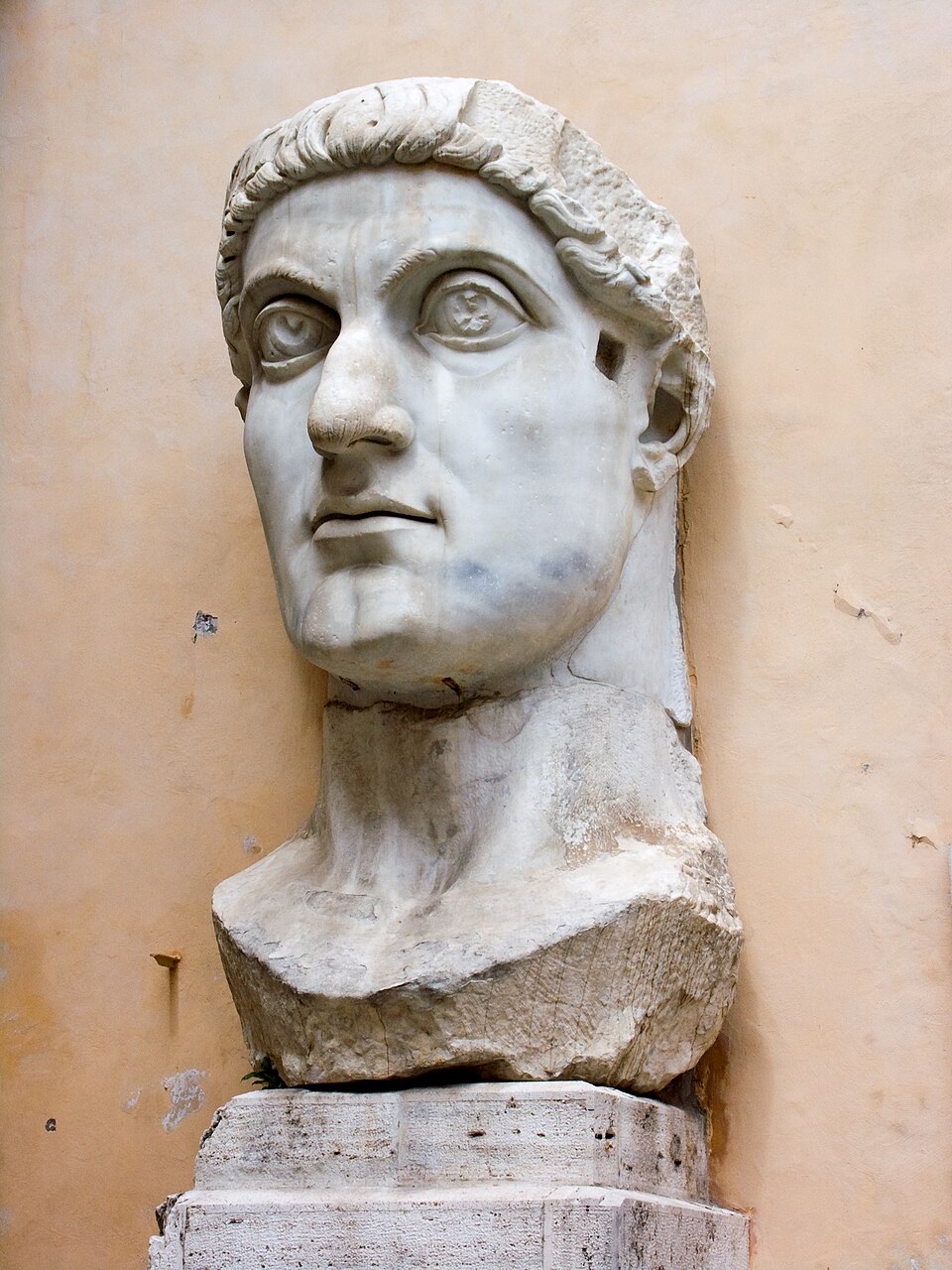
Constantine the Great
Imperator Caesar Flavius Valerius Constantinus Augustus
Imperator · Augustus · Equal of the Apostles
272 – 337
- Born
- 272
- Died
- 337
- Reign
- 306 – 337
- House
- Roman Empire
Biography
Constantine I reunited the Roman Empire under a single ruler and set it on the path to Christianity. Born at Naissus (modern Niš, Serbia) in AD 272, he was the son of Constantius Chlorus, a military officer who rose to be Caesar and then Augustus in Diocletian's tetrarchic system, and of Helena, a woman of modest origin later venerated as a saint. Constantine served at the courts of Diocletian and Galerius in the east before joining his father in Britain, and when Constantius died at York in 306 the army proclaimed Constantine emperor, against the rules of the Tetrarchy.
In the civil wars that followed he proved a commander of exceptional ability. He married Fausta, daughter of the retired emperor Maximian, linking himself to the senior tetrarchic house, and in 312 invaded Italy against her brother Maxentius, defeating him at the Milvian Bridge outside Rome. Constantine attributed the victory to the God of the Christians, having reportedly seen a vision before the battle, and in 313 he and his eastern colleague Licinius — who married Constantine's half-sister Constantia — agreed at Milan to grant Christians full freedom of worship. Relations with Licinius eventually broke down, and after defeating him in 324 Constantine ruled the whole empire alone.
His patronage transformed the Christian church from a persecuted sect into an imperial institution. He funded basilicas in Rome, Jerusalem, and elsewhere, granted privileges to clergy, and in 325 summoned the first ecumenical council at Nicaea to settle the Arian controversy, which produced the original Nicene Creed. On the site of Byzantium he founded a new capital, Constantinople, dedicated in 330, which would remain an imperial seat for over a thousand years. His administration completed the separation of civil and military power, reformed the army, and introduced the gold solidus, a stable currency for centuries. The reign also had its darker episodes: in 326 he ordered the deaths of his eldest son Crispus and of his wife Fausta, for reasons the sources leave obscure.
Constantine was baptized shortly before his death near Nicomedia in May 337. The empire was divided among his sons Constantine II, Constantius II, and Constans, and the dynasty he founded ruled until 363.
Updated June 2026 · How we research
Events
Joint declaration by Constantine, augustus of the West, and Licinius, augustus of the East, granting toleration to Christianity throughout the Roman Empire and returning previously confiscated church property. The edict ended three centuries of intermittent persecution and put the imperial government in the position of supporter rather than enemy of the Christian church — a shift that decisively shaped European history.
Connections across houses
Place Constantine the Great in the wider world of ruling houses.
Recommended Reading
Affiliate disclosure: the links below go to Amazon searches. As an Amazon Associate, Dynastica earns from qualifying purchases.