Khosroid
Iberia (Caucasus) · 580 – 786
11 figures
Every ruling house catalogued in Dynastica — 49 in total, grouped by region and ordered by founding date. Click into a dynasty to see its full lineage and the figures who defined it.
Iberia (Caucasus) · 580 – 786
11 figures
Caspian Steppe / Eurasia · 650 – 969
1 figure
Syria / Damascus / Spain · 661 – 750
The first hereditary Islamic dynasty, responsible for the rapid expansion of Arab rule from Spain to India.
2 figures
Frankish Empire / Holy Roman Empire · 751 – 987
The Carolingian dynasty ended the Merovingian rule of the Franks in 751 and held the imperial crown of the West, with brief interruptions, until 887. Their rise was the work of three generations of mayors of the palace — court officials whose constitutional position had been ceremonial but who, under Pepin of Herstal, Charles Martel, and Pepin the Short, accumulated such overwhelming military and territorial power that the Merovingian kings became functionally irrelevant. In 751 Pepin the Short asked Pope Zachary whether it would not be better for the man who actually ruled the Franks to also wear the crown; the Pope agreed, the last Merovingian was deposed and tonsured, and Pepin became the first Carolingian king. His son Charlemagne (768–814) is the dominant figure of the entire early medieval period. In a forty-six-year reign he conquered the Lombards, the Saxons, the Bavarians, and most of central Europe; founded an empire larger than anything seen in the West since Rome; was crowned Emperor of the Romans by Pope Leo III on Christmas Day 800, formally reviving the imperial title in the Latin West; and inaugurated the Carolingian Renaissance, the first systematic recovery of classical learning in five centuries. The political and cultural framework of medieval Europe was largely his creation. The empire proved indivisible only as long as Charlemagne lived. His son Louis the Pious inherited it intact but spent his reign tangled in civil wars among his own sons over its eventual division. The Treaty of Verdun in 843 settled the question by tripartition: Lothair I retained the imperial title and a long, narrow Middle Francia stretching from the Low Countries to Italy; Louis the German received East Francia (the kernel of medieval Germany); Charles the Bald received West Francia (the kernel of France). The borders sketched at Verdun shaped European politics for the next millennium. The senior Carolingian line collapsed in West Francia in 987 when Louis V died childless and the magnates elected the Robertian Hugh Capet king. The East Frankish branch had already given way to the Ottonian Saxons in 919. But the Carolingian genealogical legacy is uniquely durable: nearly every later European royal house traces ancestry to Charlemagne through cadet branches, female lines, or both. The Capetian, Plantagenet, Habsburg, and Wittelsbach houses — and through them most of the reigning European monarchs of the modern period — descend from him.
13 figures
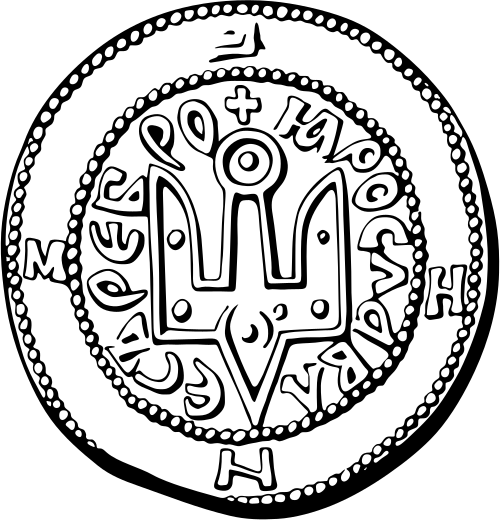
Russia / Eastern Europe · 862 – 1610
1 figure
Byzantium / Anatolia · 870 – 1056
1 figure
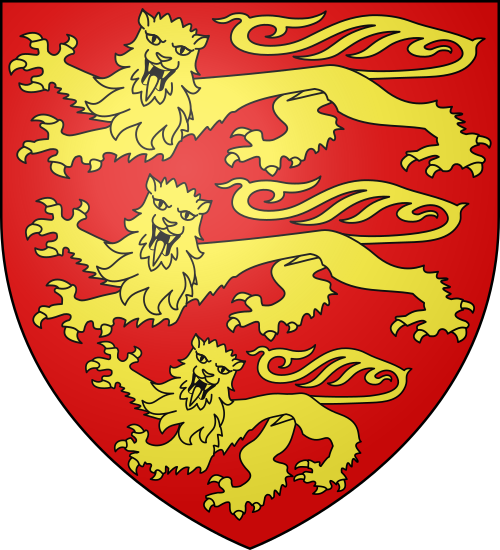
England · 1154 – 1485
The Plantagenets ruled England from 1154 to 1485 — three hundred and thirty-one years, longer than any other dynasty in English history. Their founder Henry II inherited the largest dynastic patrimony in twelfth-century Europe: through his father Geoffrey of Anjou he was Count of Anjou, Maine, and Touraine; through his mother Empress Matilda he was heir to the English throne; through his wife Eleanor of Aquitaine he became Duke of the largest French province. By his coronation in 1154 the Angevin Empire stretched from the Scottish border to the Pyrenees. The dynasty's fortunes inverted over the next century. John lost Normandy, Anjou, and Maine to Philip II of France in 1204, was forced to seal Magna Carta in 1215, and died in civil war. His son Henry III recovered slowly; Edward I conquered Wales and tried to conquer Scotland. The Hundred Years' War began under Edward III on a claim to the French throne through his mother Isabella of France — a claim that bound English foreign policy to French dynastic politics for a century and a quarter. The Plantagenet line ended in civil war between its own cadet branches. The Lancastrian (descended from John of Gaunt, Edward III's third surviving son) and Yorkist (descended from Edmund of Langley, the fourth) branches fought intermittently between 1455 and 1487 — the Wars of the Roses. Richard III, the last Plantagenet king, died at Bosworth Field in 1485, defeated by Henry Tudor whose marriage to Elizabeth of York fused the warring branches. The Plantagenet genealogical legacy is unusually dense: through Edward III's many sons and grandsons the dynasty seeded most of the later English noble houses, the entire Tudor line, the Stuart line via Margaret Tudor, and through Eleanor of Aquitaine connections to both the Capetian house of France and the medieval Castilian and Norman aristocracies. The cross-dynasty bridges Dynastica maps from the Plantagenet pages reach further than the dynasty's three centuries on the throne would suggest.
19 figures
Mongol Empire / Eurasian Steppe · 1206 – 1368
The Mongol Empire was the largest contiguous land empire in human history. It was built in a single generation. At his accession as Great Khan in 1206 Genghis Khan ruled the unified Mongol tribes from the Altai to the Khingan range — perhaps a million subjects on the high steppe. At his death in 1227 he had added the Tangut, Jin, and Khwarezmian empires to his dominions. Under his sons and grandsons the conquests continued: Korea, Russia, Persia, Mesopotamia, the Levant, all of China, parts of Eastern Europe. By 1279 the empire stretched from the Pacific coast of Korea to the Carpathian Mountains and ruled perhaps a hundred million people. The Mongol political system blended Chinggisid descent (only the descendants of Genghis through his chief wife Borte counted as imperial princes) with the older Inner Asian model of confederated tribes under elected great khans. The four khanate division formalized in the 1260s — the Yuan dynasty in China under Kublai Khan, the Ilkhanate in Persia under Hulagu, the Chagatai Khanate in Central Asia, and the Golden Horde over Russia and the western steppe — was supposed to operate under the symbolic supremacy of the Great Khan, but by the early fourteenth century each khanate was effectively independent and the unified empire ended in practice. The Mongol conquests were extraordinarily destructive. Modern estimates put the death toll of the campaigns from Genghis through his immediate successors at thirty to fifty million people — perhaps a tenth of the world population of the early thirteenth century. The sack of Baghdad in 1258 destroyed the Abbasid Caliphate and burned the libraries of the great Islamic intellectual capital; the campaigns in Khwarezm depopulated whole provinces; the Mongol invasions of Russia produced the Tatar Yoke that shaped Russian statehood for the next two and a half centuries. Where the Mongols left intact states they left them transformed. The genealogical legacy of Genghis Khan is the most demographically remarkable in human history. A 2003 study found that approximately eight percent of the male population of the territories the Mongols once ruled — roughly 0.5 percent of all living men globally — carry a Y-chromosome haplotype traced to a single male ancestor from the early thirteenth century, almost certainly Genghis himself or a close male relative. No other historical figure has documented genetic descent on remotely comparable scale.
14 figures
Austria / Holy Roman Empire · 1273 – 1918
The Habsburg house emerged in the eleventh century as obscure Swiss counts whose hereditary patrimony was a single hill-fort in Aargau. By the early fourteenth century they had risen to ducal rank in Austria; by the fifteenth they held the imperial crown of the Holy Roman Empire almost continuously; by the early sixteenth, through the marriage of Maximilian I to Mary of Burgundy and the subsequent marriages of their children, they controlled the largest European patrimony assembled since Charlemagne — Spain, the Indies, Burgundy, the Low Countries, Austria, Bohemia, Hungary, the imperial title, and parts of Italy, all under one ruler in Charles V. The empire Charles inherited proved unmanageable as a single entity. His abdication in 1556 split the dynasty into Spanish and Austrian branches. The Spanish Habsburgs took the global empire and reigned until their extinction in 1700; the Austrian Habsburgs took the imperial succession, the central European territories, and would reign in Vienna until 1918. The Austrian line endured a Reformation that nearly destroyed the religious unity of central Europe, a Thirty Years' War that killed perhaps a quarter of Germany's population, and the gradual erosion of imperial authority over the German princes. The dynasty's last truly great moment was the long reign of Maria Theresa (1740–1780), the only female ruler of the Habsburg lands. Her accession was nearly catastrophic — the Pragmatic Sanction her father Charles VI had spent decades negotiating across Europe was violated within weeks of her accession, plunging her into the War of the Austrian Succession with Frederick the Great of Prussia. She lost Silesia but preserved everything else, bore sixteen children including two emperors and Marie Antoinette of France, and reformed the army, education system, and bureaucracy of her composite monarchy. The dynasty ended in 1918 with the collapse of Austria-Hungary at the close of the First World War. Emperor Karl I renounced participation in state affairs in November 1918 and went into exile; the empire dissolved into Austria, Hungary, Czechoslovakia, Yugoslavia, Romania, and parts of Poland and Italy. The Habsburg-Lorraine family continues as a private house; the current head is Karl von Habsburg (b. 1961), great-grandson of the last reigning Emperor of Austria.
24 figures
Anatolia / Balkans / Middle East · 1299 – 1922
The Ottoman dynasty ruled an empire that, at its early-seventeenth-century peak, stretched from Algeria to the Persian Gulf and from Hungary to the Yemen — perhaps thirty-two million people across three continents. The dynasty's founder Osman I was originally the chief of a small Turkmen warband on the Byzantine frontier in northwestern Anatolia in the late thirteenth century. His descendants conquered Bursa, crossed into Europe in the 1350s, subdued the Balkans, and in 1453 captured Constantinople under Mehmed II — ending the thousand-year Byzantine Empire and giving the Ottomans a capital and an imperial ideology to inherit. The dynasty's classical apex was the reign of Süleyman I "the Magnificent" (1520–1566). His armies took Belgrade and Rhodes, decisively defeated the Hungarians at Mohács in 1526, besieged Vienna in 1529, conquered Baghdad in 1534, and made the Ottoman navy the dominant power in the Mediterranean. His judicial reforms — the kanun, the imperial codification of secular law alongside sharia — gave him the Turkish epithet Kanuni, the Lawgiver. His marriage to the Ukrainian slave concubine Hürrem Sultan transformed the Ottoman imperial harem from a women's quarter into the political center of the Topkapı Palace. Ottoman political succession was uniquely brutal among the great early-modern dynasties. From Mehmed II onward, the law of fratricide (kanunname) permitted a newly enthroned sultan to execute all of his brothers as a precaution against civil war — Mehmed III in 1595 had his nineteen surviving brothers strangled with silken bowstrings the day of his accession. The practice was replaced in the seventeenth century by the kafes (cage) system, in which potential heirs were confined in the palace under house arrest for decades until they were called to the throne; many of the later sultans came to power as middle-aged men who had never governed anything. The Ottoman dynasty's decline was visible from the second siege of Vienna in 1683, prolonged through three centuries of incremental territorial loss to Habsburgs, Romanovs, French, British, and the rising Balkan nationalisms, and ended in the post-First World War partition of the empire and the foundation of the Republic of Turkey under Mustafa Kemal in 1923. The last sultan, Mehmed VI, was deposed and exiled the previous year; the caliphate was abolished in 1924, ending six hundred and twenty-three years of Ottoman dynastic rule. The Osmanoğlu family continues today as a private house; the current head is Harun Osmanoğlu (b. 1932).
3 figures
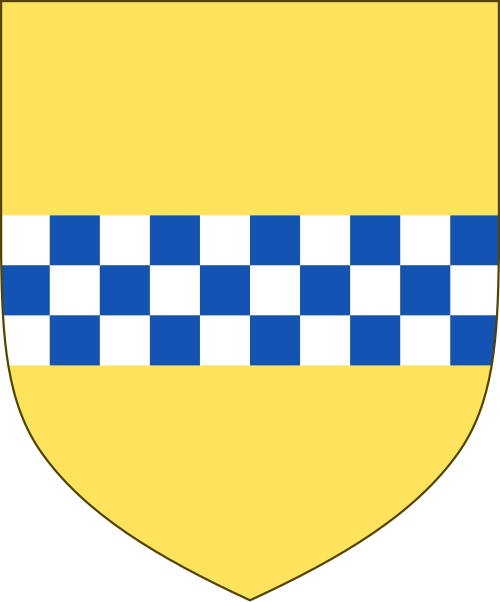
Scotland and England · 1371 – 1714
The Stuart dynasty was the royal house of Scotland from 1371 and of England, Ireland, and ultimately Great Britain from 1603 to 1714. Originating as the hereditary stewards of the Scottish crown — the surname is a corruption of "steward" — they inherited the Scottish throne through Marjorie Bruce's marriage to Walter Stewart, and held it for the next three and a half centuries through assassination, captivity, exile, and the longest sustained run of underage successions in medieval Europe. The dynasty's transformation from a Scottish to a British royal house was the work of one figure. James VI of Scotland inherited the English throne on Elizabeth I's death in 1603, through his descent from Margaret Tudor, daughter of Henry VII. Crowned in both Edinburgh and London, he styled himself King of Great Britain, though the constitutional union of the two kingdoms would not come until the reign of his great-granddaughter Anne a century later. The Stuart period in England would prove the most politically turbulent in the country's early modern history. Charles I (1625–1649) believed in the divine right of kings and refused to summon parliament for eleven years. The English Civil War followed; he was defeated, captured, tried, and on 30 January 1649 became the only English king publicly executed by his own subjects. The Commonwealth and Cromwell's Protectorate held the kingdom for eleven years; Charles II was restored in 1660. James II's open Catholicism and the birth of a Catholic male heir in 1688 triggered the Glorious Revolution: Parliament invited his Protestant daughter Mary and her Dutch husband William of Orange to invade and depose him. The dynasty ended with Queen Anne in 1714, who survived seventeen pregnancies and saw no child reach adulthood. Under the Act of Settlement the throne passed to her distant Hanoverian cousin George I, descended through Sophia of Hanover from Elizabeth Stuart, daughter of James VI and I. The Jacobite Stuart claimants persisted into exile for another century — the Old and Young Pretenders attempted to recover the throne in 1715 and 1745 — but the political Stuart line was over. The genealogical line continues: the current British royal house descends from the Stuarts via the Hanoverian succession.
12 figures
England · 1485 – 1603
The Tudors ruled England for one hundred and eighteen years across five reigns — fewer years and fewer monarchs than any other major English dynasty — but reshaped England more decisively than any predecessor since the Norman Conquest. Their founder Henry VII won the throne by force at Bosworth Field in 1485, defeating Richard III with a claim of thin Lancastrian descent through John of Gaunt's legitimized Beaufort line. Henry's marriage to Elizabeth of York the following year fused the warring branches of the Plantagenet house and ended the Wars of the Roses by union rather than further bloodshed. The dynasty's second and most consequential reign was Henry VIII's (1509–1547). His refusal to accept Pope Clement VII's denial of his annulment from Catherine of Aragon drove him to break with Rome, declare himself Supreme Head of the Church of England, dissolve the English monasteries, seize roughly a fifth of the kingdom's wealth, and reshape English politics around the religious settlement his decisions had created. Six marriages produced three legitimate children — Mary, Elizabeth, and Edward — each of whom would in turn wear the crown. Edward VI (1547–1553) consolidated the English Reformation under his Protestant regents and died at fifteen of tuberculosis. Mary I (1553–1558) reversed the Reformation, married Philip II of Spain, and burned nearly three hundred Protestants at the stake before dying childless. Elizabeth I (1558–1603) restored a moderate Anglican settlement, defeated the Spanish Armada in 1588, presided over a literary golden age that produced Shakespeare and Marlowe, and reigned for forty-four years as a deliberately unmarried queen. Her death without an heir ended the Tudor line and brought her cousin James VI of Scotland to the English throne. The Tudor genealogical legacy is denser than the brief dynasty's five reigns suggest. Through Henry VII's daughter Margaret, who married James IV of Scotland, the Tudor line transmitted the English crown to the Stuart house at Elizabeth's death; through his other daughter Mary, Queen of France, it produced the disputed Lady Jane Grey claim and the Grey-Suffolk line of Tudor descendants. Cross-dynasty bridges from the Tudor pages reach into the Plantagenet, Stuart, Spanish Habsburg, and (via marriage diplomacy) French royal lines.
15 figures
Spain / Holy Roman Empire · 1516 – 1700
The Spanish Habsburg dynasty inherited, at a single moment in 1516, the largest territorial state in the world. Charles V was simultaneously king of Castile and Aragon through his mother Joanna; king of Naples, Sicily, and Sardinia through his Aragonese inheritance; ruler of Spanish America through the same; Duke of Burgundy and Lord of the Netherlands through his grandmother Mary of Burgundy; and from 1519 Holy Roman Emperor, archduke of Austria, and king of the Romans through his Habsburg patrimony. He was nineteen years old. Charles abdicated forty years later in stages between 1554 and 1556, exhausted by four decades of universal war and convinced no successor could manage the whole inheritance. His son Philip II received Spain, the Indies, the Italian possessions, and the Low Countries; his brother Ferdinand received the Austrian lands and ultimately the imperial title. The Spanish branch would reign in Madrid for the next century and a half, defending a global empire against the rising powers of England, France, the Netherlands, and the Ottomans. The reign of Philip II (1556–1598) is the apex of Spanish Habsburg power. The Spanish silver fleets brought back the wealth of the Americas; the Battle of Lepanto in 1571 broke Ottoman naval supremacy in the Mediterranean; in 1580 Philip inherited the throne of Portugal, briefly uniting the two Iberian empires. The reign also saw the catastrophic Dutch Revolt, the failed Armada against Elizabethan England (1588), and the religious wars of the French Reformation in which Philip backed the losing Catholic League. The dynasty entered visible decline under his successors. Repeated cousin marriages — designed to keep the inheritance within the Habsburg family — produced increasingly inbred offspring; the last Spanish Habsburg, Carlos II, was so disabled by genetic damage that he could not chew solid food, walk unaided, or father an heir. His death in 1700 without issue triggered the War of the Spanish Succession, which ended the dynasty and brought the French Bourbons to the Spanish throne under the Treaty of Utrecht.
5 figures
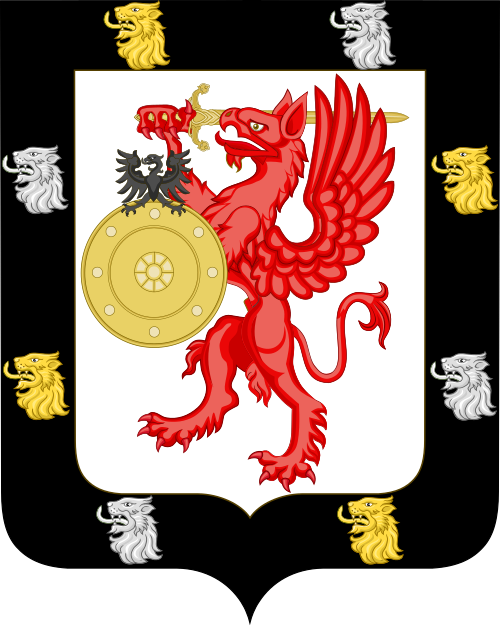
Russia / Eurasia · 1613 – 1917
The Romanov dynasty ruled Russia for three hundred and four years, from the election of Mikhail Romanov by the Zemsky Sobor in 1613 to the abdication of Nicholas II in 1917. Their rise was the resolution to the Time of Troubles — a fifteen-year crisis of dynastic extinction, foreign invasion, and pretender pretenders that followed the death of Ivan IV's son Fyodor I (the last Rurikid) in 1598. The sixteen-year-old Mikhail was a compromise candidate, the great-nephew of Anastasia Romanovna who had been Ivan the Terrible's first wife. The dynasty's transformation from a domestic Muscovite royal house into a great European power was the work of Peter the Great (1682–1725). His Westernizing reforms — beard taxes, fleet-building, the founding of St Petersburg as a "window on Europe," the systematic reorganization of state administration on Swedish and Dutch models — turned Russia from a peripheral land-locked state into a continental power. His successors enlarged the empire from the Baltic to the Pacific: Catherine the Great (1762–1796) annexed Crimea and partitioned Poland; Alexander I (1801–1825) defeated Napoleon and entered Paris in 1814; the nineteenth-century Romanovs took the Caucasus, Central Asia, and Alaska. The dynasty entered its final crisis with the assassination of Alexander II in 1881. Repression replaced reform; the cycle accelerated through the Russo-Japanese War of 1905, the 1905 Revolution, the constitutional concessions Nicholas II made under duress, the catastrophic conduct of the First World War, the February Revolution of 1917, the abdication, and finally the murder of Nicholas, his wife, his four daughters, and his hemophiliac son Alexei at Ekaterinburg on the night of 17 July 1918. The remains were thrown into a mine shaft and rediscovered in 1991. The Romanov genealogical legacy is unusually international for an Orthodox dynasty. By the nineteenth century Romanov children were marrying systematically into the Protestant royal houses of Germany — the Hohenzollerns of Prussia, the dukes of Hesse, the kings of Württemberg. Through these marriages the Romanovs are connected to nearly every reigning European royal house of the modern period: Empress Alexandra was a granddaughter of Queen Victoria; her sister was the last Empress of Russia's older sister Elizabeth Feodorovna; their cousins included George V of Britain and Kaiser Wilhelm II of Germany. The last Russian Tsar and his German Empress, the British George V, and the German Kaiser Wilhelm II were all first cousins.
4 figures
Imperial China · -2070 – -1600
3 figures
Imperial China · -1046 – -256
4 figures
South Asia / India · -322 – -185
The first empire to unify the majority of the Indian subcontinent, known for its highly organized administration and Ashoka's conversion to pacifism.
2 figures
Imperial China · -221 – -206
4 figures
Imperial China · -206 – 220
2 figures
Imperial China · 618 – 907
Often cited as the greatest imperial dynasty in ancient Chinese history, marking a golden age of cosmopolitan culture, poetry, military expansion, and the booming Silk Road trade.
5 figures
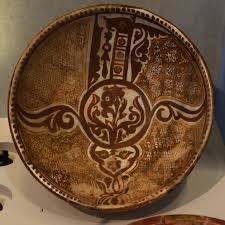
Middle East / Mesopotamia · 750 – 1258
The second great Islamic dynasty, which oversaw the "Golden Age of Islam" from their capital in Baghdad.
6 figures
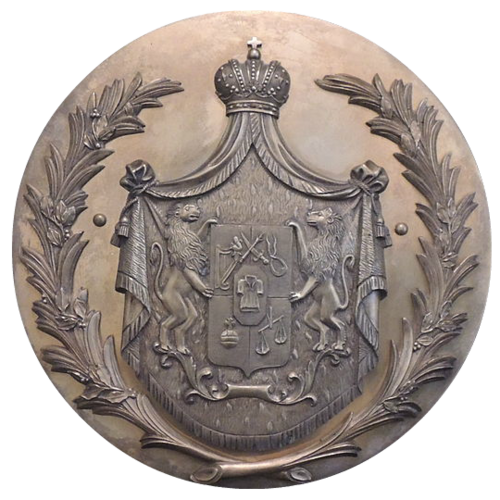
Georgia (Caucasus) · 780 – 1810
The Bagrationi were the royal house of Georgia for over a thousand years — by a wide margin the longest continuously reigning dynasty in Christian history, and one of the longest-reigning royal lines in the world. From the late ninth century, when the first Bagrationi prince Adarnase IV took the title King of the Georgians, until the formal Russian annexation of Kartli-Kakheti in 1801, an unbroken male-line descent occupied the Georgian throne. By comparison the Capetian senior line of France lasted 341 years; the Habsburgs 645; the Romanovs 304. Only the Yamato dynasty of Japan has reigned longer in a comparable royal capacity. The Bagrationi origin myth — recorded in medieval Georgian chronicles and accepted by every Georgian monarch as a fact of dynastic legitimacy — claimed descent from the Biblical King David and so from the royal house of ancient Israel. Modern scholarship treats the claim as a tenth-century legitimating fiction, but the dynasty's actual historical origin (probably as Bagratid Armenian princes who moved north into Georgia in the eighth century) is itself unusually old and well documented. The first Bagrationi rulers governed initially as princes of Tao-Klarjeti, on the borderlands between the Georgian, Armenian, and Byzantine worlds. The dynasty's golden age was the reign of David IV "the Builder" (1089–1125) and his great-granddaughter Queen Tamar (1184–1213). David expelled the Seljuk Turks from Georgia, retook Tbilisi from its Muslim emirs after four centuries of occupation, and built a unified Georgian kingdom stretching from the Black Sea to the Caspian. Tamar's reign saw the cultural and territorial apex: Shota Rustaveli's epic The Knight in the Panther's Skin, the great frescoed cathedrals of late medieval Georgia, and a sphere of influence reaching deep into Anatolia and Persia. After the Mongol invasions of the thirteenth century the unified kingdom fragmented into three smaller kingdoms (Kartli, Kakheti, Imereti) and several principalities, each ruled by a separate Bagrationi branch. The line persisted through Mongol overlordship, Timurid raids, Ottoman and Persian pressure, and centuries of border wars. In 1783 Erekle II of Kartli-Kakheti accepted Russian suzerainty under the Treaty of Georgievsk; his son Giorgi XII died in 1800, and the following year the Russian Empire annexed the kingdom outright. The Bagrationi continued as Russian princes through the imperial period and continue today; the current head of the royal house is Davit Bagrationi (b. 1976), residing in Tbilisi.
62 figures
Georgia / Caucasus · 786 – 1008
16 figures
North Caucasus · 800 – 1239
4 figures
Southeast Asia / Cambodia · 802 – 1431
In 802, according to the eleventh-century Sdok Kok Thom inscription, a king named Jayavarman II had himself consecrated chakravartin — universal monarch — in a ritual performed on the Kulen plateau north of the Tonle Sap lake. The ceremony, associated with the cult of the devaraja, declared the independence of the Khmer lands from 'Java' and is conventionally taken as the founding act of the Khmer Empire. For the next six centuries the polity centered on the plain of Angkor dominated mainland Southeast Asia, at its height claiming authority over much of modern Cambodia, Thailand, Laos, and southern Vietnam. Angkor's power rested in large part on water. Beginning with Indravarman I at Hariharalaya in the 870s, successive kings paired their temple foundations with enormous reservoirs called barays, of which the East Baray of Yasovarman I and the West Baray of the eleventh century are the largest. The network of reservoirs, channels, and embankments supported a dispersed low-density city that recent archaeological survey suggests was among the most extensive preindustrial urban complexes anywhere. Each major reign followed a recognizable pattern: hydraulic works, a temple to the royal ancestors, and a state temple-mountain identifying the king with Shiva or Vishnu. The empire's most famous monuments belong to its later centuries. Suryavarman II raised Angkor Wat in the first half of the twelfth century as a Vishnuite temple of unprecedented scale. After Cham forces sacked Angkor in 1177, Jayavarman VII expelled them, took the throne in 1181, and rebuilt the capital as Angkor Thom around the Bayon with its face towers, adding hospitals, rest houses, and roads across the kingdom and turning the state decisively toward Mahayana Buddhism. The long rivalry with Champa, fought intermittently from the tenth century onward, shaped much of this period, including a Khmer occupation of Champa in the early thirteenth century. The empire's later history is harder to follow as the inscriptional record thins. Jayavarman VIII presided over a Shaivite reaction in which thousands of Buddha images were defaced, while Theravada Buddhism spread among the population; the Chinese envoy Zhou Daguan, who visited in 1296-1297, described a city still wealthy and populous. Over the fourteenth century, pressure from the rising Tai kingdom of Ayutthaya, possible strain on the water system, and shifting trade routes weakened Angkor, though historians continue to debate the weight of each factor. Cambodian chronicle traditions record an Ayutthayan capture of the city in 1431, after which the court relocated toward the Phnom Penh region. Angkor was never wholly abandoned — Angkor Wat remained a Buddhist shrine — but 1431 conventionally marks the end of the Angkorian state.
11 figures
Armenia / Caucasus · 830 – 1021
1 figure
South India / Coromandel Coast · 848 – 1279
A Tamil maritime empire that projected naval power across Southeast Asia and was known for its colossal temple architecture.
2 figures
Georgia / Caucasus · 870 – 960
1 figure
Pontic Steppe · 1000 – 1241
1 figure
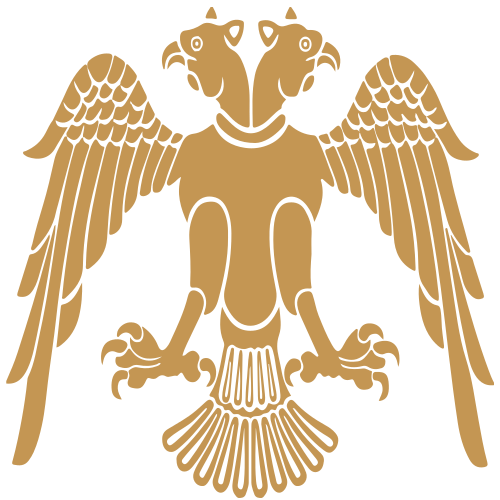
Anatolia / Persia / Middle East · 1037 – 1194
The Seljuk dynasty arose from the Qiniq clan of the Oghuz Turks, pastoral nomads of the steppe country between the Aral Sea and the lower Syr Darya. In the late tenth century the warlord Seljuk broke with the Oghuz Yabgu state and led his followers to the frontier town of Jand, where the clan accepted Sunni Islam around 985. The conversion proved decisive. It transformed a band of steppe horsemen into warriors for the faith, made them acceptable as soldiers to the Muslim powers of Transoxiana, and bound the family's fortunes to the cause of the Abbasid caliphate at the very moment that caliphate needed champions. Under Seljuk's grandsons Tughril and Chaghri the clan crossed into Khorasan, and their victory over the Ghaznavids at Dandanaqan in 1040 handed them an empire almost by accident. While Chaghri consolidated the east from Merv, Tughril pushed west across Persia, and in 1055 he entered Baghdad and ended a century of Shia Buyid control over the Abbasid caliph. Al-Qa'im invested him as sultan, creating the constitutional arrangement that defined the age: the caliph retained religious authority while the Seljuk sultan wielded the sword as protector of Sunni Islam. The dynasty's military climax came in August 1071, when Alp Arslan destroyed a Byzantine army at Manzikert and took the emperor Romanos IV Diogenes prisoner. The defeat broke Byzantine defenses in the east and opened Anatolia to Turkmen settlement, a demographic shift that ultimately produced Turkey itself. Under Malik-Shah I the empire reached its apogee, stretching from Kashgar's borders to the Mediterranean. His great vizier Nizam al-Mulk built the Nizamiyya madrasas that reshaped Sunni education, while the sultan's observatory at Isfahan employed Omar Khayyam, whose Jalali calendar of 1079 measured the solar year with remarkable precision. Malik-Shah's death in 1092 shattered this unity. His sons Mahmud, Berkyaruq, and Muhammad Tapar fought a generation of civil wars, during which the First Crusade marched through a divided Anatolia and Levant almost unopposed at the strategic level. Power devolved onto atabegs, the Turkish guardian-commanders who turned their provinces into hereditary states, and onto cadet branches in Kerman, Syria, and Anatolia. Ahmad Sanjar upheld Seljuk prestige in the east until the catastrophe at Qatwan in 1141 and his captivity among the Oghuz; in the west, a Seljuk-led coalition was routed by David IV of Georgia at Didgori in 1121, signaling the dynasty's receding reach. The Great Seljuk line ended in 1194 when Tughril III fell in battle against the Khwarazmshah. Yet the Sultanate of Rum, founded by a rival branch of the family, endured in Anatolia into the early fourteenth century, and it was through this branch that the Seljuk legacy passed to the beyliks and, eventually, to the Ottomans.
10 figures
Egypt / Levant · 1171 – 1260
The Ayyubid dynasty emerged from the Kurdish military aristocracy that served the Zangid rulers of Mosul and Aleppo in the twelfth century. Its founders were two brothers, Najm al-Din Ayyub and Asad al-Din Shirkuh, soldiers from the town of Dvin in the Caucasus who rose through Zangid service to govern cities and command armies. When Nur al-Din of Damascus sent Shirkuh to intervene in the faltering Fatimid caliphate of Egypt, the family's fortunes shifted decisively southward. Shirkuh's nephew Saladin accompanied the expeditions, succeeded his uncle as Fatimid vizier in 1169, and in 1171 quietly suppressed the Shia caliphate altogether, restoring Egypt to Sunni allegiance and founding what became an independent dynasty after Nur al-Din's death in 1174. Saladin spent the following decade absorbing Damascus, Aleppo, and the Jazira before turning the combined resources of Egypt and Syria against the crusader states. His destruction of the Frankish field army at Hattin in July 1187 and the surrender of Jerusalem three months later made him the most celebrated Muslim ruler of his age, and the Third Crusade that followed — including the campaigns of Richard I of England — failed to reverse the essential verdict of 1187, ending instead in the negotiated settlement of 1192. The Ayyubids never governed as a centralized monarchy. Saladin distributed cities and provinces among brothers, sons, and nephews as appanages, producing a family confederation in which the sultan of Egypt held seniority but rarely uncontested authority. The arrangement bred recurrent succession struggles, yet it also gave the dynasty resilience and presided over a period of commercial prosperity, Sunni religious patronage, and pragmatic diplomacy with the Franks — most strikingly al-Kamil's 1229 treaty ceding Jerusalem to the emperor Frederick II without a battle. The dynasty's instrument of destruction was of its own making. As-Salih Ayyub, the last great sultan in Cairo, built his power on regiments of Turkish slave soldiers, the Bahri Mamluks, quartered on Roda Island in the Nile. When he died during the crusade of Louis IX in 1249 and his heir Turanshah alienated these regiments, they murdered the young sultan in 1250 and elevated as-Salih's widow Shajar al-Durr, then one of their own commanders, ending Ayyubid rule in Egypt. In Syria the family lingered a decade longer under an-Nasir Yusuf of Aleppo and Damascus, until the Mongol invasion of 1260 swept his realm away. The Mamluk sultanate that defeated the Mongols at Ayn Jalut that same year inherited the Ayyubid state system intact, while minor Ayyubid lines survived in Hama and elsewhere as Mamluk clients. The dynasty's ninety years thus framed both the climax of the counter-crusade and the transition from family confederation to the slave-soldier sultanate that would dominate Egypt for two and a half centuries.
9 figures
China / East Asia · 1271 – 1368
The Mongol-founded dynasty that ruled all of China for nearly a century — the first time in Chinese history that the entire country was governed by a non-Han people. Established by Kublai Khan in 1271, the Yuan completed the conquest of the Southern Song in 1279 and made Khanbaliq (Beijing) its capital, hosting Marco Polo and binding the Pacific to the Mediterranean by Mongol post-roads. The dynasty collapsed under famine, plague, and Han rebellion in 1368, retreating to the steppe as the Northern Yuan.
8 figures
Southeast Asia / Java · 1293 – 1527
Majapahit emerged from the wreckage of Singhasari, the East Javanese kingdom destroyed in 1292 when Jayakatwang of Kediri killed King Kertanegara. Kertanegara had earlier humiliated an envoy of Kublai Khan, and in 1293 a Mongol-Yuan punitive fleet arrived off Java to find its intended target already dead. Raden Wijaya, Kertanegara's son-in-law, who had founded a settlement at Tarik named for the bitter maja fruit, allied with the expedition to crush Jayakatwang, then turned on the Mongols and drove them back to their ships. Crowned as Kertarajasa Jayawardhana, he transformed an act of opportunism into the foundation of Java's most celebrated kingdom. The first decades were precarious, marked by revolts of former companions-in-arms under Kertarajasa and his son Jayanegara, whose murder in 1328 ended the direct male line. Under the queen Tribhuwana Wijayatunggadewi the kingdom found its great minister: Gajah Mada, raised to mahapatih after suppressing the Sadeng revolt. The Pararaton credits him with the Palapa oath, a vow to renounce comfort until the archipelago — Gurun, Seran, Tanjungpura, Haru, Pahang, Dompo, Bali, Sunda, Palembang, Tumasik — was subdued. Bali was conquered in 1343, and the machinery of an expansive maritime polity took shape. The apogee came under Hayam Wuruk (1350–1389). The court poem Nagarakretagama, completed by Mpu Prapanca in 1365, lists some hundred dependencies from Sumatra to the Moluccas. Modern scholarship reads this catalogue critically: rather than administered territory, it describes a mandala of ports and polities acknowledging Majapahit's ritual precedence in widely varying degrees, with direct rule confined largely to East Java, Madura, and Bali. The era also produced its darkest episode, the Bubat incident of 1357, in which a Sundanese king and his daughter, come to seal a marriage alliance, died after Gajah Mada demanded the princess as tribute — a story the Nagarakretagama pointedly omits. Decline set in after Hayam Wuruk's death. The Paregreg civil war (1404–1406) between Wikramawardhana and the eastern court of Wirabhumi drained the kingdom just as Malacca rose to capture the straits trade. The fifteenth century is poorly documented; the Pararaton dissolves into terse obituaries, and rulers after Kertawijaya are little more than names. By 1486 a claimant, Girindrawardhana Dyah Ranawijaya, ruled from the Kediri region rather than the old capital. Javanese tradition dates Majapahit's fall to 1478, but a remnant Hindu-Buddhist court persisted, described by Portuguese observers around 1515, until the Muslim sultanate of Demak extinguished it around 1527. Majapahit's memory long outlived the state, furnishing Javanese kingship with its model of legitimacy and modern Indonesia with an image of archipelagic unity.
8 figures
Imperial China · 1368 – 1644
5 figures
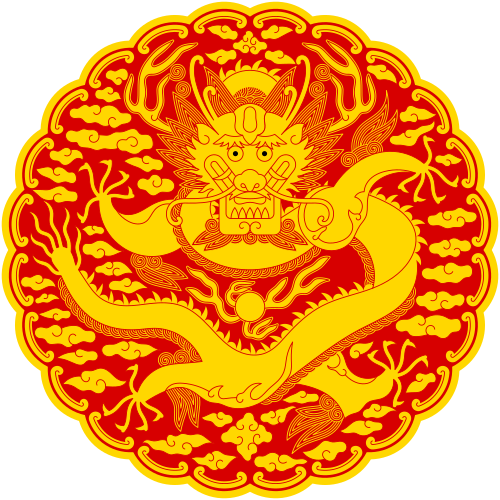
Korean Peninsula · 1392 – 1897
The final and longest-lived imperial dynasty of Korea, known for its strong Neo-Confucian ideology and high cultural achievement.
3 figures
South Asia / North India · 1526 – 1857
A Turco-Mongol dynasty that synthesized Persian and Indian cultures, overseeing an era of unparalleled artistic and economic prosperity.
3 figures
Japan · 1603 – 1868
A centralized military dictatorship that brought 250 years of stability and isolation to Japan during the Edo period.
2 figures
Ancient Egypt / North Africa · -3150 – -2613
3 figures
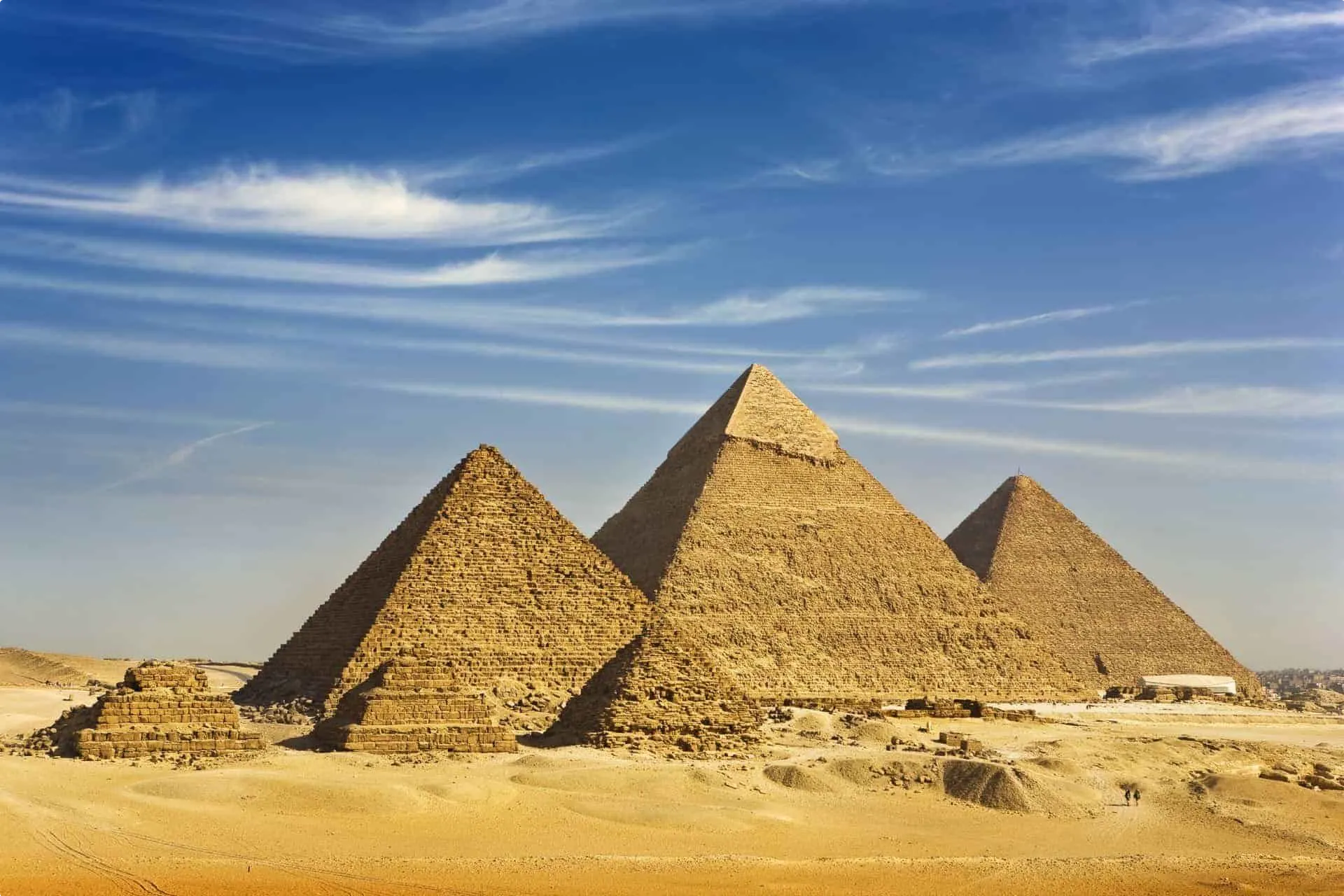
Ancient Egypt / North Africa · -2613 – -2494
3 figures
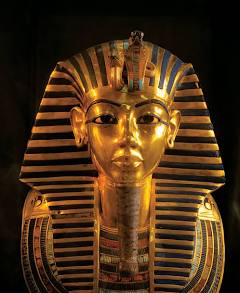
Ancient Egypt / North Africa · -1550 – -1292
10 figures
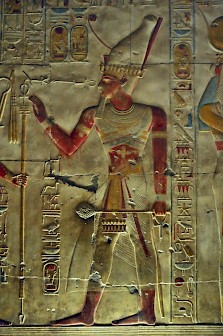
Ancient Egypt / North Africa · -1292 – -1189
5 figures
Ancient Egypt / Hellenistic World · -305 – -30
A Macedonian Greek royal house that ruled Egypt following the death of Alexander the Great. Known for adopting the customs of Egyptian Pharaohs, including extensive sibling marriage, and building the Library of Alexandria.
5 figures
West Africa · 1235 – 1670
The ruling house of the Mali Empire, which dominated West Africa from the 13th to 15th centuries. They controlled the trans-Saharan trade routes and held near-monopolies on gold and salt.
4 figures
Horn of Africa / Ethiopia · 1270 – 1974
One of the longest-ruling royal houses in history, claiming direct descent from the biblical King Solomon and the Queen of Sheba.
2 figures
West Africa / Middle Niger · 1464 – 1591
The largest contiguous empire in West African history, which controlled the trans-Saharan gold and salt trade.
2 figures
Mesoamerica / Mexico · 1428 – 1521
The Mexica polity centered on Tenochtitlan that, in alliance with Texcoco and Tlacopan, dominated central Mexico for ninety-three years before its destruction by Hernán Cortés. Built on tribute, religion, and the sustained terror of mass human sacrifice, at its 1519 height it ruled perhaps six million people across central and southern Mexico. The empire fell in two years to a Spanish force of less than a thousand soldiers, devastated by smallpox and outflanked by indigenous allies who hated Mexica rule even more than they feared the conquistadors.
9 figures
Andes / South America · 1438 – 1572
Tawantinsuyu, the Land of the Four Quarters — the largest indigenous empire ever to arise in the Americas, stretching from southern Colombia to central Chile along the spine of the Andes. From Pachacuti's reorganization of a Cuzco kingdom into an imperial system in 1438, the Inca conquered or absorbed perhaps fifteen million people in less than a century. The empire collapsed within a decade of Spanish arrival in 1532 — undermined by smallpox, civil war, and the audacity of Francisco Pizarro's seizure of the emperor at Cajamarca.
9 figures
Roman Empire / Mediterranean · -27 – 476
The Roman Empire ruled the Mediterranean world for nearly five centuries in its Western half and for fifteen centuries in its Eastern half, longer than any state in European history. The conventional date for its founding is 27 BC, when the Senate confirmed Octavian's settlement of the preceding month and granted him the title Augustus. The conventional date for its end is 476 AD, when Odoacer deposed Romulus Augustulus and sent the imperial regalia to Constantinople. In between, more than seventy emperors held the throne — by inheritance, adoption, civil war, and the sword of the Praetorian Guard. The dynastic history of the imperial Romans is messier than the regnal lists suggest. The Julio-Claudians (27 BC–68 AD) descended from Augustus by adoption and intermarriage but ended with the suicide of Nero in the chaos of the Year of the Four Emperors. The Flavians (69–96) were a single family of provincial Italian origin. The Antonines (96–192) practiced adoptive succession — the Five Good Emperors selected capable adult heirs from outside their bloodlines — until Marcus Aurelius broke with the principle and named his biological son Commodus heir. The Severans (193–235) came from North Africa. The Crisis of the Third Century saw twenty-six emperors in fifty years, most of them murdered by their own troops. The Empire was refounded by Diocletian (284–305), who divided it into a Tetrarchy of senior and junior emperors and doubled the imperial bureaucracy. Constantine the Great reunited it, converted to Christianity, and founded a new capital at Byzantium in 330. The Theodosian dynasty made Trinitarian Christianity the official religion in 380 and was the last to rule the whole empire before its permanent administrative partition. The Western half collapsed under Germanic pressure in the fifth century; the Eastern half outlived it by a thousand years as the Byzantine Empire. The Roman dynastic legacy is more thematic than genealogical: the imperial throne descended by adoption, succession, or coup more often than by blood, and the dynasties listed in regnal histories are scholarly conventions rather than self-conscious houses. But the political vocabulary of the imperial Romans — emperor, senate, consul, dictator, tribune — and the legal codifications produced under Theodosius and Justinian shaped European governance until the modern period.
21 figures
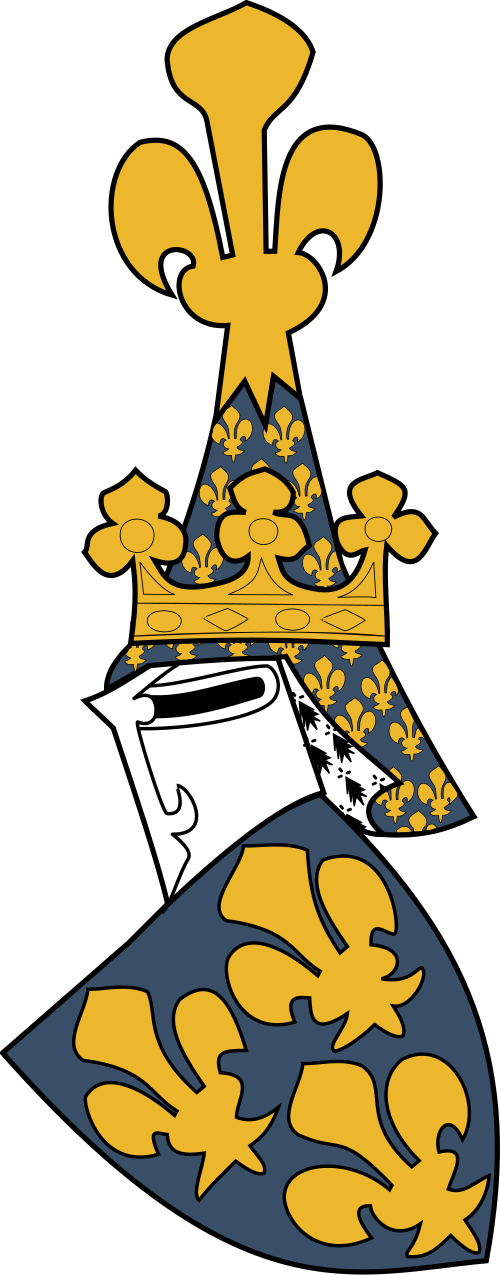
France · 987 – 1328
The Capetians ruled France from Hugh Capet's election in 987 until the death of Charles IV in 1328 — three hundred and forty-one years of unbroken father-to-son or brother-to-brother succession, the longest such streak in European royal history. Hugh's election was supposed to be a one-time provision: the West Frankish magnates had chosen him over the Carolingian claimant Charles of Lorraine because Hugh held real territorial power around Paris. By crowning his son Robert during his own lifetime, Hugh quietly converted the elective Frankish monarchy into a hereditary one. Every Capetian after him followed the same precedent. For the first century and a half the Capetian kings controlled little more than the Île-de-France around Paris — they were dukes ruling among other dukes, formally superior to but practically weaker than the Counts of Champagne and Toulouse, the Dukes of Normandy and Burgundy. The transformation came under Philip II Augustus (1180–1223), who tripled the royal demesne by stripping Plantagenet John of his French inheritance after the murder of Arthur of Brittany. Bouvines in 1214 confirmed France as the dominant power of Latin Europe. From then on the Capetian house grew steadily wealthier, more centralized, and more aggressive — through the Albigensian Crusade under Louis VIII, the canonized reign of Louis IX, the ruthless administration of Philip IV. The senior Capetian line collapsed unexpectedly in the early fourteenth century. Philip IV's three sons — Louis X, Philip V, Charles IV — reigned in succession and all died without male heirs within fourteen years of each other. Philip IV's daughter Isabella had married Edward II of England; her son Edward III therefore had a strong claim to the French throne through the female line. The assembly of French magnates rejected the claim in favor of Philip VI, a cousin from the Valois cadet branch. Edward III pressed his claim by arms; the Hundred Years' War followed. The Capetian dynastic legacy reaches further than the senior line's 341 years. The Valois, who reigned from 1328 to 1589, were a Capetian cadet branch; the Bourbons, who replaced them in 1589 and ruled France until 1848 (with interruptions), were a Capetian cadet of a cadet. Every French monarch from Hugh Capet onward — across 861 years — was a male-line Capetian descendant. The contemporary heads of the houses of Bourbon-Anjou (Spain), Bourbon-Two Sicilies (Naples), and Orléans (France) still are.
18 figures