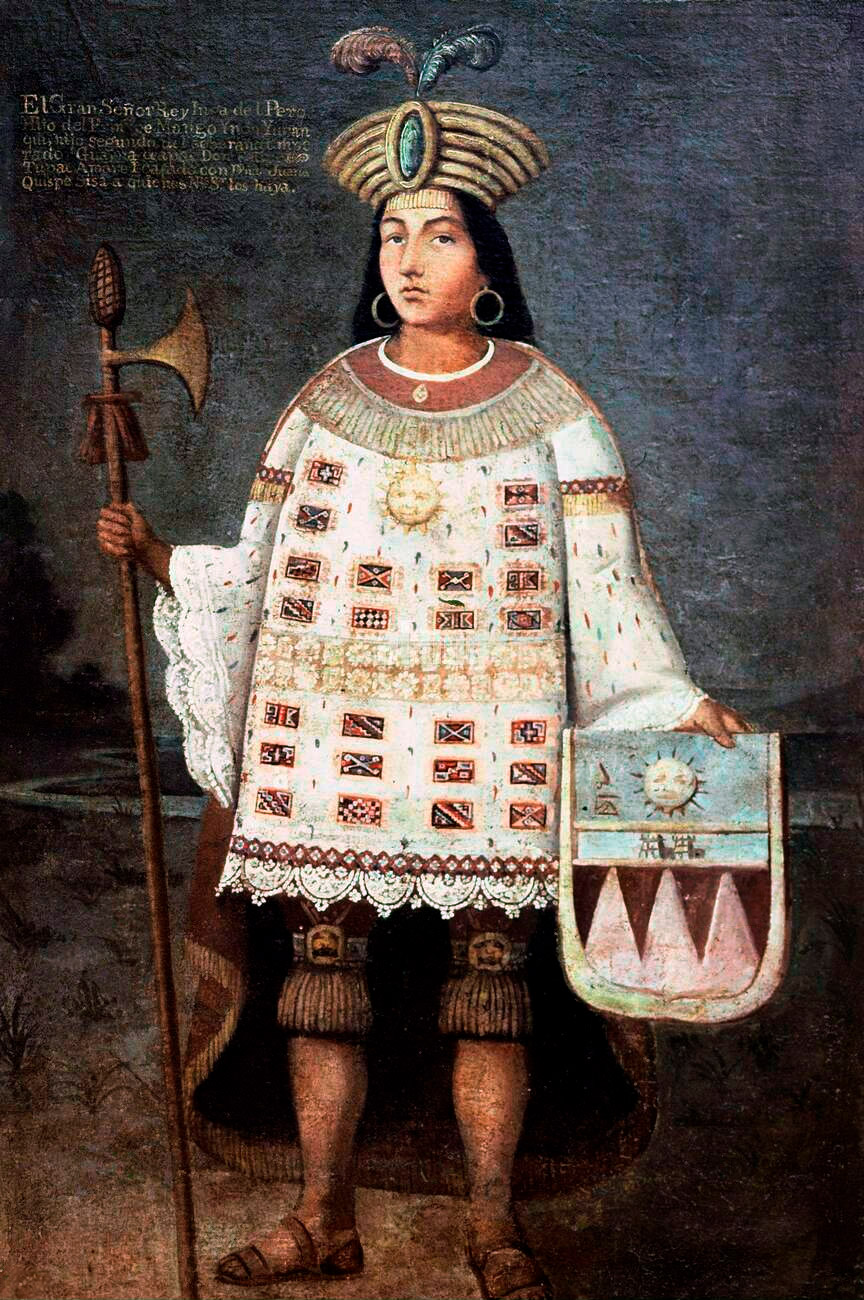
Túpac Amaru
Tupaq Amaru
Sapa Inca · Last Sapa Inca of Vilcabamba
1545 – 1572
- Born
- 1545
- Died
- 1572
- Reign
- 1571 – 1572
- House
- Inca Empire
Biography
With the execution of Tupac Amaru in the main square of Cuzco in 1572, the line of ruling Sapa Incas came to an end. The last sovereign of the Neo-Inca state of Vilcabamba, he was a son of Manco Inca, the ruler who had rebelled against the Spaniards in 1536 and withdrawn into the eastern mountains, and a grandson of the emperor Huayna Capac. Born around 1545, shortly after his father's murder, he grew up within the refuge state while his older brothers ruled it: first Sayri Tupac, who left Vilcabamba under a negotiated settlement, and then Titu Cusi Yupanqui, who governed for more than a decade while keeping diplomatic channels with the colonial authorities open. Tupac Amaru himself is described in the sources as closely involved with the shrine of the sun image and the religious life of Vilcabamba.
Titu Cusi died in 1571, and Tupac Amaru was installed as Sapa Inca. The transition proved fatal to the state. Vilcabamba's leaders, apparently fearing Spanish reaction to the death, closed the frontier, and a Spanish envoy, Atilano de Anaya, was killed at the border. The viceroy Francisco de Toledo, already determined to eliminate the independent enclave, treated the killing as cause for war and dispatched an expedition in 1572. Spanish and allied Andean forces fought their way into the lowland valleys, took the town of Vilcabamba — which they found burned and abandoned — and pursued the retreating court into the forests, where Tupac Amaru was captured with his family.
Brought to Cuzco, he was baptized, tried, and condemned for the death of the envoy and for rebellion. He was beheaded in the plaza in September 1572 before a large crowd of Andeans and Spaniards; several Spanish churchmen had protested the sentence, and the execution was criticized in Spain afterward. Toledo followed it with measures against the surviving Inca nobility and the destruction or removal of royal mummies and cult objects.
The name outlived the man. In 1780 Jose Gabriel Condorcanqui, a Cuzco-region kuraka who claimed descent from him through the female line, took the name Tupac Amaru II when he led the largest Andean uprising of the colonial era, deliberately invoking the last ruler of Vilcabamba.
Updated June 2026 · How we research
Connections across houses
Place Túpac Amaru in the wider world of ruling houses.
Recommended Reading
Affiliate disclosure: the links below go to Amazon searches. As an Amazon Associate, Dynastica earns from qualifying purchases.