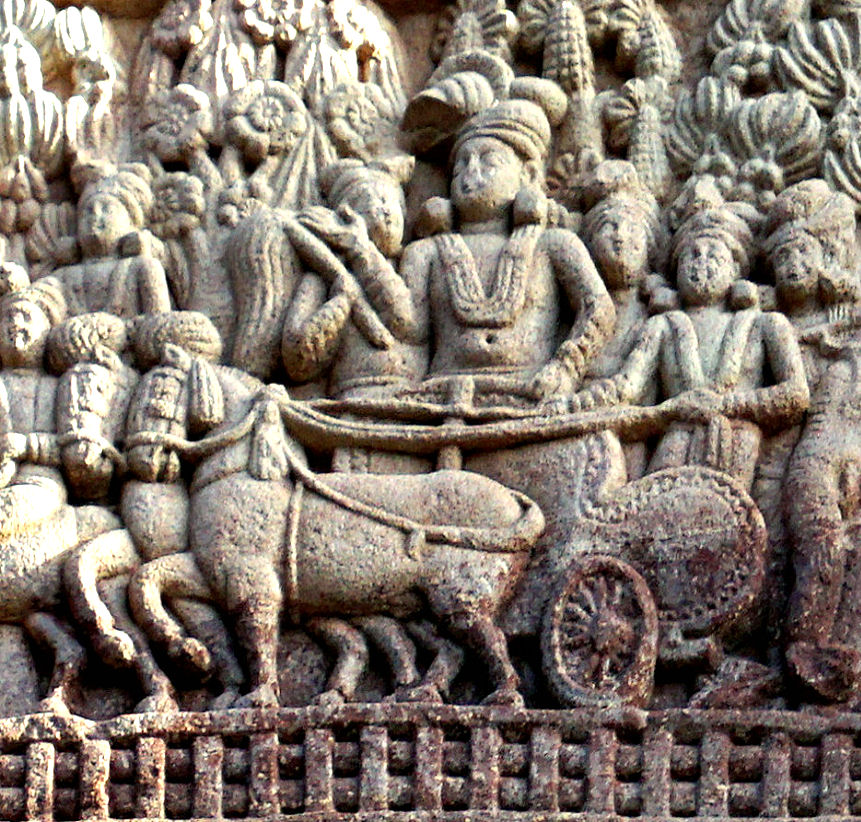
Ashoka the Great
304 BC – 232 BC
- Born
- 304 BC
- Died
- 232 BC
- House
- Mauryan Empire
Biography
Ashoka ruled the Mauryan Empire at its greatest territorial extent and became, through his inscriptions and his patronage of Buddhism, one of the most influential monarchs of ancient India. Born around 304 BC, he was a son of the emperor Bindusara and a grandson of the dynasty's founder, Chandragupta Maurya. Buddhist chronicles describe a contested succession after Bindusara's death, with Ashoka prevailing over his brothers, though these accounts were written centuries later and embellish his early cruelty to heighten the drama of his conversion. His formal consecration is generally placed around 268 BC.
The defining event of the reign was the conquest of Kalinga, on the east coast of India, around 261 BC. In his thirteenth major rock edict, Ashoka himself records the enormous toll of the war in dead, deported, and bereaved, and expresses remorse for the suffering it caused. He thereafter promoted a policy he called dhamma: an ethic of nonviolence, tolerance among sects, truthfulness, and care for dependents, propagated through officials appointed for the purpose and through inscriptions across the empire.
These edicts, carved on rocks and on polished sandstone pillars from Afghanistan to southern India, constitute the earliest substantial body of deciphered writing from ancient India. Most are in Prakrit dialects written in the Brahmi or Kharosthi scripts; in the northwest, versions in Greek and Aramaic addressed local populations. Forgotten for centuries, the script was deciphered by James Prinsep in 1837, allowing the king of the inscriptions to be identified with the Ashoka of Buddhist tradition. The lion capital that once crowned his pillar at Sarnath was adopted as the state emblem of the Republic of India in 1950.
Ashoka gave sustained support to the Buddhist order, and Sri Lankan chronicles credit him with sending missions abroad, including his son Mahinda to Sri Lanka, where Buddhism took lasting root; tradition also associates his reign with the Third Buddhist Council at Pataliputra. He continued to tolerate and support other religious communities, granting cave dwellings to the Ajivika sect among others. Ashoka died about 232 BC. The Mauryan Empire weakened under his successors and collapsed within half a century, but his edicts preserved a direct record of his rule that no other ancient Indian king left behind.
Updated June 2026 · How we research
Connections across houses
Place Ashoka the Great in the wider world of ruling houses.
Recommended Reading
Affiliate disclosure: the links below go to Amazon searches. As an Amazon Associate, Dynastica earns from qualifying purchases.