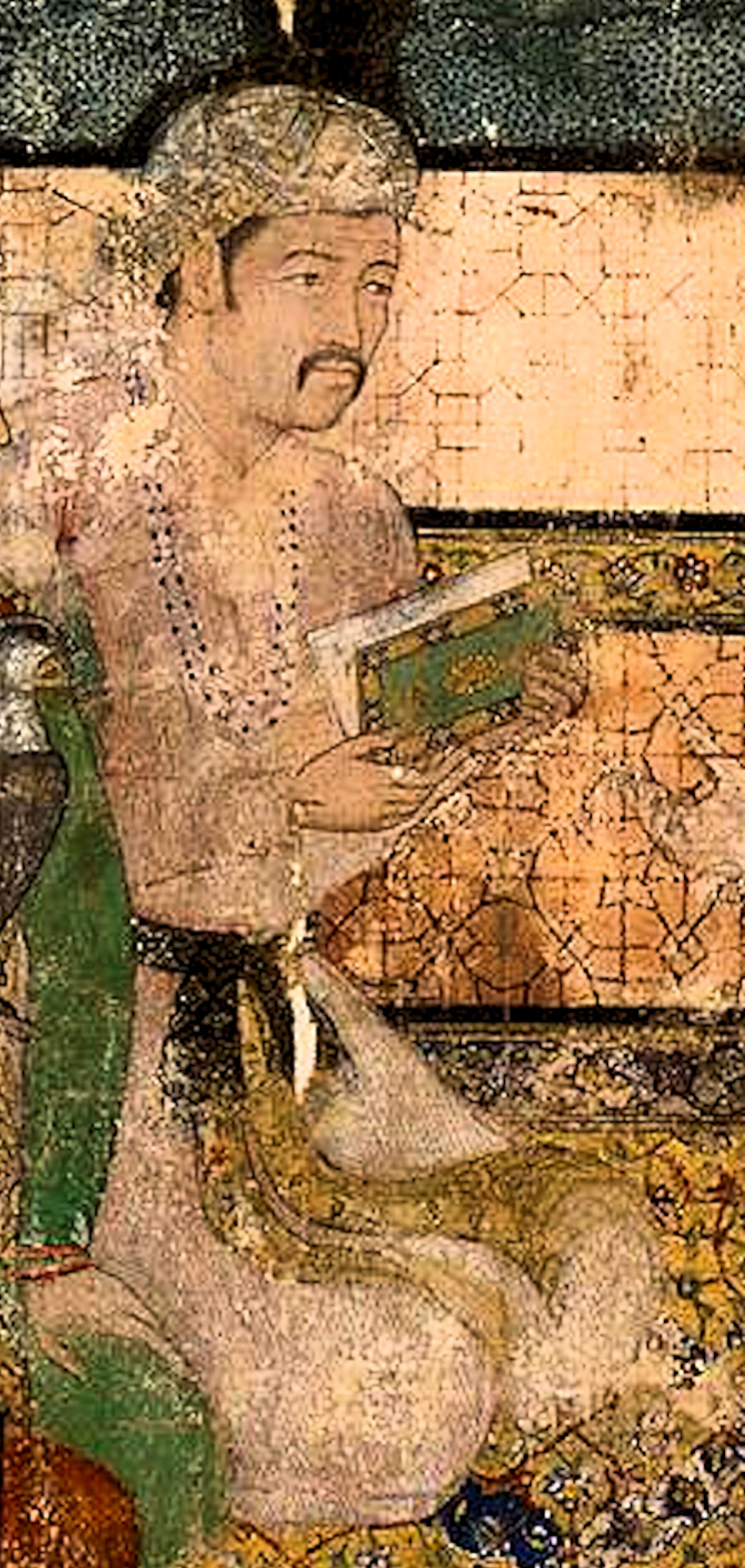
Akbar the Great
Emperor of India
1542 – 1605
- Born
- 1542
- Died
- 1605
- House
- Mughal Empire
Biography
Jalal al-Din Muhammad Akbar, third of the Mughal emperors, ruled from 1556 to 1605 and turned the precarious inheritance of his grandfather Babur into one of the largest and wealthiest states of its time. He was born in 1542 at Umarkot in Sindh, while his father Humayun was in flight after losing the empire to the Afghan ruler Sher Shah Suri. Humayun recovered Delhi in 1555 but died within months, and Akbar acceded at the age of thirteen under the regency of the general Bairam Khan, whose victory over the Hindu general Hemu at the Second Battle of Panipat in 1556 secured the dynasty's survival.
Assuming personal rule around 1560, Akbar spent the following decades in nearly continuous expansion. Gujarat, Bengal, Kashmir, Sindh, and parts of the Deccan were brought under Mughal control, and the empire eventually stretched from Afghanistan to the Godavari River. Equally important was his accommodation with the Rajput kingdoms of northern India: several Rajput rulers entered Mughal service as high commanders, and marriage alliances linked their houses to the imperial family. One such marriage, with a princess of Amber, produced his heir Salim, the future emperor Jahangir.
Akbar's religious policy departed sharply from precedent. He abolished the jizya tax on non-Muslims in 1564, ended the pilgrim tax, and welcomed Hindus, Jains, Zoroastrians, and Jesuit missionaries to theological discussions in the Ibadat Khana, a hall of debate at his court. He promoted a principle of universal toleration, sulh-i kul, and instituted a small elite discipleship order, the din-i ilahi, centered on his own person; its precise nature has been debated ever since. Administratively, his reign produced the mansabdari ranking system for officials and the revenue settlement associated with his minister Todar Mal, structures that outlasted him by generations.
Between 1571 and 1585 Akbar ruled from Fatehpur Sikri, a new red sandstone capital built near Agra, before water shortages and strategic needs drew the court elsewhere. Though he never learned to read, he maintained a large library and atelier, commissioning translations and illustrated manuscripts that shaped Mughal painting. His final years were troubled by the rebellion of his son Salim, who nonetheless succeeded him when Akbar died at Agra in 1605.
Updated June 2026 · How we research
Connections across houses
Place Akbar the Great in the wider world of ruling houses.
Recommended Reading
Affiliate disclosure: the links below go to Amazon searches. As an Amazon Associate, Dynastica earns from qualifying purchases.