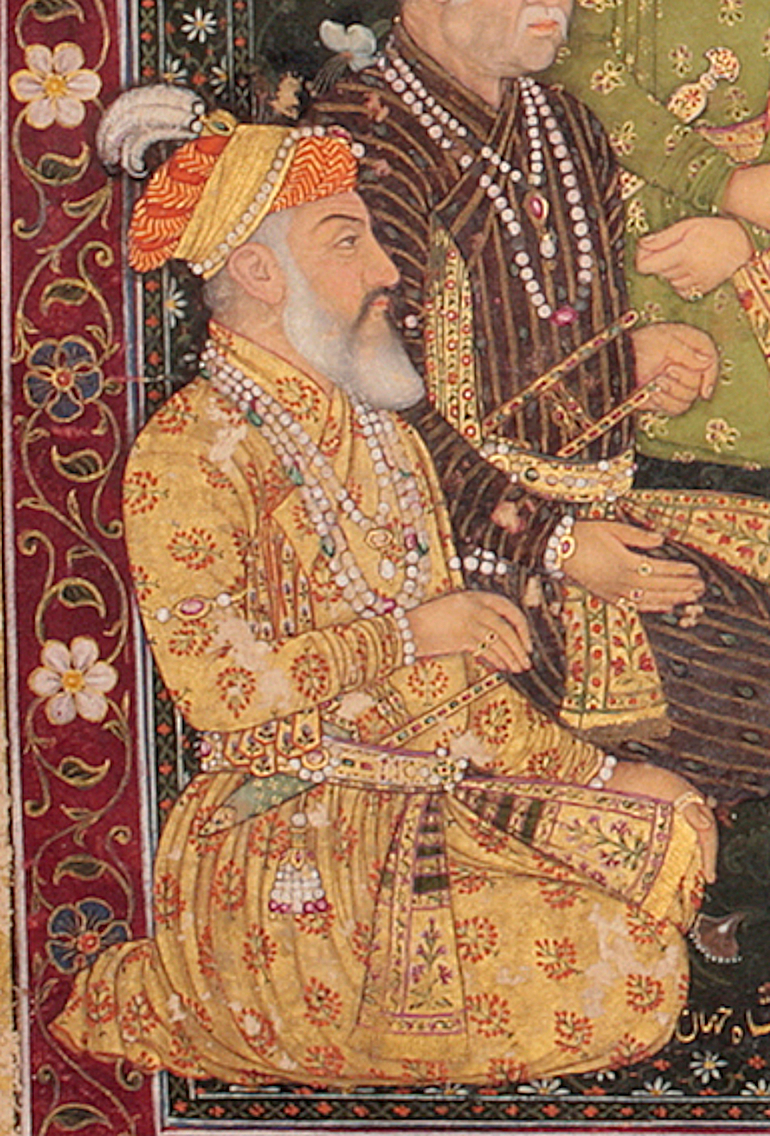
Shah Jahan
Emperor
1592 – 1666
- Born
- 1592
- Died
- 1666
- House
- Mughal Empire
Biography
Fifth of the Mughal emperors, Shah Jahan presided over the dynasty's most celebrated period of architectural patronage, and his reign from 1628 to 1658 is often treated as the classical age of Mughal court culture. Born in 1592 as Prince Khurram, he was the son of the emperor Jahangir and grandson of Akbar. He distinguished himself in military campaigns in the Deccan and against Mewar during his father's reign, receiving the title Shah Jahan, "king of the world." Court intrigue in Jahangir's later years drove him into open rebellion, but after his father's death in 1627 he secured the throne, eliminating rival claimants in the process.
In 1612 he had married Arjumand Banu Begum, known as Mumtaz Mahal, the niece of Jahangir's influential empress Nur Jahan. The marriage was by all accounts exceptionally close, and Mumtaz Mahal bore fourteen children before dying in childbirth at Burhanpur in 1631. In her memory Shah Jahan built the Taj Mahal at Agra, a white marble tomb set in formal gardens on the Yamuna River, completed in its essentials by the mid-1640s. It became the most famous building of the Mughal era and one of the most recognized monuments in the world.
The Taj Mahal was only part of a vast building program. Shah Jahan founded a new capital at Delhi, Shahjahanabad, whose Red Fort and Jama Masjid still dominate the old city, rebuilt much of the Agra fort in marble, and commissioned the jeweled Peacock Throne. The empire he ruled remained large and rich, though costly campaigns in Central Asia and the Deccan strained its finances.
His reign ended in a war among his sons. When Shah Jahan fell seriously ill in 1657, the four princes contended for the succession. His favored heir, the eldest son Dara Shukoh, was defeated by the third son, Aurangzeb, who took the throne in 1658 and later had Dara executed. Although Shah Jahan recovered, Aurangzeb confined him in the Agra fort, where he spent his last eight years attended by his daughter Jahanara, within sight of the Taj Mahal. He died in 1666 and was buried there beside Mumtaz Mahal.
Updated June 2026 · How we research
Connections across houses
Place Shah Jahan in the wider world of ruling houses.
Recommended Reading
Affiliate disclosure: the links below go to Amazon searches. As an Amazon Associate, Dynastica earns from qualifying purchases.