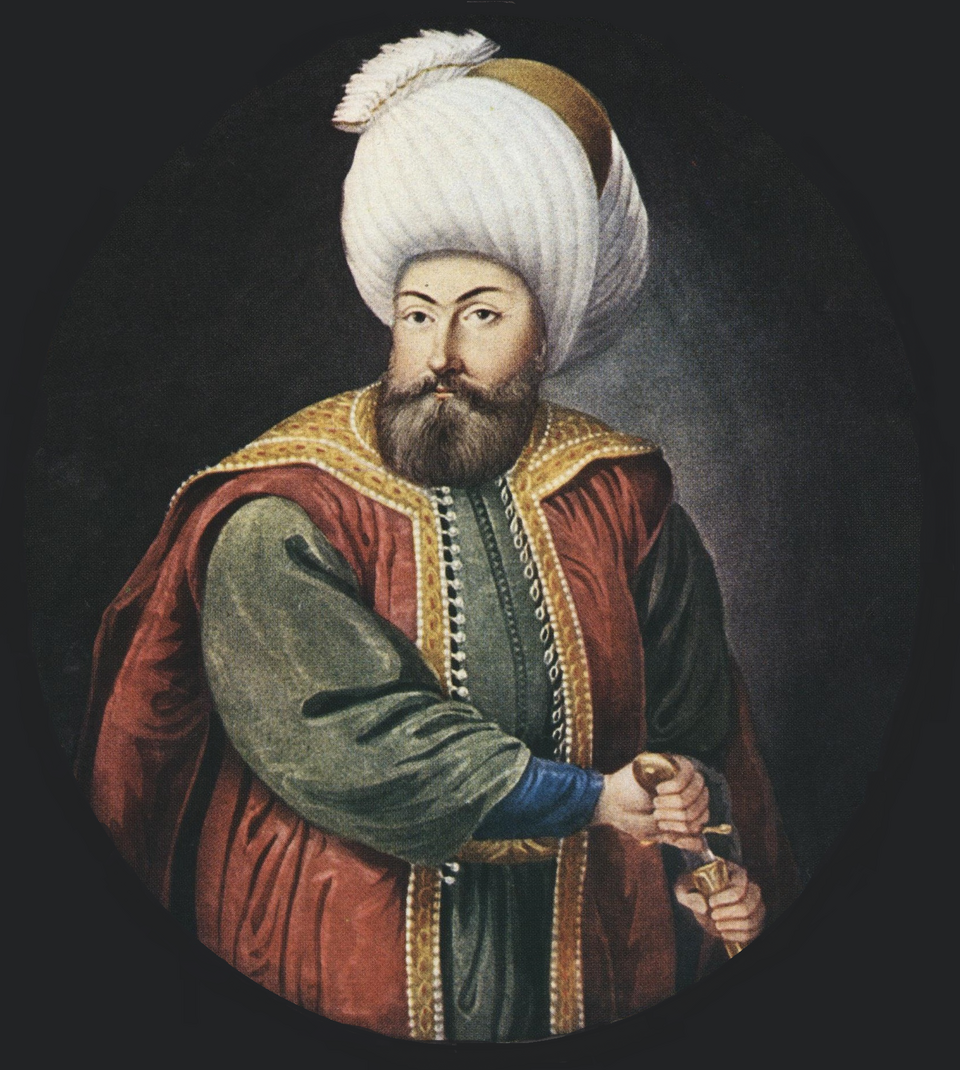
Osman I
1258 – 1324
- Born
- 1258
- Died
- 1324
- House
- Ottoman Empire
Biography
The dynasty that ruled the Ottoman Empire for six centuries took its name from Osman I, a Turkish frontier lord in Bithynia, in northwestern Anatolia, around the turn of the fourteenth century. Conventionally his dates are given as about 1258 to about 1324, but contemporary documentation of his life is almost nonexistent: no Ottoman written sources survive from his lifetime, and the earliest dynastic chronicles were composed more than a century after his death. What can be said of him is reconstructed from those late traditions, from Byzantine writers such as Pachymeres, and from a small number of coins and inscriptions of disputed interpretation.
Osman inherited the leadership of a small Turkoman principality from his father Ertugrul, who in later tradition was granted lands around Sögüt as a vassal of the Seljuk sultans of Rum. As Seljuk and Mongol Ilkhanid authority in Anatolia decayed, dozens of such frontier beyliks emerged; Osman's was initially among the least significant, but its position on the Byzantine border gave it room to expand and a steady supply of warriors drawn to the frontier. The Byzantine historian Pachymeres provides the one roughly contemporary fixed point: a victory by Osman over an imperial force at Bapheus, near Nicomedia, generally dated to 1302, after which his raids ranged widely through Bithynia.
Later Ottoman tradition embellished the founder considerably. The story of Osman's dream — in which a tree growing from his body shades the world, interpreted as a prophecy of empire — and his marriage to the daughter of the dervish sheikh Edebali are foundation legends serving dynastic legitimacy, recorded long after the fact. The older notion that the early Ottoman enterprise was driven primarily by ghaza, religiously motivated frontier warfare, has been qualified by modern scholarship, which notes that Osman's followers included Greek Christian allies and that motives on the frontier were mixed.
Osman's forces blockaded rather than stormed the region's walled cities, lacking siege capability. Bursa, the principal prize, fell only in 1326, shortly after his death, which is conventionally placed about 1324. He was succeeded by his son Orhan, under whom the principality became a state with conquered cities, coinage, and institutions. Every subsequent Ottoman sultan claimed descent from Osman, and the dynasty bore his name until its abolition in 1922.
Updated June 2026 · How we research
Connections across houses
Place Osman I in the wider world of ruling houses.
Recommended Reading
Affiliate disclosure: the links below go to Amazon searches. As an Amazon Associate, Dynastica earns from qualifying purchases.