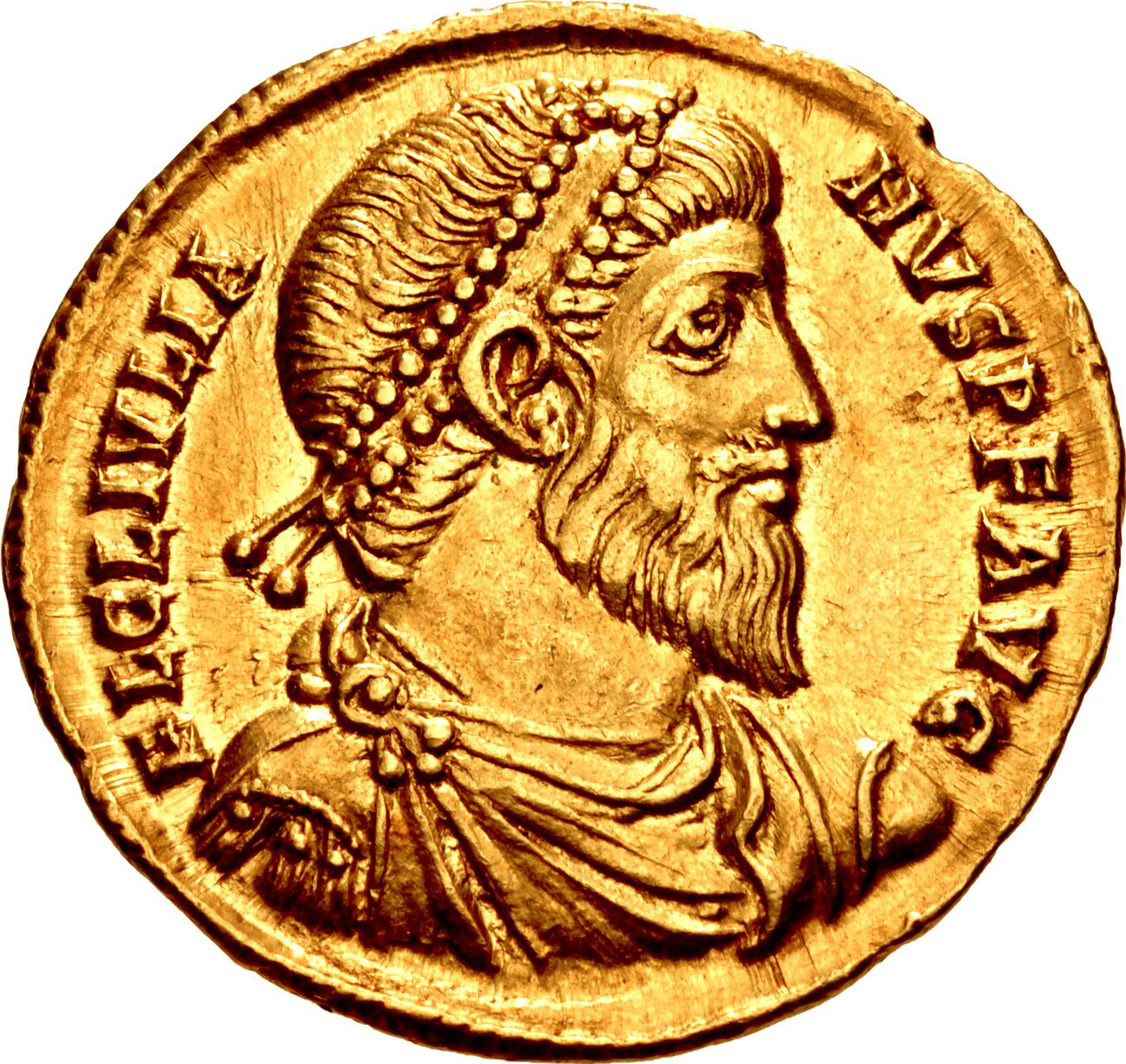
Julian
Imperator Caesar Flavius Claudius Iulianus Augustus
Imperator · Augustus · Apostate (later epithet)
331 – 363
- Born
- 331
- Died
- 363
- Reign
- 361 – 363
- House
- Roman Empire
Biography
Julian, called "the Apostate" by later Christian writers, was the last emperor of the Constantinian dynasty and the last pagan to rule Rome. A nephew of Constantine the Great, born in Constantinople in 331, he lost his father, Julius Constantius, in the dynastic massacre of 337 and spent his youth in supervised seclusion, including years on an estate in Cappadocia. The education this enforced leisure permitted shaped him permanently: he studied rhetoric and Neoplatonic philosophy, eventually in Athens, and privately abandoned the Christianity in which he had been raised.
In 355 his cousin Constantius II, short of trusted kinsmen, appointed him Caesar for Gaul and married him to his sister Helena, a marriage binding the surviving branches of Constantine's house. Despite his bookish background Julian proved a capable commander, defeating an Alamannic coalition at Strasbourg in 357 and restoring the Rhine frontier, while reducing the tax burden of the Gallic provinces. In 360, when Constantius ordered the transfer of his best troops to the Persian front, the army in Paris proclaimed Julian Augustus. Civil war was averted when Constantius died in November 361, reportedly designating Julian his heir.
As sole emperor Julian declared openly for the old gods, restoring sacrifices, reopening temples and reorganizing pagan priesthoods on a model that borrowed from the church's institutions. He proclaimed toleration but pressured Christianity indirectly, most controversially through an edict of 362 effectively barring Christians from teaching classical literature, a measure criticized even by the pagan Ammianus Marcellinus. He was the most prolific author to occupy the throne: orations, letters, the satire Misopogon directed at the citizens of Antioch, and the polemic Against the Galilaeans survive in whole or part.
In 363 he launched a major invasion of Persia, advancing to the walls of Ctesiphon before beginning a difficult withdrawal up the Tigris. Wounded by a spear in a skirmish, he died on 26 June 363, about thirty-one years old. With him the male line of Constantine's dynasty ended, and the army elevated the officer Jovian in his place.
Updated June 2026 · How we research
Connections across houses
Place Julian in the wider world of ruling houses.
Recommended Reading
Affiliate disclosure: the links below go to Amazon searches. As an Amazon Associate, Dynastica earns from qualifying purchases.