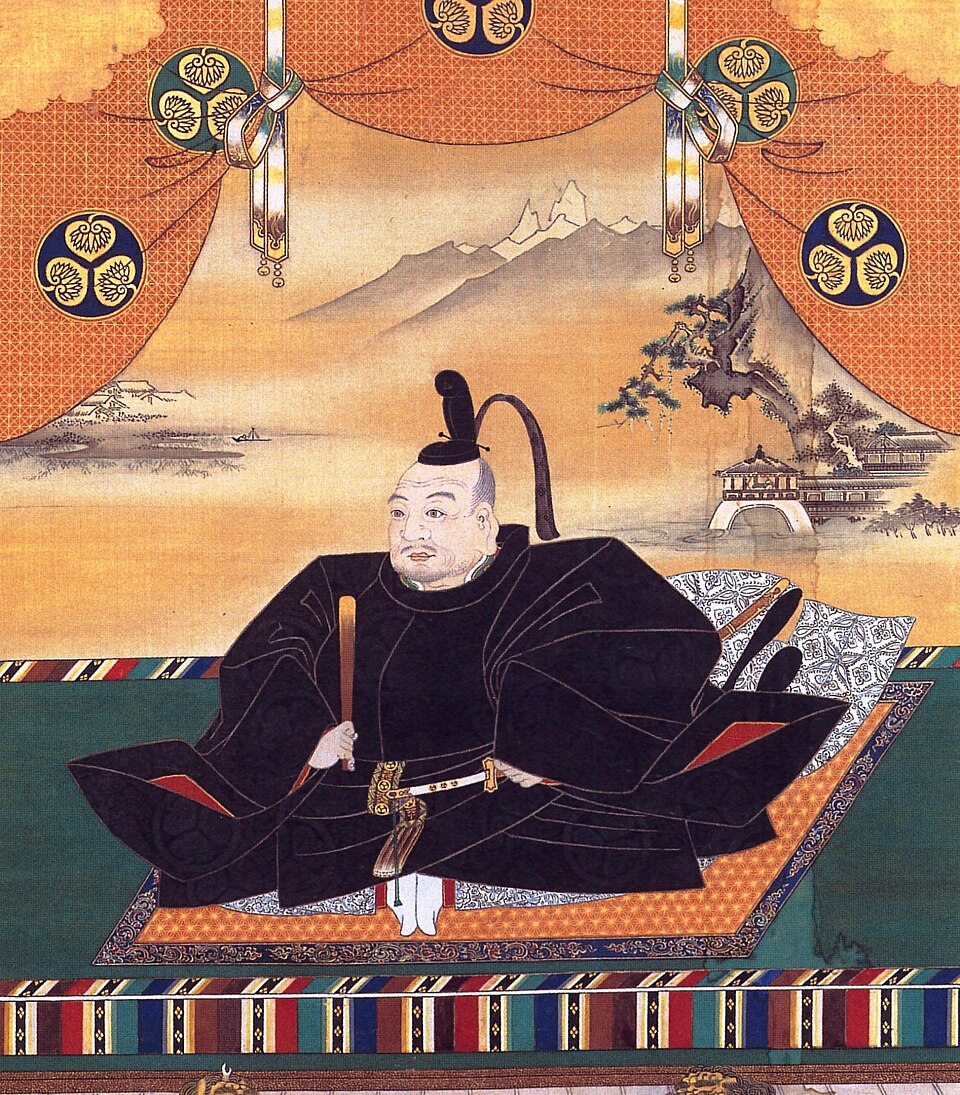
Tokugawa Ieyasu
1543 – 1616
- Born
- 1543
- Died
- 1616
- House
- Tokugawa Shogunate
Biography
Tokugawa Ieyasu established the shogunate that governed Japan for over two and a half centuries, ending the long era of civil war known as the Sengoku period. Born in 1543 into the Matsudaira family, minor lords of Mikawa province, he spent much of his childhood as a political hostage, first of the Oda and then of the Imagawa, the regional powers between whom his family was caught. After the Imagawa defeat at Okehazama in 1560 he recovered his independence, allied himself with Oda Nobunaga, and spent the next two decades consolidating his position in central Japan.
Following Nobunaga's assassination in 1582, Ieyasu maneuvered carefully against Toyotomi Hideyoshi, who emerged as Nobunaga's effective successor. After an inconclusive military confrontation, the two reached an accommodation, and Ieyasu served as Hideyoshi's most powerful vassal. In 1590 he accepted a transfer of his domains to the Kanto plain in eastern Japan, making the small castle town of Edo his headquarters. The move distanced him from the center of power but gave him the largest landholding of any lord in the country, and Edo would in time grow into modern Tokyo.
Hideyoshi's death in 1598 left a five-year-old heir and a fragile council of regents. Rivalries within the Toyotomi coalition came to a head in 1600 at the Battle of Sekigahara, where Ieyasu's eastern coalition defeated an alliance of western lords. The victory made him master of Japan, and in 1603 the emperor appointed him shogun. He held the office only two years before resigning it in 1605 to his son Hidetada, a step designed to fix the succession in the Tokugawa line; he continued to direct affairs as retired shogun from Sunpu. The remaining Toyotomi presence in Osaka was eliminated in the campaigns of 1614-1615, removing the last serious challenge to Tokugawa rule.
Ieyasu died in 1616. He was subsequently deified under the name Tosho Daigongen and enshrined at Nikko, where the mausoleum complex built by his grandson Iemitsu became one of Japan's most elaborate religious sites. The institutions he and his immediate successors created, including the system of regulated daimyo domains and the alternate attendance requirement, underpinned the largely peaceful Edo period, which lasted until the resignation of the fifteenth shogun, Tokugawa Yoshinobu, in 1867.
Updated June 2026 · How we research
Connections across houses
Place Tokugawa Ieyasu in the wider world of ruling houses.
Recommended Reading
Affiliate disclosure: the links below go to Amazon searches. As an Amazon Associate, Dynastica earns from qualifying purchases.