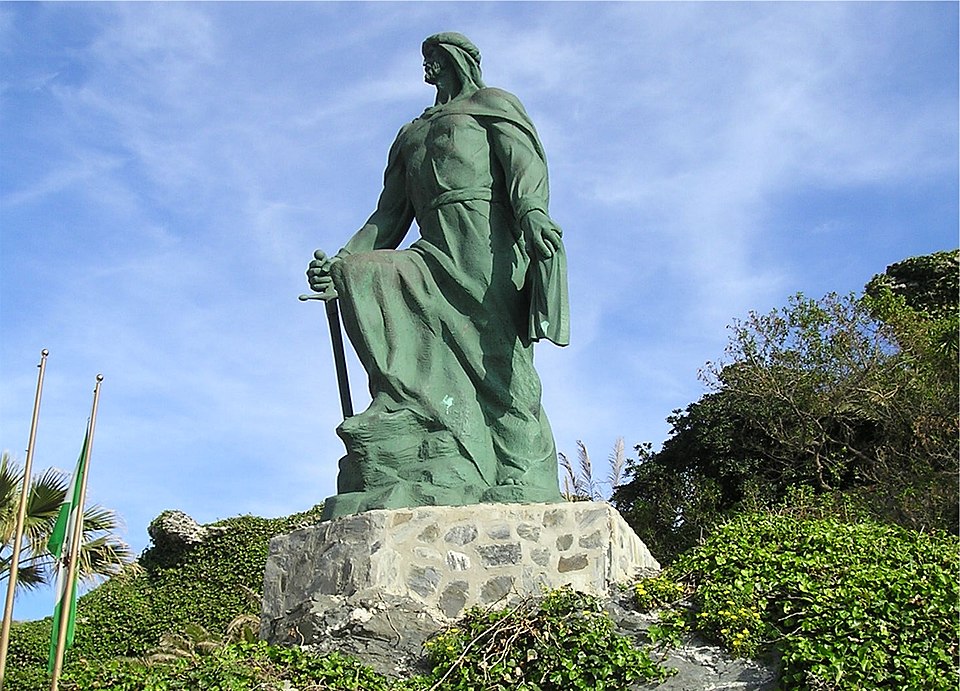
Abd al-Rahman I
Emir of Córdoba
731 – 788
- Born
- 731
- Died
- 788
- House
- Umayyad Caliphate
Biography
A grandson of the caliph Hisham, Abd al-Rahman ibn Mu'awiya was about nineteen when the Abbasid revolution destroyed the Umayyad caliphate in 750 and its victors set about exterminating the ruling family. He was born in 731 in Syria, raised among the Umayyad elite, and escaped the massacre of his kinsmen — tradition places one infamous slaughter at a banquet near Jaffa — fleeing through Palestine and Egypt into North Africa. Accounts of the flight, including his swimming the Euphrates under pursuit while his brother turned back and was killed, derive from later Arabic chronicles and carry an evident element of dynastic legend, but the outline of his escape and westward journey is not in doubt.
After several precarious years in the Maghreb, where his mother's Berber origins among the Nafza gave him some protection, he turned to al-Andalus, the Iberian territories conquered by Muslim armies four decades earlier and at the time torn by feuds between Arab factions and resentful Berber settlers. Umayyad clients (mawali) in the peninsula prepared his arrival, and he landed at Almuñécar in 755. Gathering support among Syrian junds and Yemeni faction leaders, he defeated the governor Yusuf al-Fihri outside Córdoba in May 756 and entered the city, taking the title of emir.
He pointedly did not claim the caliphate — that assertion was left to his descendant Abd al-Rahman III in 929 — but he ceased recognizing the Abbasids in the Friday prayers. His thirty-two-year reign was largely consumed by survival: he suppressed repeated revolts by Arab chiefs, Berbers, and former allies, crushed an Abbasid-backed rising whose leader's head he is said to have sent to the caliph al-Mansur, and in 778 benefited when Charlemagne's expedition against Zaragoza ended in withdrawal and the ambush of the Frankish rearguard at Roncesvalles. To reduce dependence on tribal levies he built up an army of slave and mercenary troops loyal to the dynasty.
In 785-86 he began the Great Mosque of Córdoba on the site of a church his administration purchased, founding what successive emirs would enlarge into one of the principal monuments of Islamic architecture. He died in Córdoba in 788, succeeded by his son Hisham I, having restored in the far west a dynasty extinguished in Syria; the Umayyads of Córdoba ruled al-Andalus until 1031.
Updated June 2026 · How we research
Connections across houses
Place Abd al-Rahman I in the wider world of ruling houses.
Recommended Reading
Affiliate disclosure: the links below go to Amazon searches. As an Amazon Associate, Dynastica earns from qualifying purchases.