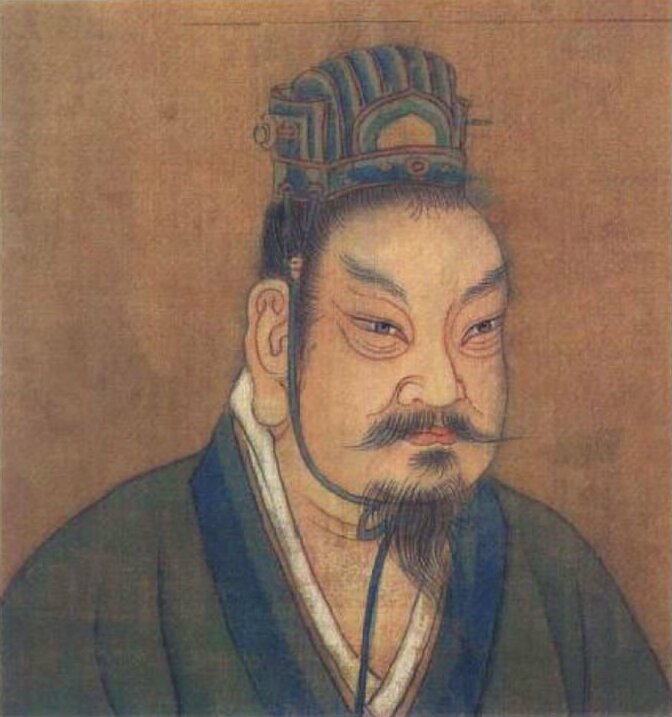
King Cheng
d. 1021 BC
- Died
- 1021 BC
- House
- Zhou
Biography
Second king of the Zhou dynasty, King Cheng (d. c. 1021 BC) reigned during the decades in which Zhou rule over the former Shang domains was made permanent. He was the son of King Wu, who had overthrown the Shang at Muye but died only a few years afterward, leaving the throne to a boy. Knowledge of his reign rests on Western Zhou bronze inscriptions, several chapters of the Book of Documents associated with his era, and later histories; as with all early Zhou rulers, the outline is reasonably secure while dates and particulars remain debated.
The defining circumstance of his early reign was the regency of his uncle Dan, the Duke of Zhou. The arrangement was contested from the start: other royal uncles, set as overseers in the east, rebelled together with Wu Geng, the son of the last Shang king, in what tradition calls the rebellion of the three guards. The Duke of Zhou's eastern campaigns suppressed the rising and were followed by the measures that consolidated the dynasty — large-scale enfeoffment of Zhou kinsmen and allies as regional lords, the relocation of subjugated Shang lineages, and the foundation of an eastern administrative center at Luoyi, near modern Luoyang. Bronze inscriptions such as that of the He zun, which records the king's address concerning the new settlement at the "center of the lands," provide contemporary witness to this program and contain an early occurrence of the term later read as "Middle Kingdom."
Tradition holds that after seven years the Duke of Zhou returned power to the now-adult king, an act celebrated by Confucian writers as the model of ministerial loyalty. King Cheng's personal rule appears to have been comparatively uneventful, remembered for stability rather than conquest. Later historiography paired his reign with that of his son and successor, King Kang, as the era of "Cheng and Kang," an idealized age in which, the histories claim, punishments were set aside for forty years because none were needed.
He died around 1021 BC. Whatever idealization attaches to the received accounts, his reign marks the point at which the Zhou conquest hardened into an enduring order, the framework within which Chinese political culture developed for centuries.
Updated June 2026 · How we research
Connections across houses
Place King Cheng in the wider world of ruling houses.
Recommended Reading
Affiliate disclosure: the links below go to Amazon searches. As an Amazon Associate, Dynastica earns from qualifying purchases.