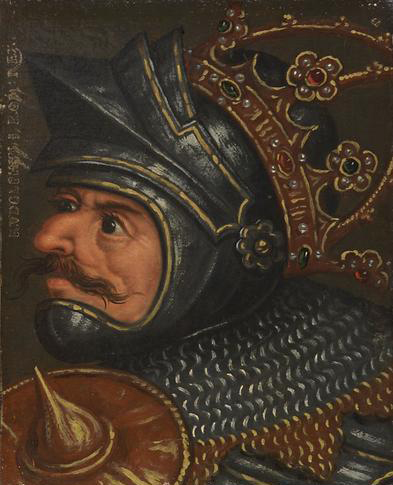
Rudolf I
Rudolf I. von Habsburg
King of Germany · King of the Romans · Count of Habsburg
1218 – 1291
- Born
- 1218
- Died
- 1291
- Reign
- 1273 – 1291
- House
- Austrian Habsburgs
Biography
The election of Rudolf, Count of Habsburg, as King of the Romans in 1273 ended the long Interregnum that had followed the collapse of Hohenstaufen rule and brought his family, until then a regional power in the Swiss and Alsatian lands, onto the imperial stage. Born in 1218, the son of Count Albert IV of Habsburg, Rudolf had spent decades enlarging his ancestral holdings through inheritance, purchase, and service to the Hohenstaufen emperors before the electors, seeking a candidate strong enough to restore order but not strong enough to threaten them, settled on him at Frankfurt.
His reign was dominated by the conflict with Ottokar II, the Přemyslid king of Bohemia, who had seized the duchies of Austria, Styria, Carinthia, and Carniola during the Interregnum and refused to acknowledge Rudolf's election. After Ottokar declined to return the territories, Rudolf placed him under the imperial ban and defeated him decisively at the Battle of the Marchfeld near Dürnkrut in 1278, where Ottokar was killed. In 1282 Rudolf invested his sons Albert and Rudolf with Austria and Styria, an act that established the Habsburg dynasty in the Danubian lands it would hold until 1918.
Rudolf understood marriage as an instrument of policy as fully as warfare. His first wife, Gertrude of Hohenberg, bore him numerous children whom he placed deliberately across the dynastic map of Europe: his daughter Judith married Wenceslaus II of Bohemia, reconciling the Habsburgs with the Přemyslid house they had defeated, while Clementia married Charles Martel of the Angevin line of Naples and Hungary. Late in life he took a second wife, Isabella of Burgundy. These alliances set the pattern of dynastic marriage diplomacy that later generations of the family would develop into a system.
Rudolf never secured an imperial coronation in Rome and remained King of the Romans rather than emperor. Nor could he persuade the electors to choose his son Albert as his successor during his lifetime; after Rudolf's death at Speyer in 1291, they elected Adolf of Nassau instead. He was buried in Speyer Cathedral among the Salian and Hohenstaufen rulers, and the territorial foundation he laid in Austria proved the basis of his dynasty's power for more than six centuries.
Updated June 2026 · How we research
Connections across houses
Place Rudolf I in the wider world of ruling houses.
Recommended Reading
Affiliate disclosure: the links below go to Amazon searches. As an Amazon Associate, Dynastica earns from qualifying purchases.