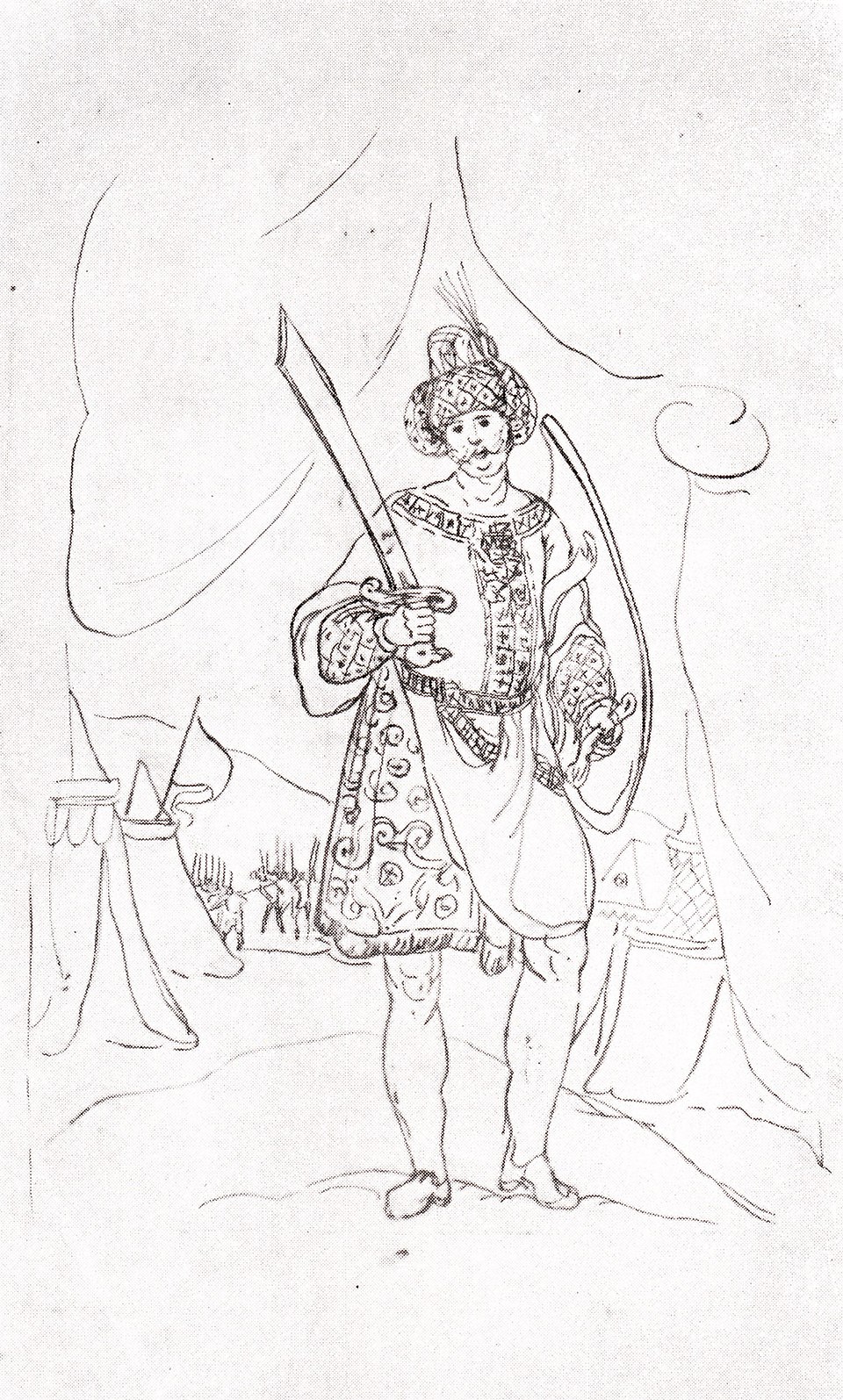
Rostom of Kartli
King of Kartli · Vali of Kartli
1565 – 1658
- Born
- 1565
- Died
- 1658
- House
- Bagrationi
Biography
Rostom, king of Kartli from 1633 to 1658, was a Muslim Bagrationi raised at the Safavid court who gave eastern Georgia a quarter century of peace at the price of acknowledged Persian suzerainty. Born about 1565 in Isfahan, he was the illegitimate son of David XI, the Daud Khan who had ruled Tbilisi for the shah, and a concubine. When his father defected to the Ottomans in 1579 the boy was taken by the Persians and grew up a Muslim at court. About 1612 the Georgian general Giorgi Saakadze befriended him and introduced him to Shah Abbas I; by 1618 he was darugha, or prefect, of Isfahan, a post he kept for life. As commander of the royal guard from 1629 he secured the accession of Shah Safi and received the name Rostam Khan. In 1632 Safi named him wali of Gurjistan and sent him with an army against Teimuraz I, king of Kartli and Kakheti. Rostom entered Tbilisi in February 1633 and had himself crowned in a Christian ceremony at Anchiskhati in 1634. His first wife, Ketevan Abashishvili, died in 1633; his marriage to Mariam Dadiani, sister of Levan II Dadiani of Mingrelia, dated variously between 1633 and 1638, brought western Georgia into the Persian orbit and blocked Russian influence there. Plots and revolts followed, including an assassination attempt in 1635 and a civil war with the great nobles that lasted to 1642, when the catholicos Evdemoz was implicated and executed. Rostom allowed Teimuraz to hold Kakheti as his vassal until 1648, then annexed it and ruled it until 1656. He rebuilt Tbilisi with a new palace, restored the Narikala citadel, built the Metekhi bridge and the citadel of Gori, and restored Svetitskhoveli and Alaverdi, while reshaping court offices on Persian lines. Childless, he adopted Luarsab, a Bagrationi of the Mukhrani branch, in 1639; after Luarsab died in a hunting accident in 1652, he adopted Vakhtang, prince of Mukhrani, in 1653. Rostom died on 17 November 1658 and was buried at Qom. Vakhtang V succeeded him. Historians still debate whether he ended Kartli's independence or preserved its church and institutions under the only protection available; from his accession until 1744 every king of Kartli was a Muslim appointed by the shah.
Updated September 2026 · How we research
Connections across houses
Place Rostom of Kartli in the wider world of ruling houses.
Recommended Reading
Affiliate disclosure: the links below go to Amazon searches. As an Amazon Associate, Dynastica earns from qualifying purchases.