Carolingian
Frankish Empire / Holy Roman Empire · 751 – 987
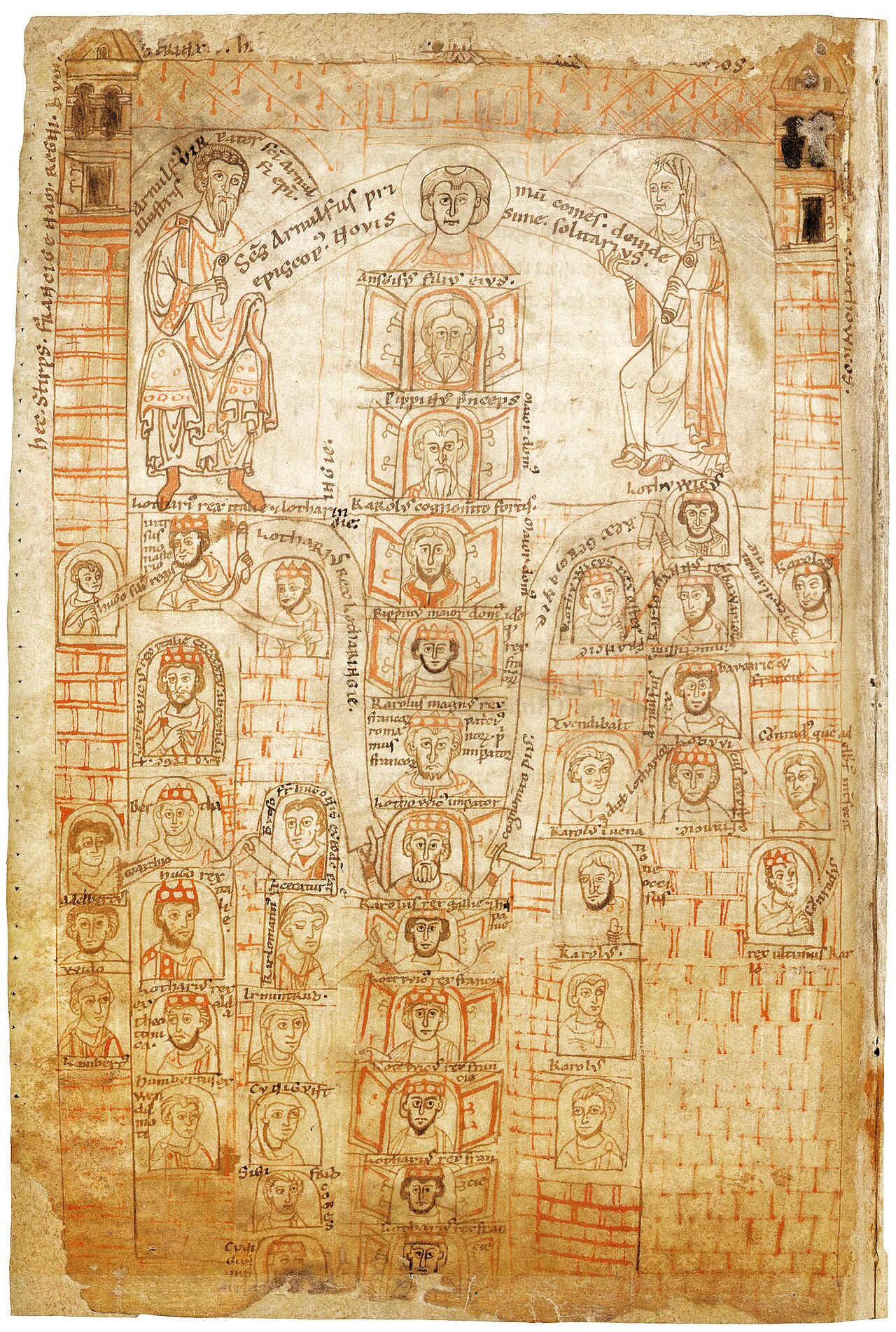
Overview
The Carolingian dynasty ended the Merovingian rule of the Franks in 751 and held the imperial crown of the West, with brief interruptions, until 887. Their rise was the work of three generations of mayors of the palace — court officials whose constitutional position had been ceremonial but who, under Pepin of Herstal, Charles Martel, and Pepin the Short, accumulated such overwhelming military and territorial power that the Merovingian kings became functionally irrelevant. In 751 Pepin the Short asked Pope Zachary whether it would not be better for the man who actually ruled the Franks to also wear the crown; the Pope agreed, the last Merovingian was deposed and tonsured, and Pepin became the first Carolingian king.
His son Charlemagne (768–814) is the dominant figure of the entire early medieval period. In a forty-six-year reign he conquered the Lombards, the Saxons, the Bavarians, and most of central Europe; founded an empire larger than anything seen in the West since Rome; was crowned Emperor of the Romans by Pope Leo III on Christmas Day 800, formally reviving the imperial title in the Latin West; and inaugurated the Carolingian Renaissance, the first systematic recovery of classical learning in five centuries. The political and cultural framework of medieval Europe was largely his creation.
The empire proved indivisible only as long as Charlemagne lived. His son Louis the Pious inherited it intact but spent his reign tangled in civil wars among his own sons over its eventual division. The Treaty of Verdun in 843 settled the question by tripartition: Lothair I retained the imperial title and a long, narrow Middle Francia stretching from the Low Countries to Italy; Louis the German received East Francia (the kernel of medieval Germany); Charles the Bald received West Francia (the kernel of France). The borders sketched at Verdun shaped European politics for the next millennium.
The senior Carolingian line collapsed in West Francia in 987 when Louis V died childless and the magnates elected the Robertian Hugh Capet king. The East Frankish branch had already given way to the Ottonian Saxons in 919. But the Carolingian genealogical legacy is uniquely durable: nearly every later European royal house traces ancestry to Charlemagne through cadet branches, female lines, or both. The Capetian, Plantagenet, Habsburg, and Wittelsbach houses — and through them most of the reigning European monarchs of the modern period — descend from him.
Updated May 2026 · How we research
Succession of rulers
- 1.Pepin the Shortr. 751 – 768
- 2.Charlemagner. 768 – 814
- 3.Louis the Piousr. 814 – 840
- 4.Lothair Ir. 817 – 855
- 5.Louis the Germanr. 843 – 876
- 6.Charles the Baldr. 843 – 877
- 7.Louis II the Stammererr. 877 – 879
- 8.Charles the Fatr. 881 – 888
- 9.Charles the Simpler. 898 – 922
- 10.Louis IV d'Outremerr. 936 – 954
- 11.Lothair of Francer. 954 – 986
- 12.Louis Vr. 986 – 987
Rulers of the Carolingian in order of accession.
Lineage
13 figures- Charles Martel688 – 741
- Pepin the Short714 – 768
- Charlemagne742 – 814
- Louis the Pious778 – 840
- Lothair I795 – 855
- Louis the German804 – 876
- Charles the Bald823 – 877
- Louis II the Stammerer846 – 879
- Charles the Simple879 – 929
- Louis IV d'Outremer920 – 954
- Lothair of France941 – 986
- Louis V967 – 987
- Charles the Fat839 – 888
All figures
- Charles Martel688 – 741
- Pepin the Short714 – 768
- Charlemagne742 – 814
- Louis the Pious778 – 840
- Lothair I795 – 855
- Louis the German804 – 876
- Charles the Bald823 – 877
- Charles the Fat839 – 888
- Louis II the Stammerer846 – 879
- Charles the Simple879 – 929
- Louis IV d'Outremer920 – 954
- Lothair of France941 – 986
- Louis V967 – 987
Related events
On Christmas Day 800, Pope Leo III crowned Charlemagne emperor of the Romans in St. Peter's Basilica. The coronation revived the imperial dignity in the Latin West for the first time since 476 and bound the Frankish royal line to Rome and to the papacy — relationships that would define European politics for the next thousand years.
Three-way partition of the Carolingian Empire among the surviving sons of Louis the Pious after three years of civil war. Lothair I retained the imperial title and a long, narrow Middle Francia stretching from the Low Countries through Burgundy into Italy. Louis the German received East Francia, the kernel of medieval Germany; Charles the Bald received West Francia, the kernel of France. The borders sketched in 843 shaped European politics for the next millennium.
See also
Same region
- Khosroid
Iberia (Caucasus) · 580 – 786
- Khazar
Caspian Steppe / Eurasia · 650 – 969
- Umayyad Caliphate
Syria / Damascus / Spain · 661 – 750
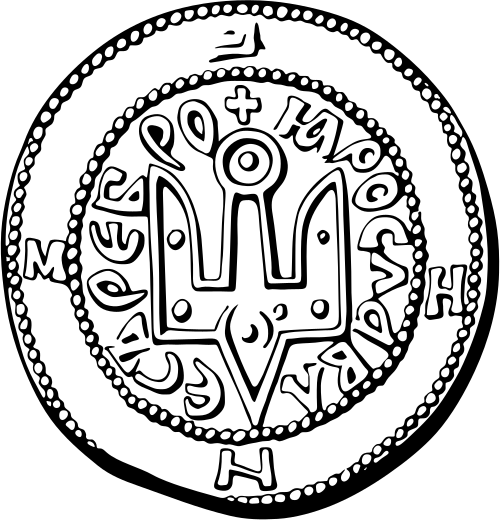 Rurikid
Russia / Eastern Europe · 862 – 1610
- Argyros
Byzantium / Anatolia · 870 – 1056
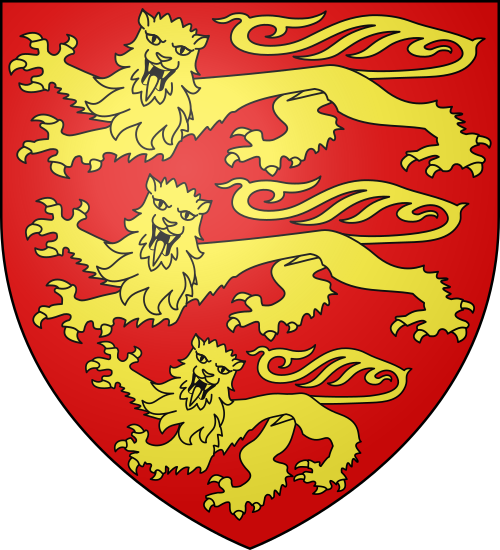 Plantagenet
England · 1154 – 1485
Same era
- Khosroid
Iberia (Caucasus) · 580 – 786
- Tang Dynasty
Imperial China · 618 – 907
- Khazar
Caspian Steppe / Eurasia · 650 – 969
- Umayyad Caliphate
Syria / Damascus / Spain · 661 – 750
 Abbasid Caliphate
Middle East / Mesopotamia · 750 – 1258
 Bagrationi
Georgia (Caucasus) · 780 – 1810