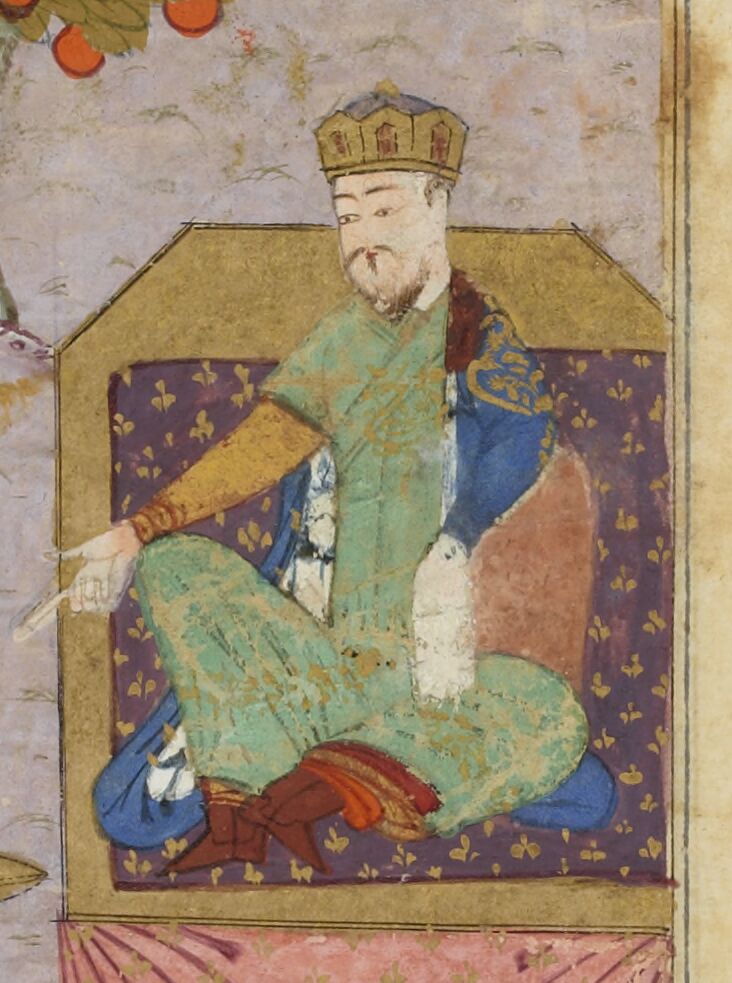
Güyük Khan
Гүюг хаан
Great Khan · Khagan of the Mongol Empire
1206 – 1248
- Born
- 1206
- Died
- 1248
- Reign
- 1246 – 1248
- House
- Mongol Empire
Biography
Güyük Khan (1206-1248) ruled the Mongol Empire as its third great khan from 1246 to 1248, one of the shortest reigns in the dynasty's history. He was the eldest son of Ögedei Khan and Töregene Khatun and a grandson of Genghis Khan, belonging to the Ögedeid branch of the imperial family that held the great khanate before it passed to the descendants of Tolui.
He served in the campaigns against the Jin dynasty in north China and then in the great western expedition of the late 1230s, which carried Mongol arms through the Volga region and the Russian principalities. During that campaign he quarreled openly with its senior commander, his cousin Batu of the Jochid line, reportedly over precedence at a victory banquet; Ögedei recalled his son in anger. The feud between Güyük and Batu — heir of Jochi and effective founder of what became the Golden Horde — shadowed the rest of his life and the politics of the whole empire.
Ögedei died in 1241, and only after nearly five years of regency under Güyük's mother Töregene did a kurultai confirm him as great khan in 1246. The enthronement near Karakorum drew an extraordinary gathering of subject rulers and envoys, among them the Franciscan friar John of Plano Carpini, sent by Pope Innocent IV. Güyük's surviving reply to the pope, demanding the submission of Christendom, is one of the best-known documents of the early Mongol Empire. As ruler he reversed several of his mother's appointments, restored experienced administrators such as Mahmud Yalavach, ordered the execution of her favorite Fatima, and intervened in the affairs of the Chagatai ulus by installing Yesü Möngke as its khan.
In 1248 Güyük moved westward from Mongolia with a substantial force, officially for his health, though contemporaries suspected a reckoning with Batu. He died on the journey, in Central Asia, before any confrontation took place. His widow Oghul Qaimish assumed the regency, but the Ögedeid hold on the empire was broken: with Batu's backing, the throne passed in 1251 to Möngke of the Toluid line. Güyük's descendants were sidelined in the purges that followed, and supreme power never returned to his branch, which was later largely absorbed into the orbit of the Chagatai khans and the rebel prince Qaidu.
Updated June 2026 · How we research
Connections across houses
Place Güyük Khan in the wider world of ruling houses.
Recommended Reading
Affiliate disclosure: the links below go to Amazon searches. As an Amazon Associate, Dynastica earns from qualifying purchases.