Mongol Empire
Mongol Empire / Eurasian Steppe · 1206 – 1368
Overview
The Mongol Empire was the largest contiguous land empire in human history. It was built in a single generation. At his accession as Great Khan in 1206 Genghis Khan ruled the unified Mongol tribes from the Altai to the Khingan range — perhaps a million subjects on the high steppe. At his death in 1227 he had added the Tangut, Jin, and Khwarezmian empires to his dominions. Under his sons and grandsons the conquests continued: Korea, Russia, Persia, Mesopotamia, the Levant, all of China, parts of Eastern Europe. By 1279 the empire stretched from the Pacific coast of Korea to the Carpathian Mountains and ruled perhaps a hundred million people.
The Mongol political system blended Chinggisid descent (only the descendants of Genghis through his chief wife Borte counted as imperial princes) with the older Inner Asian model of confederated tribes under elected great khans. The four khanate division formalized in the 1260s — the Yuan dynasty in China under Kublai Khan, the Ilkhanate in Persia under Hulagu, the Chagatai Khanate in Central Asia, and the Golden Horde over Russia and the western steppe — was supposed to operate under the symbolic supremacy of the Great Khan, but by the early fourteenth century each khanate was effectively independent and the unified empire ended in practice.
The Mongol conquests were extraordinarily destructive. Modern estimates put the death toll of the campaigns from Genghis through his immediate successors at thirty to fifty million people — perhaps a tenth of the world population of the early thirteenth century. The sack of Baghdad in 1258 destroyed the Abbasid Caliphate and burned the libraries of the great Islamic intellectual capital; the campaigns in Khwarezm depopulated whole provinces; the Mongol invasions of Russia produced the Tatar Yoke that shaped Russian statehood for the next two and a half centuries. Where the Mongols left intact states they left them transformed.
The genealogical legacy of Genghis Khan is the most demographically remarkable in human history. A 2003 study found that approximately eight percent of the male population of the territories the Mongols once ruled — roughly 0.5 percent of all living men globally — carry a Y-chromosome haplotype traced to a single male ancestor from the early thirteenth century, almost certainly Genghis himself or a close male relative. No other historical figure has documented genetic descent on remotely comparable scale.
Updated May 2026 · How we research
Succession of rulers
- 1.Genghis Khanr. 1206 – 1227
- 2.Chagatai Khanr. 1226 – 1242
- 3.Ögedei Khanr. 1229 – 1241
- 4.Töregene Khatunr. 1241 – 1246
- 5.Güyük Khanr. 1246 – 1248
- 6.Möngke Khanr. 1251 – 1259
- 7.Kublai Khanr. 1260 – 1294
- 8.Toghon Temürr. 1333 – 1368
Rulers of the Mongol Empire in order of accession.
Lineage
14 figures- Borte1161 – 1230
- Genghis Khan1162 – 1227
- Jochi1182 – 1227
- Batu Khan1207 – 1255
- Chagatai Khan1183 – 1242
- Ögedei Khan1186 – 1241
- Güyük Khan1206 – 1248
- Tolui1191 – 1232
- Möngke Khan1209 – 1259
- Kublai Khan1215 – 1294
- Hulagu Khan1218 – 1265
- Töregene Khatun1185 – 1246
- Sorghaghtani Beki1190 – 1252
- Toghon Temür1320 – 1370
All figures
- Borte1161 – 1230
- Genghis Khan1162 – 1227
- Jochi1182 – 1227
- Chagatai Khan1183 – 1242
- Töregene Khatun1185 – 1246
- Ögedei Khan1186 – 1241
- Sorghaghtani Beki1190 – 1252
- Tolui1191 – 1232
- Güyük Khan1206 – 1248
- Batu Khan1207 – 1255
- Möngke Khan1209 – 1259
- Kublai Khan1215 – 1294
- Hulagu Khan1218 – 1265
- Toghon Temür1320 – 1370
Related events
After a twelve-day siege, the Mongol army of Hulagu Khan stormed Baghdad on 10 February 1258. They sacked the city for a week, butchering perhaps two hundred thousand inhabitants and throwing the books of the great libraries into the Tigris until, the chronicles say, the river ran black with ink. The last Abbasid caliph, al-Musta'sim, was rolled in a carpet and trampled to death by horses, ending the caliphate that had ruled the Islamic east for half a millennium.
Also involved: Abbasid Caliphate (destroyed)
The campaign that ended at Ain Jalut began with the westward offensive of Hulagu Khan, brother of the great khan Möngke, who had been charged with subduing the Islamic lands. In 1258 his army sacked Baghdad and put the last reigning Abbasid caliph, al-Musta'sim, to death, extinguishing a caliphate that had stood for five centuries. In early 1260 the Mongols took Aleppo by storm and received the surrender of Damascus. The Ayyubid ruler of Syria, an-Nasir Yusuf, abandoned his capital without a battle, fled south, and was captured; he was later killed in Mongol custody. Ayyubid Syria had ceased to exist as a power. Hulagu then withdrew the bulk of his army eastward, a movement usually connected to the death of Möngke in 1259 and the succession struggle that followed, though logistical limits on pasturing a large cavalry army in Syria may have weighed as heavily. He left a force of perhaps ten to twenty thousand under the Naiman commander Kitbuqa and sent envoys to Cairo demanding submission. The Mamluk sultan Qutuz executed the envoys and marched into Palestine, joined by the émigré commander Baybars. The armies met on 3 September 1260 at Ain Jalut, the "Spring of Goliath," in the Jezreel Valley of Galilee. The Mamluks, fielding numbers at least equal to the Mongol force, drew Kitbuqa's troops forward with a feigned retreat and enveloped them; Kitbuqa was captured and executed. The defeat was modest in scale but large in consequence: it was the first major battlefield reverse of the Mongol westward expansion not soon avenged, it fixed the Euphrates as the rough frontier between the Mamluk sultanate and Hulagu's Ilkhanate, and it delivered Muslim Syria to the Mamluks. Qutuz was assassinated on the homeward march, and Baybars took the throne.
Also involved: Ayyubid Dynasty (Syrian branch destroyed in the preceding Mongol invasion), Abbasid Caliphate (Extinguished at Baghdad in 1258, during the same Mongol offensive)
Kublai Khan proclaimed the Yuan dynasty on 18 December 1271, adopting a Chinese-style reign name and presenting his Mongol regime to his subjects as the legitimate successor to the Chinese imperial tradition. The Southern Song dynasty held out for another eight years before its final collapse at Yamen, completing the first foreign conquest of all China.
Also involved: Yuan (founded)
See also
Same region
Same era
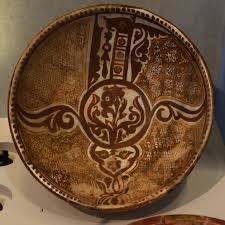 Abbasid Caliphate
Middle East / Mesopotamia · 750 – 1258
 Bagrationi
Georgia (Caucasus) · 780 – 1810
- Abkhazia
Georgia / Caucasus · 786 – 1008
- Ossetia
North Caucasus · 800 – 1239
- Khmer Empire
Southeast Asia / Cambodia · 802 – 1431
- Arcruni
Armenia / Caucasus · 830 – 1021