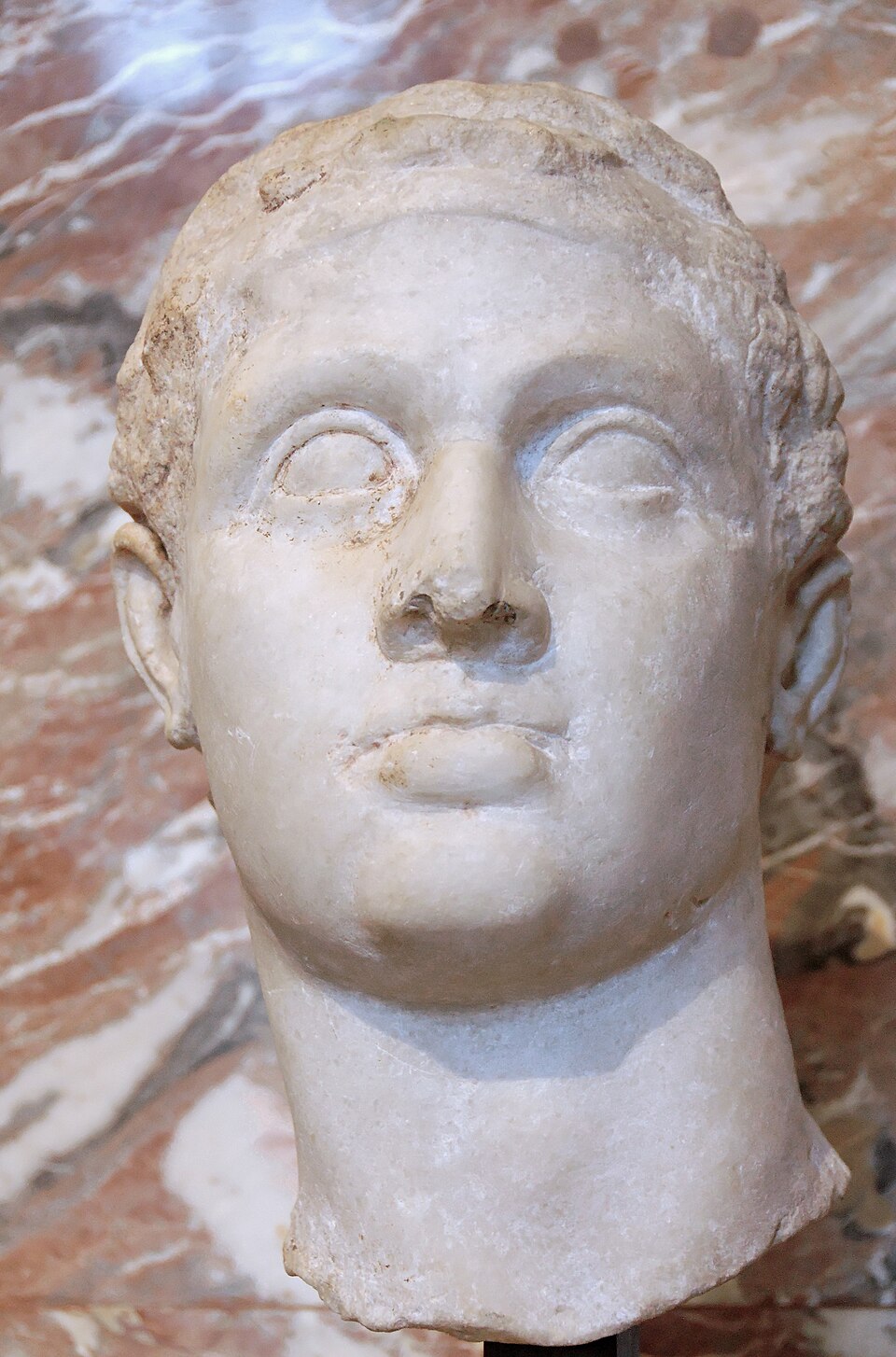
Ptolemy XII Auletes
Pharaoh of Egypt · The Flute Player
117 BC – 51 BC
- Born
- 117 BC
- Died
- 51 BC
- House
- Ptolemaic Dynasty
Biography
Few Hellenistic monarchs depended as openly on Roman favour as Ptolemy XII, nicknamed Auletes, the flute-player, for his devotion to playing the aulos. Born around 117 BC, he was a son of Ptolemy IX Soter II, though his mother's identity is uncertain and his legitimacy was questioned in antiquity. He came to the throne in 80 BC after the brief reign and murder of Ptolemy XI left the dynasty without a clear heir.
The central problem of his reign was Rome. A purported will of an earlier Ptolemy bequeathing Egypt to the Roman people hung over the kingdom, and annexation was repeatedly discussed in the Senate. Ptolemy XII therefore spent lavishly to purchase security: in 59 BC he paid an enormous sum, reported at six thousand talents, to Julius Caesar and Pompey to obtain formal recognition as a friend and ally of the Roman people. The financial burden fell on his subjects, and his prestige suffered further when Rome annexed Cyprus in 58 BC, driving his brother, its ruler, to suicide, without protest from Alexandria's king.
The Alexandrians expelled him that same year. He withdrew to Rome to lobby for restoration, while his daughter Berenice IV ruled in Egypt. After years of intrigue and the promise of further vast payments, the Roman governor of Syria, Aulus Gabinius, marched on Egypt in 55 BC and restored him by force; the cavalry of the expedition was commanded by the young Marcus Antonius. Reinstalled, Ptolemy executed Berenice IV and spent his final years repaying his Roman creditors, notably the financier Rabirius Postumus, who was placed in charge of Egypt's revenues.
Ptolemy XII died in 51 BC, leaving the throne jointly to his daughter Cleopatra VII and his elder son Ptolemy XIII, who were expected to rule together in the manner of Ptolemaic sibling consorts, with Rome named as guardian of the arrangement. The settlement quickly collapsed into civil war between the siblings, drawing Caesar himself to Alexandria. Though often dismissed as weak, Auletes preserved his dynasty's independence for a generation by treating Roman politicians as a resource to be bought, a strategy his famous daughter would pursue by other means.
Updated June 2026 · How we research
Connections across houses
Place Ptolemy XII Auletes in the wider world of ruling houses.
Recommended Reading
Affiliate disclosure: the links below go to Amazon searches. As an Amazon Associate, Dynastica earns from qualifying purchases.