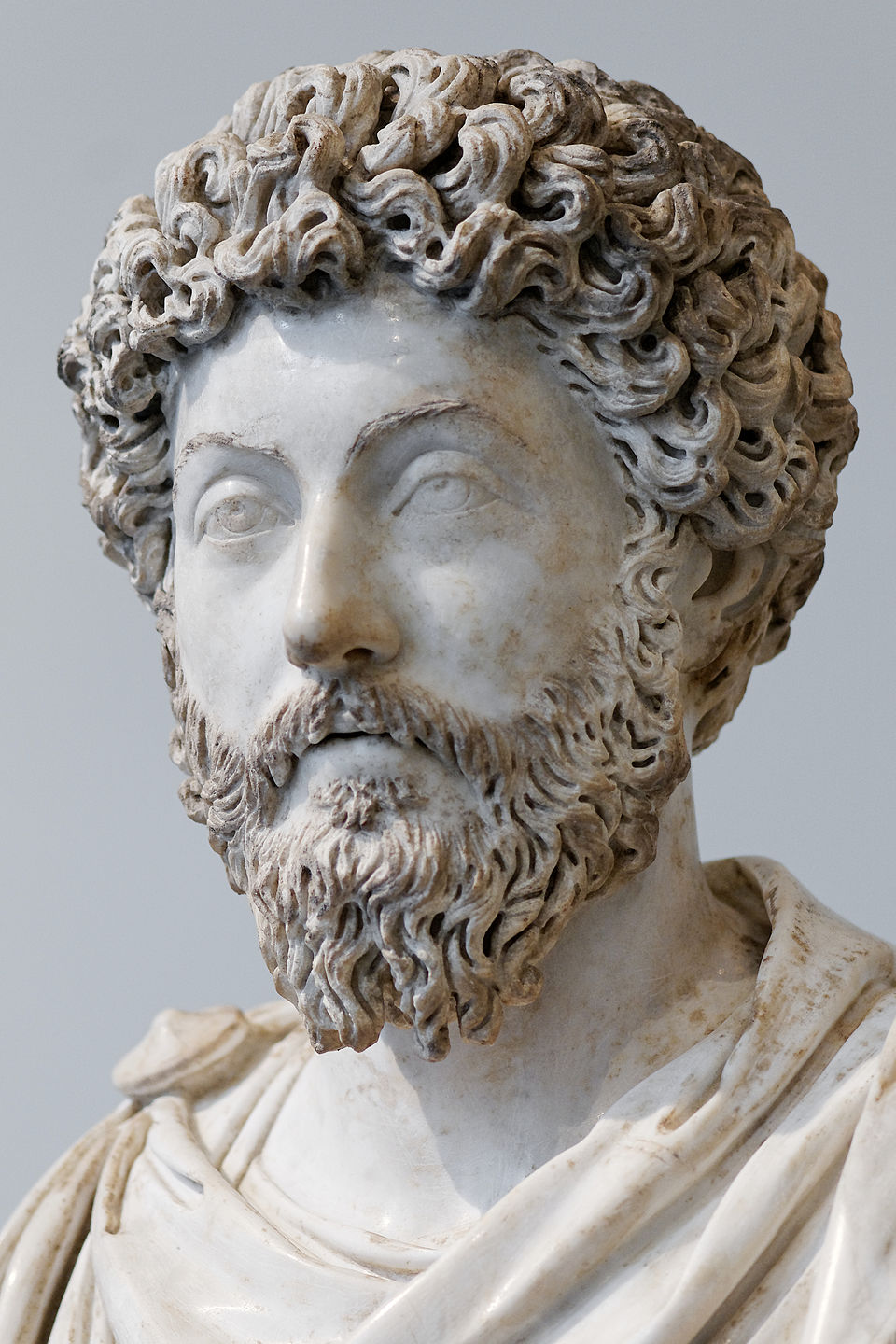
Marcus Aurelius
Imperator Caesar Marcus Aurelius Antoninus Augustus
Imperator · Princeps · Philosopher-Emperor
121 – 180
- Born
- 121
- Died
- 180
- Reign
- 161 – 180
- House
- Roman Empire
Biography
Remembered both as ruler and as author of the Meditations, Marcus Aurelius governed the Roman Empire from AD 161 to 180 through a period of war and plague. He was born in Rome in 121 to a distinguished senatorial family of Spanish origin. The emperor Hadrian took an interest in the boy, and in 138 arranged for his successor Antoninus Pius to adopt both Marcus and the younger Lucius Verus, fixing the imperial succession by adoption across two generations. Marcus was educated by leading rhetoricians and philosophers, including Fronto, whose correspondence with him survives, and was drawn early to Stoicism. In 145 he married Faustina the Younger, daughter of Antoninus Pius, binding the adoptive succession with a marriage tie; the couple had at least thirteen children, few of whom survived to adulthood.
On Antoninus's death in 161 Marcus insisted that Lucius Verus be made co-emperor with him, the first formal sharing of the imperial office. Verus took nominal command of the war against Parthia (161-166), which ended in Roman victory, but the returning armies brought back the Antonine plague, an epidemic that ravaged the empire for years and severely strained manpower and finances.
From the late 160s the northern frontier collapsed into the Marcomannic Wars, as the Marcomanni, Quadi, Sarmatians, and other peoples crossed the Danube, at one point raiding into northern Italy. Marcus spent most of his remaining years on campaign along the river. Verus died in 169, leaving him sole ruler until he raised his son Commodus to co-emperor in 177. In 175 the eastern general Avidius Cassius proclaimed himself emperor on a false report of Marcus's death; the revolt collapsed within months.
During the Danubian campaigns Marcus composed the Meditations, private reflections in Greek on duty, mortality, and self-discipline in the Stoic tradition, never intended for publication and now his most enduring legacy. He died at or near Vindobona (Vienna) in March 180. The succession of Commodus, his natural son, ended the sequence of adoptive successions that had given Rome its emperors since 96, and later historians marked his death as the close of the empire's most stable era.
Updated June 2026 · How we research
Connections across houses
Place Marcus Aurelius in the wider world of ruling houses.
Recommended Reading
Affiliate disclosure: the links below go to Amazon searches. As an Amazon Associate, Dynastica earns from qualifying purchases.