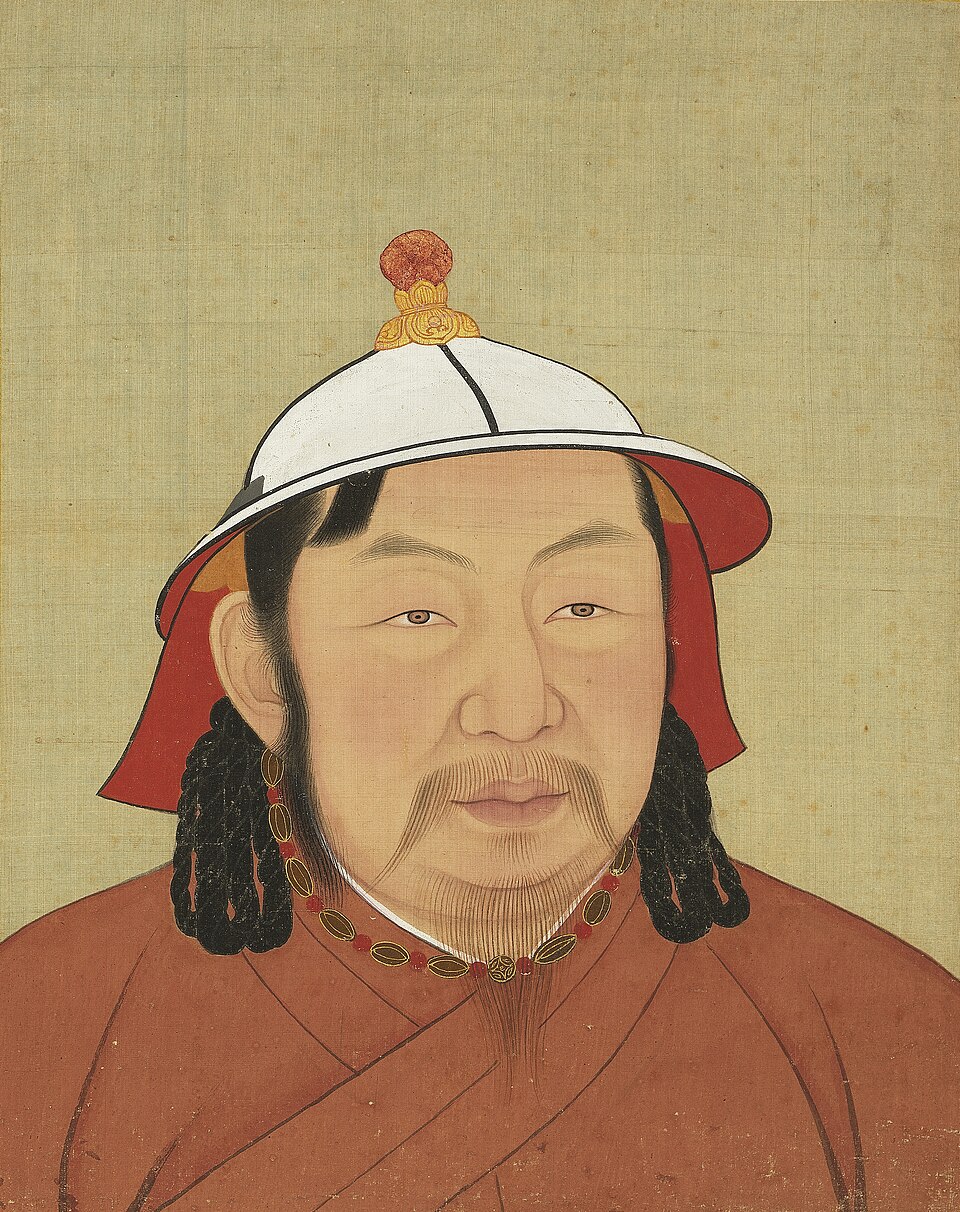
Buyantu Khan
愛育黎拔力八達
Emperor of the Yuan · Khagan of the Mongols
1285 – 1320
- Born
- 1285
- Died
- 1320
- Reign
- 1311 – 1320
- House
- Yuan
Biography
Buyantu Khan, the emperor Ayurbarwada, brought the Confucian examination system back to China after a lapse of decades, the act for which his reign is chiefly remembered. Born in 1285, he was the younger son of Darmabala and Dagi, a great-grandson of Kublai Khan through the line of Zhenjin, and the brother of Khayishan, Külüg Khan. Unlike most Yuan princes he received a sustained Chinese education, studying under the Confucian scholar Li Meng, whose influence shaped his view of government.
His path to power began with the succession crisis of 1307. When Temür Khan died without an heir, Ayurbarwada and his mother seized the capital and eliminated the rival candidate Ananda, clearing the way for his elder brother Khayishan, who held the army in Mongolia, to take the throne. In return Ayurbarwada was made heir apparent, under a pact that the crown would alternate thereafter between the two brothers' lines. He succeeded peacefully on Khayishan's death in 1311, the first orderly transfer of the Yuan throne without an electoral assembly or armed contest.
As emperor, Ayurbarwada moved Yuan government toward Chinese bureaucratic norms. He purged some of his brother's costly innovations, abolishing Külüg Khan's new currency and offices, and promoted scholar-officials. His best-known measure came in 1313, when he decreed the restoration of the civil service examinations, suspended since the Song and Jin dynasties fell; the first examinations were held in 1315, based on the Four Books with the commentaries of Zhu Xi, an arrangement with a long subsequent history in Chinese institutions. Quotas reserved places for Mongols and western Asians alongside Chinese candidates. He also sponsored translations of Chinese classics and administrative texts into Mongolian.
His reign had pronounced limits. His mother, the empress dowager Dagi, and her favored minister Temüder wielded great influence, and Temüder's corruption went largely unchecked. Most consequentially, Ayurbarwada broke the succession compact of 1307: instead of naming Khayishan's son Khoshila heir, he designated his own son Shidebala, while Khoshila was sent away to the far west. The decision purchased a smooth succession in 1320, when Ayurbarwada died at thirty-five, but it stored up the grievances that produced the succession violence of the following decade.
Updated June 2026 · How we research
Connections across houses
Place Buyantu Khan in the wider world of ruling houses.
Recommended Reading
Affiliate disclosure: the links below go to Amazon searches. As an Amazon Associate, Dynastica earns from qualifying purchases.