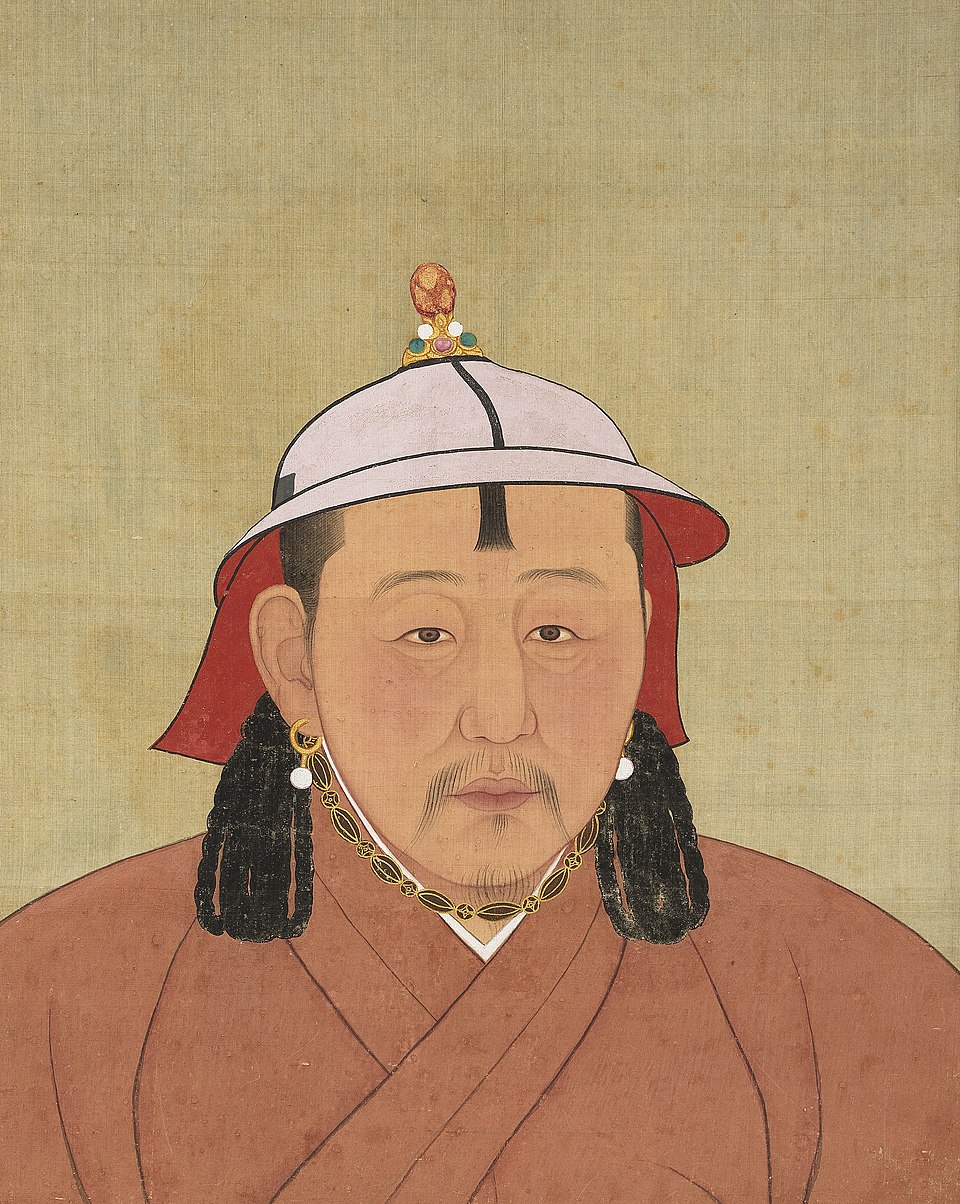
Külüg Khan
海山
Emperor of the Yuan · Khagan of the Mongols
1281 – 1311
- Born
- 1281
- Died
- 1311
- Reign
- 1307 – 1311
- House
- Yuan
Biography
Külüg Khan, known in Chinese sources by his temple name Wuzong and personally as Khayishan, owed his throne to an army and a brother. Born in 1281, he was a son of Darmabala and Dagi of the Khunggirad, a grandson of Kublai Khan's designated heir Zhenjin, and a great-grandson of Kublai himself. As a young man he was sent to Mongolia, where he spent years commanding Yuan forces against the rival Mongol power of Kaidu, ruler of the Ögedeid domains in Central Asia; Kaidu's death after fighting in 1301 ended the most serious threat to Yuan authority in the steppe.
The succession crisis of 1307 made him emperor. Temür Khan, Kublai's successor, died in February of that year without a surviving son, and his widow Bulugan moved to install Ananda, a Muslim prince of the Tangut appanage. Khayishan's younger brother Ayurbarwada and their mother Dagi forestalled the plan with a coup in the capital, Dadu, arresting and later executing Ananda and his supporters. Khayishan then arrived from Mongolia at the head of his troops and took the throne at Shangdu in June 1307. The brothers reached a formal understanding: Ayurbarwada became heir apparent, on the agreement that the succession would afterward return to Khayishan's sons, alternating between the two lines.
His reign was brief and expensive. Külüg Khan rewarded his steppe commanders and the imperial clan with lavish grants, expanded the nobility, and multiplied government offices, straining a treasury already burdened. His administration issued a new and quickly devalued paper currency and undertook major construction, including a new city, Zhongdu, between Dadu and Shangdu. He patronized Buddhism generously, and in 1308 elevated the Confucian thinker Mencius's honors while showing little of his brother's interest in Chinese literati government.
Külüg Khan died in 1311, about thirty years old, and Ayurbarwada succeeded him as agreed. The compact between the lines, however, did not hold: Ayurbarwada's heirs displaced Khayishan's sons Khoshila and Tugh Temür, who were sidelined and exiled. Both eventually reached the throne in the violent successions of 1328–1329, so that the dynasty's later emperors all descended from Külüg Khan. His four-year reign exemplified the tension between steppe military politics and Chinese-style administration that ran through the Yuan dynasty.
Updated June 2026 · How we research
Connections across houses
Place Külüg Khan in the wider world of ruling houses.
Recommended Reading
Affiliate disclosure: the links below go to Amazon searches. As an Amazon Associate, Dynastica earns from qualifying purchases.