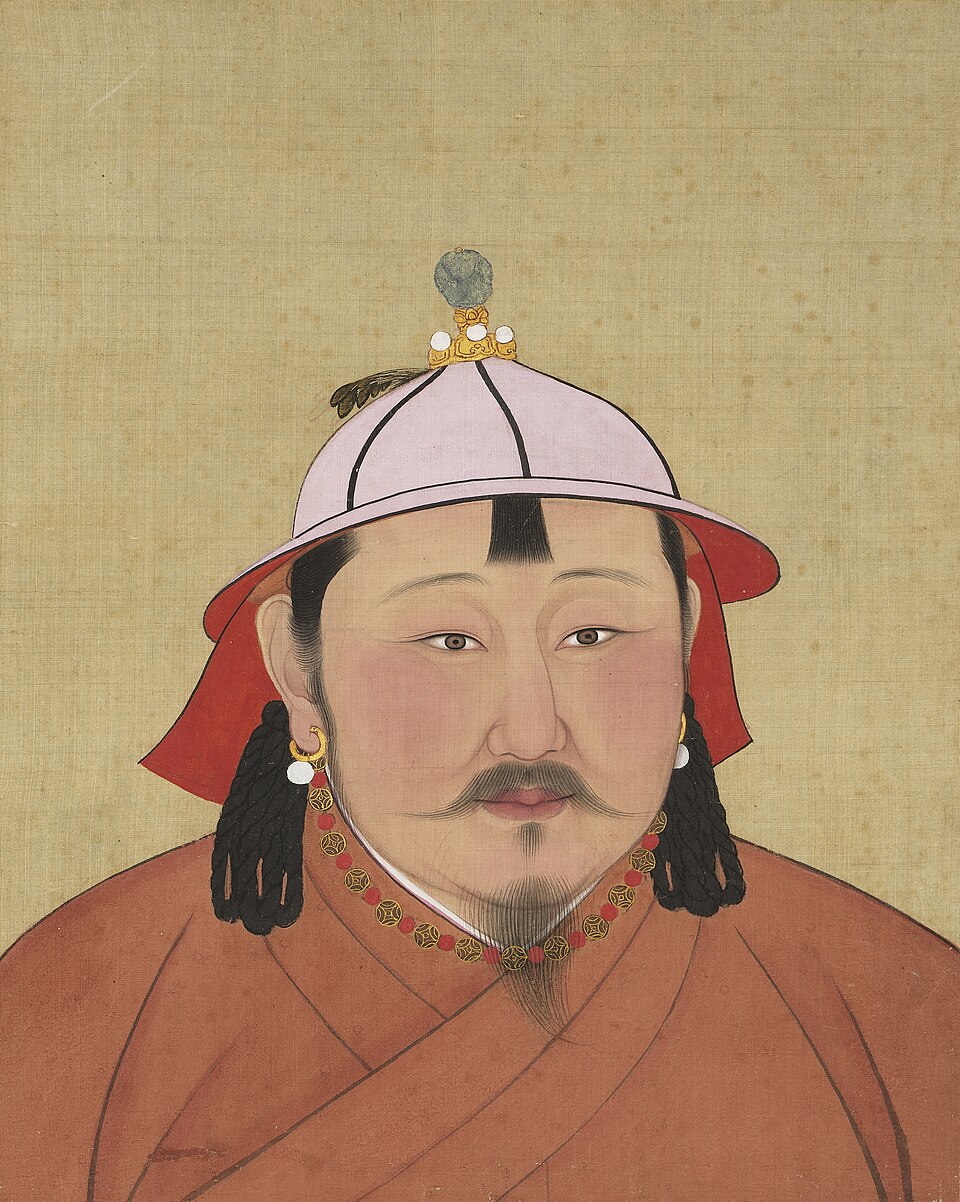
Temür Khan
テムル
Emperor of the Yuan · Khagan of the Mongols
1265 – 1307
- Born
- 1265
- Died
- 1307
- Reign
- 1294 – 1307
- House
- Yuan
Biography
When Kublai Khan died in 1294 after a thirty-four-year reign, the Yuan throne passed not to a son but to a grandson: Temür Khan (1265-1307), third son of the late crown prince Zhenjin. His succession marked the first transfer of power in the dynasty Kublai had founded, and it held. Temür ruled until 1307, a reign remembered chiefly for consolidation rather than conquest.
His path to the throne was contested within the family. Zhenjin had died in 1286, and at the assembly following Kublai's death Temür's claim was pressed against that of his elder brother Gammala. Backed by his mother Kökejin and by the veteran general Bayan, and reportedly favored for his command of the Chinggisid precedents recited on such occasions, Temür prevailed. Gammala accepted the outcome and was confirmed in his princely station guarding the dynastic homeland in Mongolia.
As emperor, Temür maintained his grandfather's institutions while abandoning his grandfather's most costly ambitions. He cancelled preparations for further expeditions against Japan and ended the inconclusive wars in Vietnam, accepting tributary relations with Dai Viet in place of occupation. Domestically he reduced some tax burdens and continued the mixed Mongol-Chinese administration Kublai had built, though the later years of the reign saw growing fiscal strain and the rising influence of his empress, Bulugan, as the emperor's health declined.
The signal achievement of his reign lay in relations among the descendants of Genghis Khan. For decades the Ögedeid prince Qaidu, master of much of Central Asia, had warred against the Yuan in alliance with Chagataid khans. Qaidu's death after a battle with Yuan forces in 1301 broke the coalition, and in 1304 a general peace was concluded: the rulers of the Chagatai ulus, the Ilkhanate in Persia, and the Golden Horde on the western steppe all acknowledged Temür's nominal supremacy as great khan. The reconciliation restored, at least in form, the unity of the Chinggisid world that had been broken since the 1260s, and envoys and trade moved among the khanates with renewed regularity.
Temür's only son, Deshou, died in 1306, and the emperor followed him in early 1307 without a designated heir, opening a succession struggle won by his nephew Khayishan. He was honored with the temple name Chengzong and is also known by his Mongolian title, Öljeytü Khan.
Updated June 2026 · How we research
Connections across houses
Place Temür Khan in the wider world of ruling houses.
Recommended Reading
Affiliate disclosure: the links below go to Amazon searches. As an Amazon Associate, Dynastica earns from qualifying purchases.