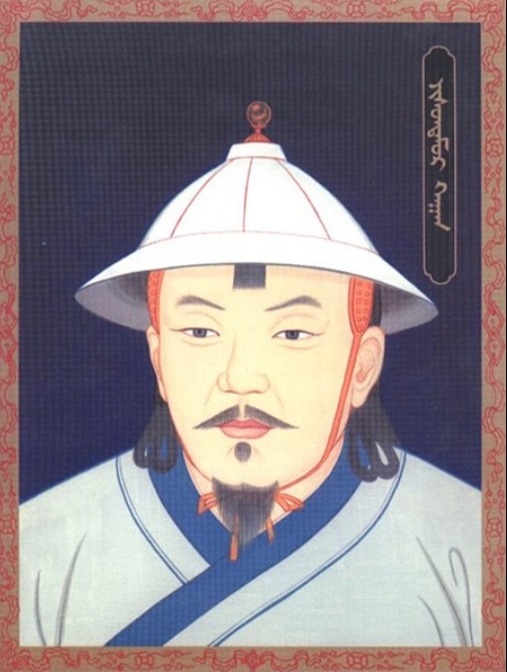
Yesün Temür
也孫鐵木兒
Emperor of the Yuan · Khagan of the Mongols
1293 – 1328
- Born
- 1293
- Died
- 1328
- Reign
- 1323 – 1328
- House
- Yuan
Biography
Yesün Temür came to the Yuan throne from the steppe, summoned by the murderers of his predecessor. Born in 1293, he was the son of Gammala, prince of Jin, and a grandson of Kublai Khan's heir Zhenjin, which made him a first cousin once removed of the emperor Gegeen Khan. On his father's death in 1302 he inherited the princedom of Jin and with it the guardianship of the Mongolian homeland and the great ordos of Genghis Khan near Karakorum, one of the most prestigious commands in the empire.
In 1323 the conspirators planning the assassination of Gegeen Khan at Nanpo informed Yesün Temür's camp of their intentions in advance, intending to offer him the throne. The extent of his foreknowledge and complicity has been debated since; the Yuan court's own records were later edited by hostile successors, and certainty is not possible. What is established is that after the emperor was killed, Yesün Temür was enthroned near the Kerulen River in Mongolia, and that within months he arrested and executed Tegshi and the other assassins, distancing his reign from the crime that had created it.
His government, conducted under the era name Taiding, was comparatively stable. He balanced the factions of the multiethnic Yuan elite, giving high office to Muslim financial administrators, most prominently Dawlat Shah, while maintaining the Confucian institutions of his predecessors, including the examinations, and patronizing Tibetan Buddhism. He kept the empire at peace abroad. The period was, however, marked by repeated floods, droughts, and earthquakes, which strained relief administration and were read by contemporaries as inauspicious.
Yesün Temür died at Shangdu, the summer capital, in August 1328, about thirty-five years old. His death undid his line. At Dadu the commander El Temür, a partisan of the sons of Külüg Khan, seized the capital and enthroned Tugh Temür, while Yesün Temür's young son Ragibagh was proclaimed emperor at Shangdu by the late ruler's ministers. The ensuing War of the Two Capitals ended within months in the defeat of the Shangdu side; Ragibagh disappeared, and Dawlat Shah was executed. The victors treated Yesün Temür's reign as illegitimate, denying him a temple name, which is why he is known to history by his era name, Taiding, and his Mongolian name alone.
Updated June 2026 · How we research
Connections across houses
Place Yesün Temür in the wider world of ruling houses.
Recommended Reading
Affiliate disclosure: the links below go to Amazon searches. As an Amazon Associate, Dynastica earns from qualifying purchases.