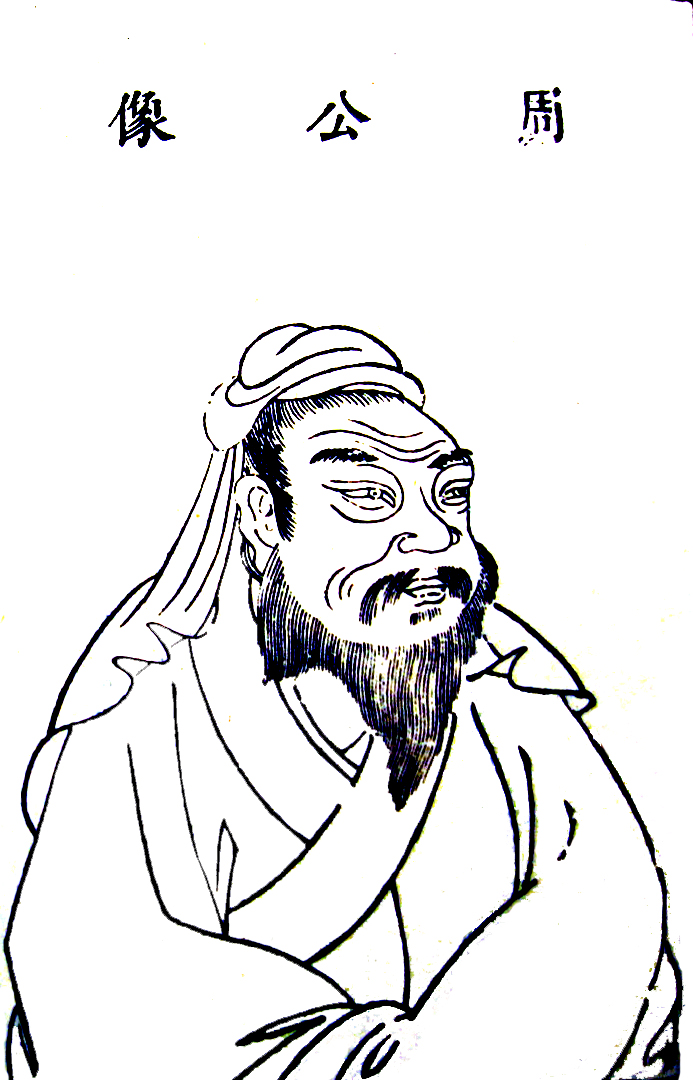
Dan, Duke of Zhou
d. 1035 BC
- Died
- 1035 BC
- House
- Zhou
Biography
For more than two millennia of Chinese political thought, Dan, Duke of Zhou (d. c. 1035 BC), served as the standard of the loyal minister: a royal brother who held supreme power as regent and surrendered it intact. A son of King Wen and younger brother of King Wu, the conqueror of the Shang, he belongs to the early Western Zhou period, for which evidence combines bronze inscriptions and portions of the Book of Documents with much later elaboration; the historical core of his career is generally accepted, but many famous details are products of tradition.
When King Wu died only a few years after the victory at Muye, the heir, King Cheng, was a minor, and the Duke of Zhou assumed the regency. The arrangement provoked the gravest crisis of the young dynasty: his brothers Guanshu and Caishu, stationed to supervise the old Shang territories, suspected him of usurpation and rebelled in concert with Wu Geng, son of the last Shang king. The duke's eastern campaigns, lasting by tradition three years, crushed the revolt, extended Zhou control deep into the east, and were followed by measures that defined the dynasty's structure: the resettlement of Shang populations, the enfeoffment of royal kinsmen over new regional states, and the building of a secondary capital at Luoyi (near modern Luoyang) to anchor the east.
Tradition further credits him with articulating the doctrine of the Mandate of Heaven — the argument, preserved in speeches in the Book of Documents, that Heaven transfers the right to rule from dynasties that fail in virtue — and with shaping Zhou ritual and institutions. After seven years he returned full authority to the adult King Cheng, an act later moralists regarded as his defining achievement.
Confucius, who came from the duke's old fief-state of Lu, ruled by the duke's descendants, looked to him as the supreme exemplar of the tradition he sought to restore, lamenting in the Analects that he no longer dreamed of the Duke of Zhou. Through this Confucian canonization, the duke became the archetype against which regents and ministers were measured throughout imperial history, invoked both sincerely and, by would-be usurpers, opportunistically.
Updated June 2026 · How we research
Connections across houses
Place Dan, Duke of Zhou in the wider world of ruling houses.
Recommended Reading
Affiliate disclosure: the links below go to Amazon searches. As an Amazon Associate, Dynastica earns from qualifying purchases.