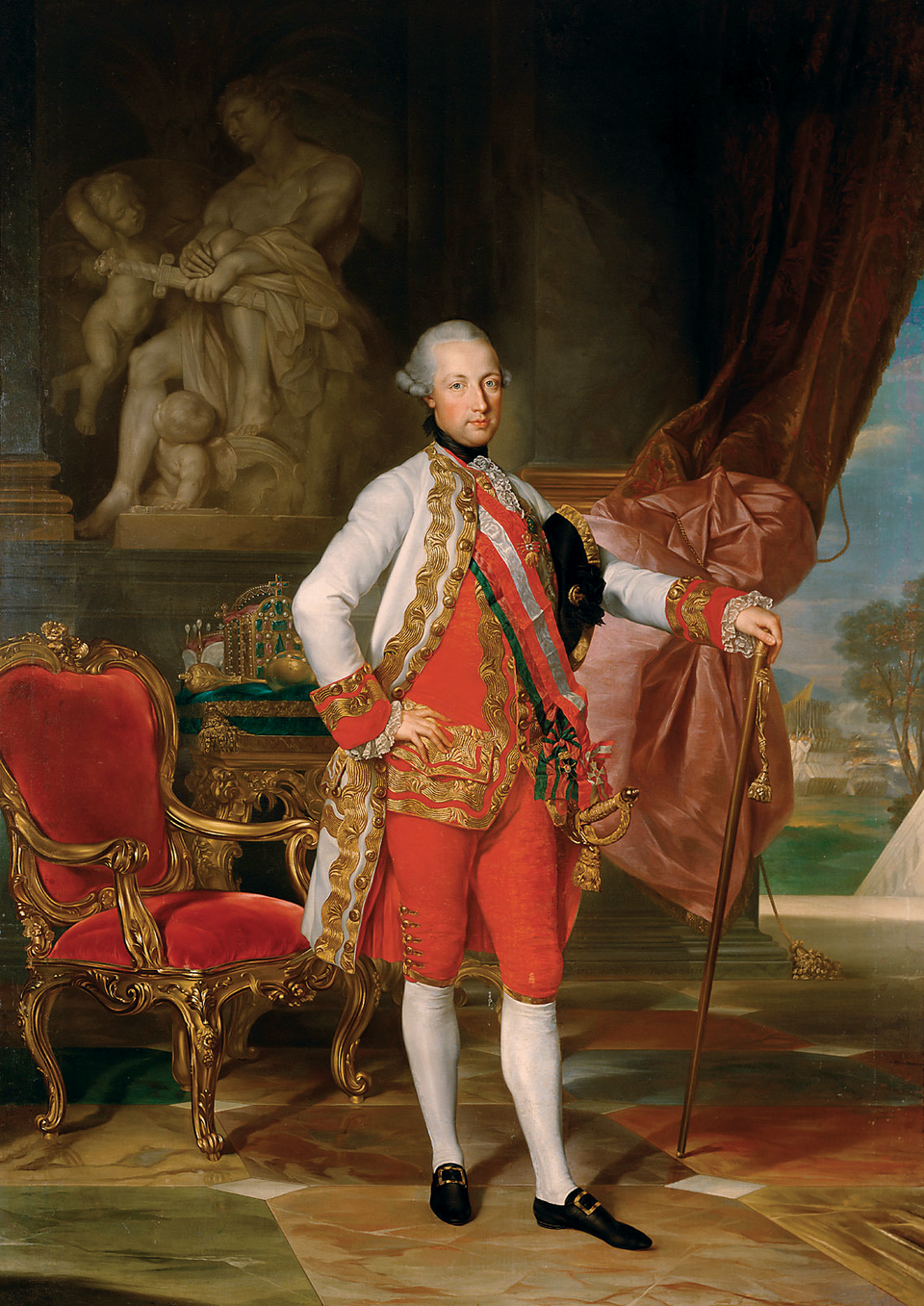
Joseph II
Joseph II.
Holy Roman Emperor · King of Bohemia · King of Hungary · Archduke of Austria
1741 – 1790
- Born
- 1741
- Died
- 1790
- Reign
- 1780 – 1790
- House
- Austrian Habsburgs
Biography
Few rulers of the eighteenth century attempted so much reform in so short a time as Joseph II (1741-1790). The eldest son of Maria Theresa and Emperor Francis I, he was the first ruler of the new house of Habsburg-Lorraine and an exemplar of what later historians called enlightened absolutism. On his father's death in 1765 he became Holy Roman Emperor and co-regent of the Habsburg monarchy with his mother, though she retained the decisive voice in most matters until her death in 1780.
His personal life was marked early by loss. His first wife, Isabella of Parma, to whom he was deeply attached, died in 1763; a second marriage, to Maria Josepha of Bavaria, was unhappy and brief. No child survived him, and the succession passed to his brother Leopold, Grand Duke of Tuscany.
Ruling alone from 1780, Joseph legislated at extraordinary speed. The Edict of Toleration of 1781 granted Protestants and Orthodox Christians limited freedom of worship, and further measures eased restrictions on Jews. The same year he abolished serfdom in the form of personal bondage in the Bohemian and Austrian lands. He dissolved contemplative monasteries and redirected their revenues to parishes, hospitals, and schools, subordinated the church to state supervision in a policy known as Josephinism, relaxed censorship, reformed the penal law, and pressed German as the language of administration throughout his diverse territories, including Hungary, where he pointedly declined to be crowned king.
His foreign policy was less successful. An attempt to exchange the Austrian Netherlands for Bavaria was blocked by Prussia, which had already frustrated him in the War of the Bavarian Succession (1778-1779). War against the Ottoman Empire from 1788, undertaken in alliance with Russia, strained finances and his health. By the late 1780s his centralizing measures had provoked open revolt in the Austrian Netherlands and dangerous resistance in Hungary, and shortly before his death he revoked most of his reforms for Hungary, the Edict of Toleration and the abolition of serfdom excepted. Joseph died in Vienna on 20 February 1790, aged forty-eight. His brother Leopold II restored calm by negotiation, but many Josephine institutions, particularly in church-state relations, outlasted both men by decades.
Updated June 2026 · How we research
Connections across houses
Place Joseph II in the wider world of ruling houses.
Recommended Reading
Affiliate disclosure: the links below go to Amazon searches. As an Amazon Associate, Dynastica earns from qualifying purchases.