Khosroid
Iberia (Caucasus) · 580 – 786
11 figures
Caliphates, Carolingians, the rise of new royal houses across Eurasia.
17 dynasties
The early medieval period is the formative age of most of the dynasties we now think of as canonically European. The Carolingian house in continental Europe, the Anglo-Saxon kings of Wessex who consolidated the English crown, the Bagrationi of Georgia, the Capetian Robertian ancestors in West Francia, the Tang and Song imperial houses of China, the Abbasid caliphate in Baghdad — all rose to dominance between roughly 600 and 1000. By the end of the period, the political map of Eurasia had been redrawn into shapes that lasted, in their dynastic essentials, until the seventeenth century.
Cross-dynasty connections in the early medieval are still relatively sparse compared to what would come later: long-distance royal marriages were rare and the great religious-cultural divides (Latin Christendom, Greek Christendom, Dar al-Islam, Confucian East Asia) operated as effective barriers to royal intermarriage. But the period laid the groundwork: the Carolingian princess Bertha of Holland married into the Capetians, the Byzantine princess Theophanu married Otto II of Saxony, and the Anglo-Saxon royal women who married into the early Norman and French houses transmitted English royal blood far enough across the continent to be claimed back, four centuries later, by the Tudor and Stuart kings of England.
Iberia (Caucasus) · 580 – 786
11 figures
Imperial China · 618 – 907
Often cited as the greatest imperial dynasty in ancient Chinese history, marking a golden age of cosmopolitan culture, poetry, military expansion, and the booming Silk Road trade.
5 figures
Caspian Steppe / Eurasia · 650 – 969
1 figure
Syria / Damascus / Spain · 661 – 750
The first hereditary Islamic dynasty, responsible for the rapid expansion of Arab rule from Spain to India.
2 figures
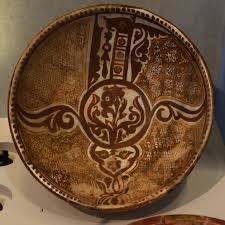
Middle East / Mesopotamia · 750 – 1258
The second great Islamic dynasty, which oversaw the "Golden Age of Islam" from their capital in Baghdad.
6 figures
Frankish Empire / Holy Roman Empire · 751 – 987
The Carolingian dynasty ended the Merovingian rule of the Franks in 751 and held the imperial crown of the West, with brief interruptions, until 887. Their rise was the work of three generations of mayors of the palace — court officials whose constitutional position had been ceremonial but who, under Pepin of Herstal, Charles Martel, and Pepin the Short, accumulated such overwhelming military and territorial power that the Merovingian kings became functionally irrelevant. In 751 Pepin the Short asked Pope Zachary whether it would not be better for the man who actually ruled the Franks to also wear the crown; the Pope agreed, the last Merovingian was deposed and tonsured, and Pepin became the first Carolingian king. His son Charlemagne (768–814) is the dominant figure of the entire early medieval period. In a forty-six-year reign he conquered the Lombards, the Saxons, the Bavarians, and most of central Europe; founded an empire larger than anything seen in the West since Rome; was crowned Emperor of the Romans by Pope Leo III on Christmas Day 800, formally reviving the imperial title in the Latin West; and inaugurated the Carolingian Renaissance, the first systematic recovery of classical learning in five centuries. The political and cultural framework of medieval Europe was largely his creation. The empire proved indivisible only as long as Charlemagne lived. His son Louis the Pious inherited it intact but spent his reign tangled in civil wars among his own sons over its eventual division. The Treaty of Verdun in 843 settled the question by tripartition: Lothair I retained the imperial title and a long, narrow Middle Francia stretching from the Low Countries to Italy; Louis the German received East Francia (the kernel of medieval Germany); Charles the Bald received West Francia (the kernel of France). The borders sketched at Verdun shaped European politics for the next millennium. The senior Carolingian line collapsed in West Francia in 987 when Louis V died childless and the magnates elected the Robertian Hugh Capet king. The East Frankish branch had already given way to the Ottonian Saxons in 919. But the Carolingian genealogical legacy is uniquely durable: nearly every later European royal house traces ancestry to Charlemagne through cadet branches, female lines, or both. The Capetian, Plantagenet, Habsburg, and Wittelsbach houses — and through them most of the reigning European monarchs of the modern period — descend from him.
13 figures
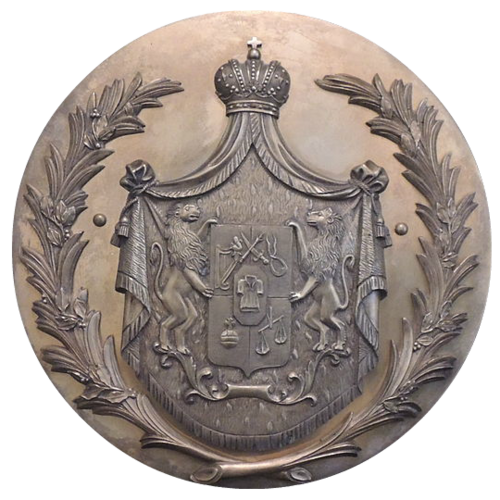
Georgia (Caucasus) · 780 – 1810
The Bagrationi were the royal house of Georgia for over a thousand years — by a wide margin the longest continuously reigning dynasty in Christian history, and one of the longest-reigning royal lines in the world. From the late ninth century, when the first Bagrationi prince Adarnase IV took the title King of the Georgians, until the formal Russian annexation of Kartli-Kakheti in 1801, an unbroken male-line descent occupied the Georgian throne. By comparison the Capetian senior line of France lasted 341 years; the Habsburgs 645; the Romanovs 304. Only the Yamato dynasty of Japan has reigned longer in a comparable royal capacity. The Bagrationi origin myth — recorded in medieval Georgian chronicles and accepted by every Georgian monarch as a fact of dynastic legitimacy — claimed descent from the Biblical King David and so from the royal house of ancient Israel. Modern scholarship treats the claim as a tenth-century legitimating fiction, but the dynasty's actual historical origin (probably as Bagratid Armenian princes who moved north into Georgia in the eighth century) is itself unusually old and well documented. The first Bagrationi rulers governed initially as princes of Tao-Klarjeti, on the borderlands between the Georgian, Armenian, and Byzantine worlds. The dynasty's golden age was the reign of David IV "the Builder" (1089–1125) and his great-granddaughter Queen Tamar (1184–1213). David expelled the Seljuk Turks from Georgia, retook Tbilisi from its Muslim emirs after four centuries of occupation, and built a unified Georgian kingdom stretching from the Black Sea to the Caspian. Tamar's reign saw the cultural and territorial apex: Shota Rustaveli's epic The Knight in the Panther's Skin, the great frescoed cathedrals of late medieval Georgia, and a sphere of influence reaching deep into Anatolia and Persia. After the Mongol invasions of the thirteenth century the unified kingdom fragmented into three smaller kingdoms (Kartli, Kakheti, Imereti) and several principalities, each ruled by a separate Bagrationi branch. The line persisted through Mongol overlordship, Timurid raids, Ottoman and Persian pressure, and centuries of border wars. In 1783 Erekle II of Kartli-Kakheti accepted Russian suzerainty under the Treaty of Georgievsk; his son Giorgi XII died in 1800, and the following year the Russian Empire annexed the kingdom outright. The Bagrationi continued as Russian princes through the imperial period and continue today; the current head of the royal house is Davit Bagrationi (b. 1976), residing in Tbilisi.
62 figures
Georgia / Caucasus · 786 – 1008
16 figures
North Caucasus · 800 – 1239
4 figures
Southeast Asia / Cambodia · 802 – 1431
In 802, according to the eleventh-century Sdok Kok Thom inscription, a king named Jayavarman II had himself consecrated chakravartin — universal monarch — in a ritual performed on the Kulen plateau north of the Tonle Sap lake. The ceremony, associated with the cult of the devaraja, declared the independence of the Khmer lands from 'Java' and is conventionally taken as the founding act of the Khmer Empire. For the next six centuries the polity centered on the plain of Angkor dominated mainland Southeast Asia, at its height claiming authority over much of modern Cambodia, Thailand, Laos, and southern Vietnam. Angkor's power rested in large part on water. Beginning with Indravarman I at Hariharalaya in the 870s, successive kings paired their temple foundations with enormous reservoirs called barays, of which the East Baray of Yasovarman I and the West Baray of the eleventh century are the largest. The network of reservoirs, channels, and embankments supported a dispersed low-density city that recent archaeological survey suggests was among the most extensive preindustrial urban complexes anywhere. Each major reign followed a recognizable pattern: hydraulic works, a temple to the royal ancestors, and a state temple-mountain identifying the king with Shiva or Vishnu. The empire's most famous monuments belong to its later centuries. Suryavarman II raised Angkor Wat in the first half of the twelfth century as a Vishnuite temple of unprecedented scale. After Cham forces sacked Angkor in 1177, Jayavarman VII expelled them, took the throne in 1181, and rebuilt the capital as Angkor Thom around the Bayon with its face towers, adding hospitals, rest houses, and roads across the kingdom and turning the state decisively toward Mahayana Buddhism. The long rivalry with Champa, fought intermittently from the tenth century onward, shaped much of this period, including a Khmer occupation of Champa in the early thirteenth century. The empire's later history is harder to follow as the inscriptional record thins. Jayavarman VIII presided over a Shaivite reaction in which thousands of Buddha images were defaced, while Theravada Buddhism spread among the population; the Chinese envoy Zhou Daguan, who visited in 1296-1297, described a city still wealthy and populous. Over the fourteenth century, pressure from the rising Tai kingdom of Ayutthaya, possible strain on the water system, and shifting trade routes weakened Angkor, though historians continue to debate the weight of each factor. Cambodian chronicle traditions record an Ayutthayan capture of the city in 1431, after which the court relocated toward the Phnom Penh region. Angkor was never wholly abandoned — Angkor Wat remained a Buddhist shrine — but 1431 conventionally marks the end of the Angkorian state.
11 figures
Armenia / Caucasus · 830 – 1021
1 figure
South India / Coromandel Coast · 848 – 1279
A Tamil maritime empire that projected naval power across Southeast Asia and was known for its colossal temple architecture.
2 figures
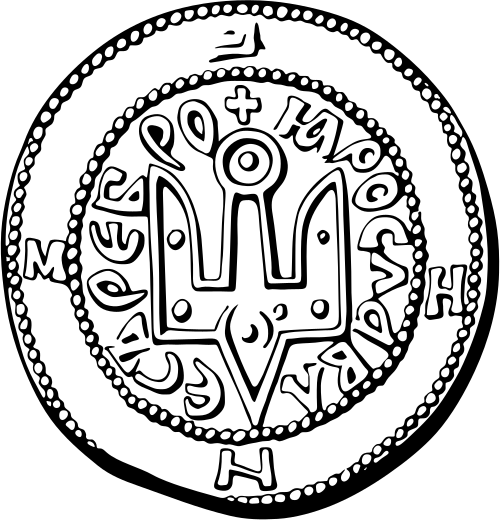
Russia / Eastern Europe · 862 – 1610
1 figure
Byzantium / Anatolia · 870 – 1056
1 figure
Georgia / Caucasus · 870 – 960
1 figure
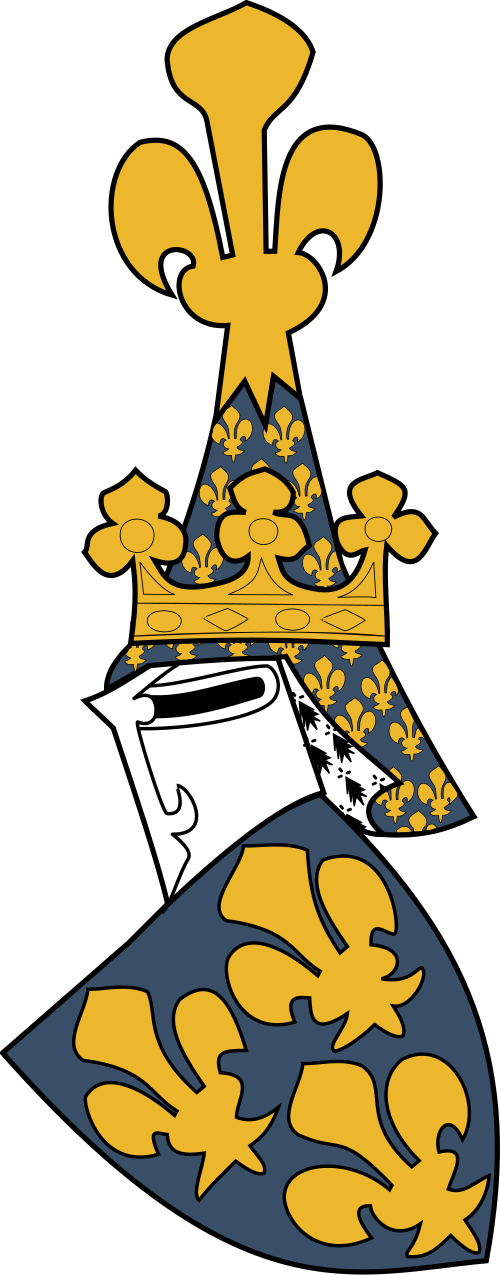
France · 987 – 1328
The Capetians ruled France from Hugh Capet's election in 987 until the death of Charles IV in 1328 — three hundred and forty-one years of unbroken father-to-son or brother-to-brother succession, the longest such streak in European royal history. Hugh's election was supposed to be a one-time provision: the West Frankish magnates had chosen him over the Carolingian claimant Charles of Lorraine because Hugh held real territorial power around Paris. By crowning his son Robert during his own lifetime, Hugh quietly converted the elective Frankish monarchy into a hereditary one. Every Capetian after him followed the same precedent. For the first century and a half the Capetian kings controlled little more than the Île-de-France around Paris — they were dukes ruling among other dukes, formally superior to but practically weaker than the Counts of Champagne and Toulouse, the Dukes of Normandy and Burgundy. The transformation came under Philip II Augustus (1180–1223), who tripled the royal demesne by stripping Plantagenet John of his French inheritance after the murder of Arthur of Brittany. Bouvines in 1214 confirmed France as the dominant power of Latin Europe. From then on the Capetian house grew steadily wealthier, more centralized, and more aggressive — through the Albigensian Crusade under Louis VIII, the canonized reign of Louis IX, the ruthless administration of Philip IV. The senior Capetian line collapsed unexpectedly in the early fourteenth century. Philip IV's three sons — Louis X, Philip V, Charles IV — reigned in succession and all died without male heirs within fourteen years of each other. Philip IV's daughter Isabella had married Edward II of England; her son Edward III therefore had a strong claim to the French throne through the female line. The assembly of French magnates rejected the claim in favor of Philip VI, a cousin from the Valois cadet branch. Edward III pressed his claim by arms; the Hundred Years' War followed. The Capetian dynastic legacy reaches further than the senior line's 341 years. The Valois, who reigned from 1328 to 1589, were a Capetian cadet branch; the Bourbons, who replaced them in 1589 and ruled France until 1848 (with interruptions), were a Capetian cadet of a cadet. Every French monarch from Hugh Capet onward — across 861 years — was a male-line Capetian descendant. The contemporary heads of the houses of Bourbon-Anjou (Spain), Bourbon-Two Sicilies (Naples), and Orléans (France) still are.
18 figures
Pontic Steppe · 1000 – 1241
1 figure