Dynastica

Modern dynasties (1801–2200)

From the Napoleonic age to the dynasties that survive into the present.

8 dynasties

About the Modern era

The modern period is the age in which the dynastic system that had governed most of the world for millennia broke apart. Between 1789 and 1918, monarchy as the default form of large-scale government was overthrown in France (twice), abolished in the United States, dismantled in Spain, transformed by parliamentary constraint in Britain, and finally destroyed across Russia, Germany, Austria-Hungary, and the Ottoman Empire in a single five-year span at the close of the First World War. The Romanov, Hohenzollern, Habsburg-Lorraine, and Ottoman dynasties had all reigned for hundreds of years; all four ended within months of each other.

What remains in the early twenty-first century is a small set of constitutional monarchies — the British, Dutch, Belgian, Scandinavian, and Spanish royal houses, the Japanese imperial dynasty, the Thai monarchy, several Gulf states — most of which exercise little real political power. The genealogical interconnections persist: nearly every reigning European monarch today is descended from Queen Victoria, who herself descended through her mother from Sophia of Hanover and so from the seventeenth-century Stuart kings. The shape of the dynastic graph is now a vestige of the political order that produced it.

Bagrationi coat of arms

Bagrationi

Georgia (Caucasus) · 780 – 1810

The Bagrationi were the royal house of Georgia for over a thousand years — by a wide margin the longest continuously reigning dynasty in Christian history, and one of the longest-reigning royal lines in the world. From the late ninth century, when the first Bagrationi prince Adarnase IV took the title King of the Georgians, until the formal Russian annexation of Kartli-Kakheti in 1801, an unbroken male-line descent occupied the Georgian throne. By comparison the Capetian senior line of France lasted 341 years; the Habsburgs 645; the Romanovs 304. Only the Yamato dynasty of Japan has reigned longer in a comparable royal capacity. The Bagrationi origin myth — recorded in medieval Georgian chronicles and accepted by every Georgian monarch as a fact of dynastic legitimacy — claimed descent from the Biblical King David and so from the royal house of ancient Israel. Modern scholarship treats the claim as a tenth-century legitimating fiction, but the dynasty's actual historical origin (probably as Bagratid Armenian princes who moved north into Georgia in the eighth century) is itself unusually old and well documented. The first Bagrationi rulers governed initially as princes of Tao-Klarjeti, on the borderlands between the Georgian, Armenian, and Byzantine worlds. The dynasty's golden age was the reign of David IV "the Builder" (1089–1125) and his great-granddaughter Queen Tamar (1184–1213). David expelled the Seljuk Turks from Georgia, retook Tbilisi from its Muslim emirs after four centuries of occupation, and built a unified Georgian kingdom stretching from the Black Sea to the Caspian. Tamar's reign saw the cultural and territorial apex: Shota Rustaveli's epic The Knight in the Panther's Skin, the great frescoed cathedrals of late medieval Georgia, and a sphere of influence reaching deep into Anatolia and Persia. After the Mongol invasions of the thirteenth century the unified kingdom fragmented into three smaller kingdoms (Kartli, Kakheti, Imereti) and several principalities, each ruled by a separate Bagrationi branch. The line persisted through Mongol overlordship, Timurid raids, Ottoman and Persian pressure, and centuries of border wars. In 1783 Erekle II of Kartli-Kakheti accepted Russian suzerainty under the Treaty of Georgievsk; his son Giorgi XII died in 1800, and the following year the Russian Empire annexed the kingdom outright. The Bagrationi continued as Russian princes through the imperial period and continue today; the current head of the royal house is Davit Bagrationi (b. 1976), residing in Tbilisi.

63 figures

Solomonic Dynasty

Horn of Africa / Ethiopia · 1270 – 1974

One of the longest-ruling royal houses in history, claiming direct descent from the biblical King Solomon and the Queen of Sheba.

2 figures

Austrian Habsburgs

Austria / Holy Roman Empire · 1273 – 1918

The Habsburg house emerged in the eleventh century as obscure Swiss counts whose hereditary patrimony was a single hill-fort in Aargau. By the early fourteenth century they had risen to ducal rank in Austria; by the fifteenth they held the imperial crown of the Holy Roman Empire almost continuously; by the early sixteenth, through the marriage of Maximilian I to Mary of Burgundy and the subsequent marriages of their children, they controlled the largest European patrimony assembled since Charlemagne — Spain, the Indies, Burgundy, the Low Countries, Austria, Bohemia, Hungary, the imperial title, and parts of Italy, all under one ruler in Charles V. The empire Charles inherited proved unmanageable as a single entity. His abdication in 1556 split the dynasty into Spanish and Austrian branches. The Spanish Habsburgs took the global empire and reigned until their extinction in 1700; the Austrian Habsburgs took the imperial succession, the central European territories, and would reign in Vienna until 1918. The Austrian line endured a Reformation that nearly destroyed the religious unity of central Europe, a Thirty Years' War that killed perhaps a quarter of Germany's population, and the gradual erosion of imperial authority over the German princes. The dynasty's last truly great moment was the long reign of Maria Theresa (1740–1780), the only female ruler of the Habsburg lands. Her accession was nearly catastrophic — the Pragmatic Sanction her father Charles VI had spent decades negotiating across Europe was violated within weeks of her accession, plunging her into the War of the Austrian Succession with Frederick the Great of Prussia. She lost Silesia but preserved everything else, bore sixteen children including two emperors and Marie Antoinette of France, and reformed the army, education system, and bureaucracy of her composite monarchy. The dynasty ended in 1918 with the collapse of Austria-Hungary at the close of the First World War. Emperor Karl I renounced participation in state affairs in November 1918 and went into exile; the empire dissolved into Austria, Hungary, Czechoslovakia, Yugoslavia, Romania, and parts of Poland and Italy. The Habsburg-Lorraine family continues as a private house; the current head is Karl von Habsburg (b. 1961), great-grandson of the last reigning Emperor of Austria.

24 figures

Ottoman Empire

Anatolia / Balkans / Middle East · 1299 – 1922

The Ottoman dynasty ruled an empire that, at its early-seventeenth-century peak, stretched from Algeria to the Persian Gulf and from Hungary to the Yemen — perhaps thirty-two million people across three continents. The dynasty's founder Osman I was originally the chief of a small Turkmen warband on the Byzantine frontier in northwestern Anatolia in the late thirteenth century. His descendants conquered Bursa, crossed into Europe in the 1350s, subdued the Balkans, and in 1453 captured Constantinople under Mehmed II — ending the thousand-year Byzantine Empire and giving the Ottomans a capital and an imperial ideology to inherit. The dynasty's classical apex was the reign of Süleyman I "the Magnificent" (1520–1566). His armies took Belgrade and Rhodes, decisively defeated the Hungarians at Mohács in 1526, besieged Vienna in 1529, conquered Baghdad in 1534, and made the Ottoman navy the dominant power in the Mediterranean. His judicial reforms — the kanun, the imperial codification of secular law alongside sharia — gave him the Turkish epithet Kanuni, the Lawgiver. His marriage to the Ukrainian slave concubine Hürrem Sultan transformed the Ottoman imperial harem from a women's quarter into the political center of the Topkapı Palace. Ottoman political succession was uniquely brutal among the great early-modern dynasties. From Mehmed II onward, the law of fratricide (kanunname) permitted a newly enthroned sultan to execute all of his brothers as a precaution against civil war — Mehmed III in 1595 had his nineteen surviving brothers strangled with silken bowstrings the day of his accession. The practice was replaced in the seventeenth century by the kafes (cage) system, in which potential heirs were confined in the palace under house arrest for decades until they were called to the throne; many of the later sultans came to power as middle-aged men who had never governed anything. The Ottoman dynasty's decline was visible from the second siege of Vienna in 1683, prolonged through three centuries of incremental territorial loss to Habsburgs, Romanovs, French, British, and the rising Balkan nationalisms, and ended in the post-First World War partition of the empire and the foundation of the Republic of Turkey under Mustafa Kemal in 1923. The last sultan, Mehmed VI, was deposed and exiled the previous year; the caliphate was abolished in 1924, ending six hundred and twenty-three years of Ottoman dynastic rule. The Osmanoğlu family continues today as a private house; the current head is Harun Osmanoğlu (b. 1932).

3 figures

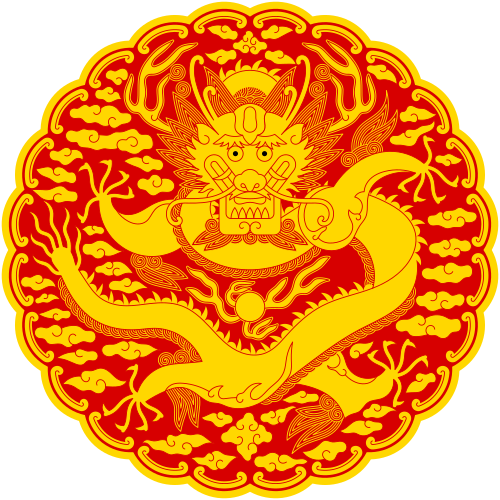
Joseon Dynasty coat of arms

Joseon Dynasty

Korean Peninsula · 1392 – 1897

The final and longest-lived imperial dynasty of Korea, known for its strong Neo-Confucian ideology and high cultural achievement.

3 figures

Mughal Empire

South Asia / North India · 1526 – 1857

A Turco-Mongol dynasty that synthesized Persian and Indian cultures, overseeing an era of unparalleled artistic and economic prosperity.

3 figures

Tokugawa Shogunate

Japan · 1603 – 1868

A centralized military dictatorship that brought 250 years of stability and isolation to Japan during the Edo period.

2 figures

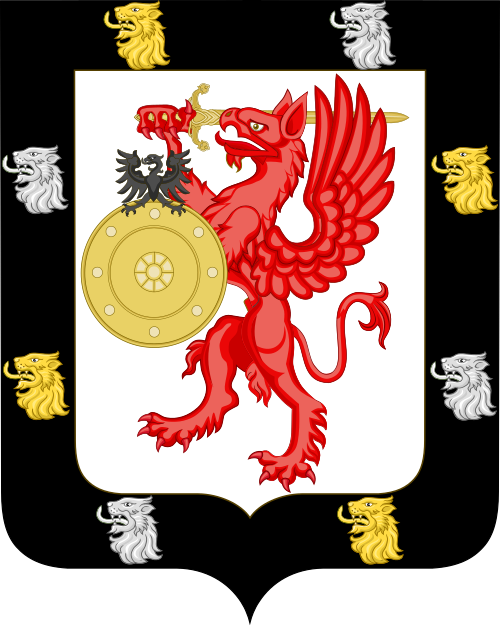
House of Romanov coat of arms

House of Romanov

Russia / Eurasia · 1613 – 1917

The Romanov dynasty ruled Russia for three hundred and four years, from the election of Mikhail Romanov by the Zemsky Sobor in 1613 to the abdication of Nicholas II in 1917. Their rise was the resolution to the Time of Troubles — a fifteen-year crisis of dynastic extinction, foreign invasion, and pretender pretenders that followed the death of Ivan IV's son Fyodor I (the last Rurikid) in 1598. The sixteen-year-old Mikhail was a compromise candidate, the great-nephew of Anastasia Romanovna who had been Ivan the Terrible's first wife. The dynasty's transformation from a domestic Muscovite royal house into a great European power was the work of Peter the Great (1682–1725). His Westernizing reforms — beard taxes, fleet-building, the founding of St Petersburg as a "window on Europe," the systematic reorganization of state administration on Swedish and Dutch models — turned Russia from a peripheral land-locked state into a continental power. His successors enlarged the empire from the Baltic to the Pacific: Catherine the Great (1762–1796) annexed Crimea and partitioned Poland; Alexander I (1801–1825) defeated Napoleon and entered Paris in 1814; the nineteenth-century Romanovs took the Caucasus, Central Asia, and Alaska. The dynasty entered its final crisis with the assassination of Alexander II in 1881. Repression replaced reform; the cycle accelerated through the Russo-Japanese War of 1905, the 1905 Revolution, the constitutional concessions Nicholas II made under duress, the catastrophic conduct of the First World War, the February Revolution of 1917, the abdication, and finally the murder of Nicholas, his wife, his four daughters, and his hemophiliac son Alexei at Ekaterinburg on the night of 17 July 1918. The remains were thrown into a mine shaft and rediscovered in 1991. The Romanov genealogical legacy is unusually international for an Orthodox dynasty. By the nineteenth century Romanov children were marrying systematically into the Protestant royal houses of Germany — the Hohenzollerns of Prussia, the dukes of Hesse, the kings of Württemberg. Through these marriages the Romanovs are connected to nearly every reigning European royal house of the modern period: Empress Alexandra was a granddaughter of Queen Victoria; her sister was the last Empress of Russia's older sister Elizabeth Feodorovna; their cousins included George V of Britain and Kaiser Wilhelm II of Germany. The last Russian Tsar and his German Empress, the British George V, and the German Kaiser Wilhelm II were all first cousins.

4 figures