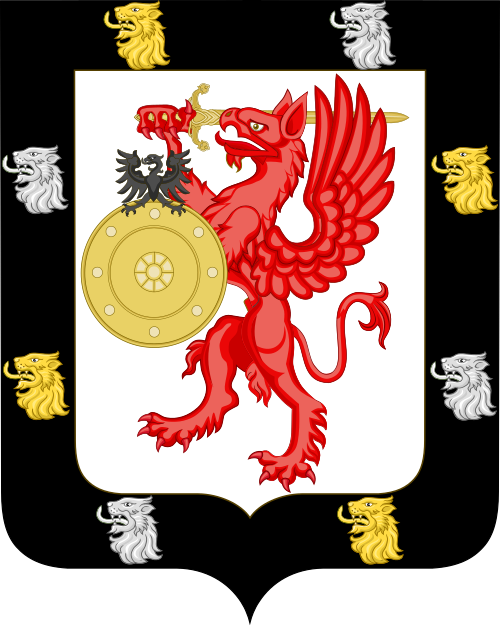
House of Romanov
Russia / Eurasia · 1613 – 1917
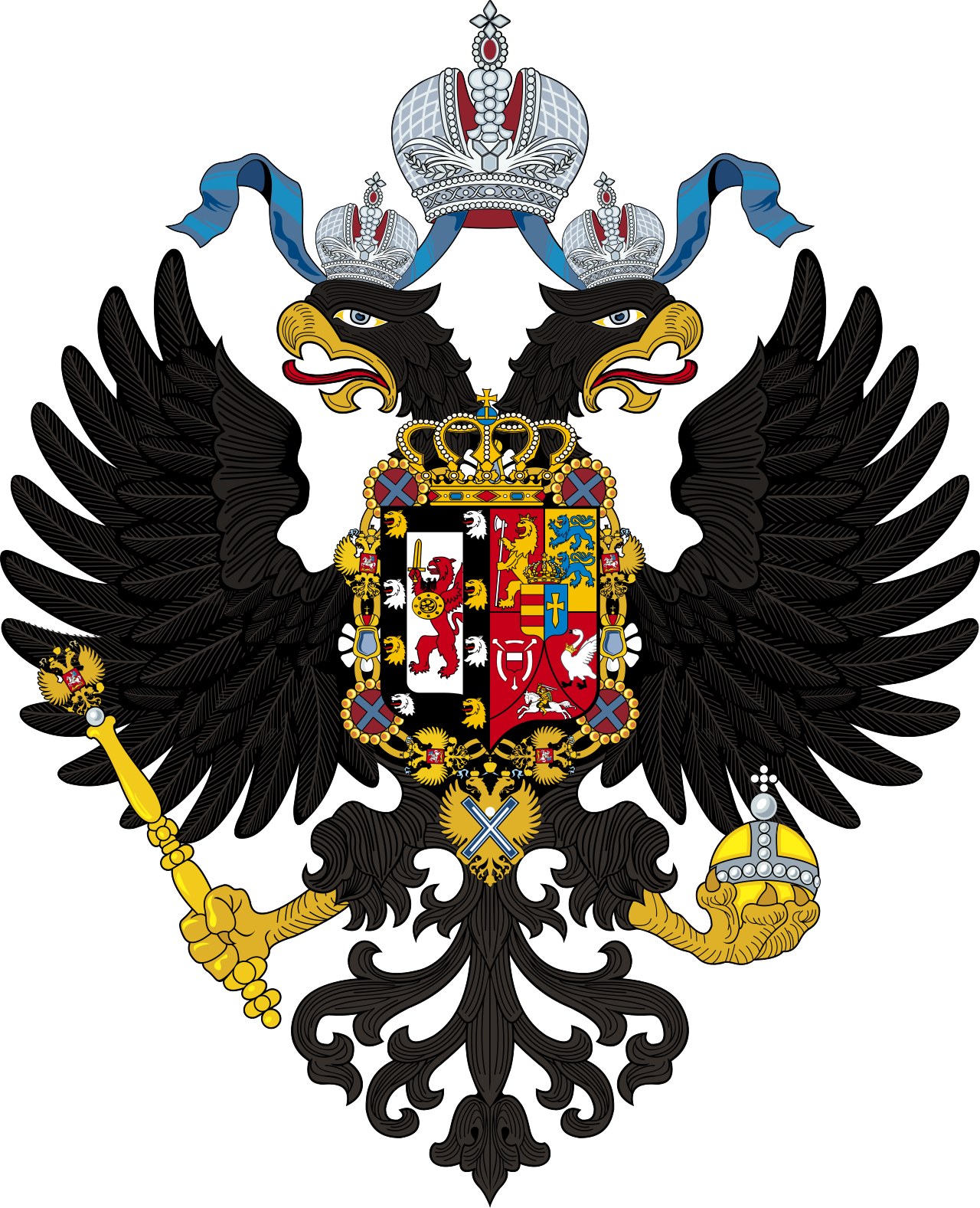
Overview
The Romanov dynasty ruled Russia for three hundred and four years, from the election of Mikhail Romanov by the Zemsky Sobor in 1613 to the abdication of Nicholas II in 1917. Their rise was the resolution to the Time of Troubles — a fifteen-year crisis of dynastic extinction, foreign invasion, and pretender pretenders that followed the death of Ivan IV's son Fyodor I (the last Rurikid) in 1598. The sixteen-year-old Mikhail was a compromise candidate, the great-nephew of Anastasia Romanovna who had been Ivan the Terrible's first wife.
The dynasty's transformation from a domestic Muscovite royal house into a great European power was the work of Peter the Great (1682–1725). His Westernizing reforms — beard taxes, fleet-building, the founding of St Petersburg as a "window on Europe," the systematic reorganization of state administration on Swedish and Dutch models — turned Russia from a peripheral land-locked state into a continental power. His successors enlarged the empire from the Baltic to the Pacific: Catherine the Great (1762–1796) annexed Crimea and partitioned Poland; Alexander I (1801–1825) defeated Napoleon and entered Paris in 1814; the nineteenth-century Romanovs took the Caucasus, Central Asia, and Alaska.
The dynasty entered its final crisis with the assassination of Alexander II in 1881. Repression replaced reform; the cycle accelerated through the Russo-Japanese War of 1905, the 1905 Revolution, the constitutional concessions Nicholas II made under duress, the catastrophic conduct of the First World War, the February Revolution of 1917, the abdication, and finally the murder of Nicholas, his wife, his four daughters, and his hemophiliac son Alexei at Ekaterinburg on the night of 17 July 1918. The remains were thrown into a mine shaft and rediscovered in 1991.
The Romanov genealogical legacy is unusually international for an Orthodox dynasty. By the nineteenth century Romanov children were marrying systematically into the Protestant royal houses of Germany — the Hohenzollerns of Prussia, the dukes of Hesse, the kings of Württemberg. Through these marriages the Romanovs are connected to nearly every reigning European royal house of the modern period: Empress Alexandra was a granddaughter of Queen Victoria; her sister was the last Empress of Russia's older sister Elizabeth Feodorovna; their cousins included George V of Britain and Kaiser Wilhelm II of Germany. The last Russian Tsar and his German Empress, the British George V, and the German Kaiser Wilhelm II were all first cousins.
Updated May 2026 · How we research
Lineage
4 figures- Michael I1596 – 1645
- Peter the Great1672 – 1725
- Catherine the Great1729 – 1796
- Nicholas II1868 – 1918
All figures
- Michael I1596 – 1645
- Peter the Great1672 – 1725
- Catherine the Great1729 – 1796
- Nicholas II1868 – 1918
See also
Same region
- Khosroid
Iberia (Caucasus) · 580 – 786
- Khazar
Caspian Steppe / Eurasia · 650 – 969
- Umayyad Caliphate
Syria / Damascus / Spain · 661 – 750
- Carolingian
Frankish Empire / Holy Roman Empire · 751 – 987
 Rurikid
Russia / Eastern Europe · 862 – 1610
- Argyros
Byzantium / Anatolia · 870 – 1056
Same era
 Bagrationi
Georgia (Caucasus) · 780 – 1810
- Rurikid
Russia / Eastern Europe · 862 – 1610
- Keita Dynasty
West Africa · 1235 – 1670
- Solomonic Dynasty
Horn of Africa / Ethiopia · 1270 – 1974
- Austrian Habsburgs
Austria / Holy Roman Empire · 1273 – 1918
- Majapahit
Southeast Asia / Java · 1293 – 1527