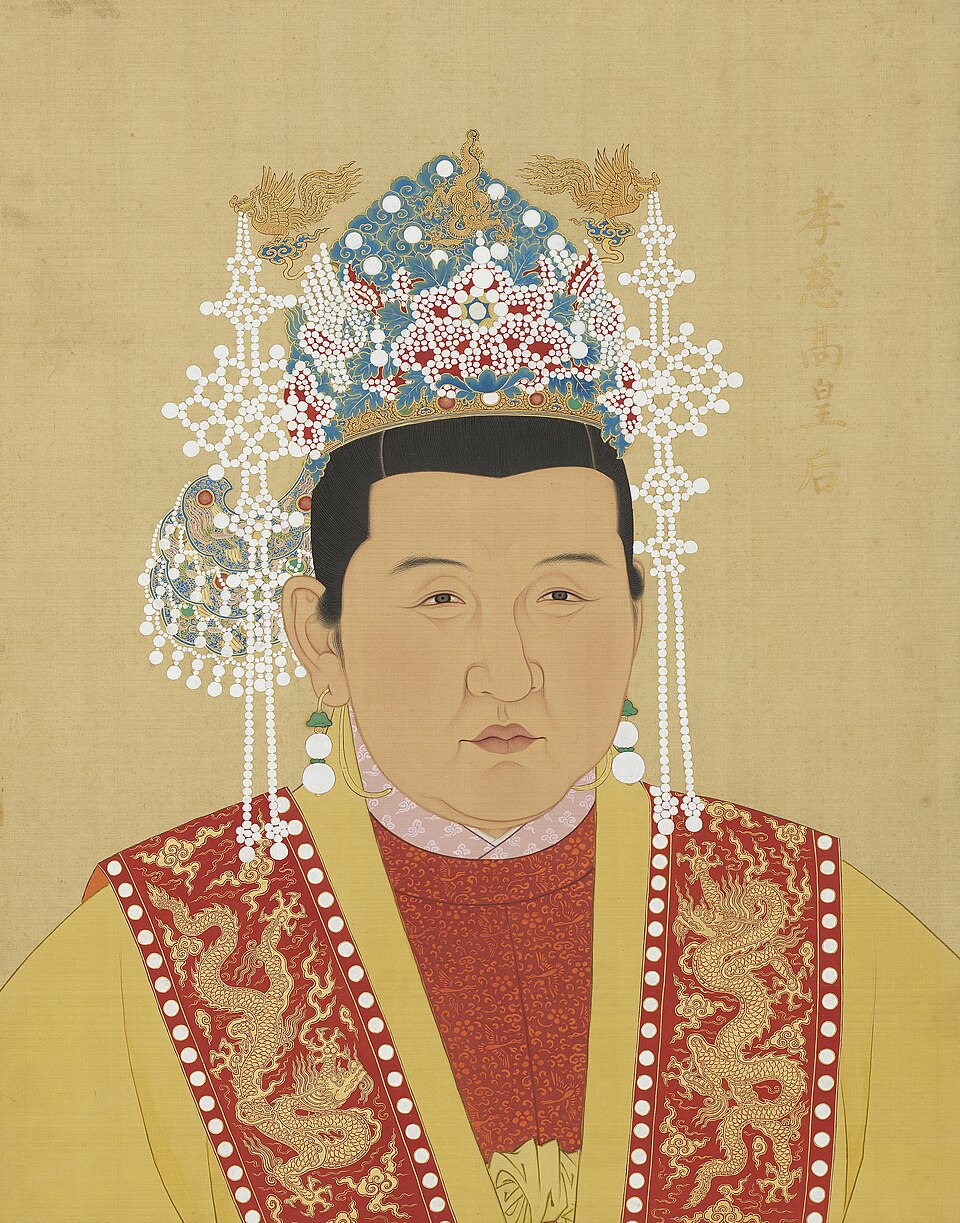
Empress Ma
- House
- Ming
Biography
Empress Ma (1332-1382), consort of the Ming founder Zhu Yuanzhang, the Hongwu Emperor, was the first empress of the Ming dynasty and acquired a lasting reputation as a moderating presence at a notoriously severe court. Orphaned young, she was raised as the adopted daughter of Guo Zixing, a Red Turban rebel leader in whose service Zhu Yuanzhang began his rise; the marriage, arranged around 1352, bound the able young officer to his commander's household and proved one of the more consequential alliances of the period.
During the years of civil war she followed her husband on campaign, and anecdotes preserved in Ming sources credit her with practical service — managing documents, organizing supplies for soldiers' families, and steadying morale during reverses. When Zhu Yuanzhang proclaimed the Ming dynasty in 1368, she was invested as empress. In the palace she was remembered for personal frugality, attention to the education of the imperial children, and oversight of the consorts' quarters in deliberate accordance with classical models of the virtuous empress.
Her most cited role, however, was as a check on the emperor's anger. The Hongwu Emperor's reign was marked by sweeping purges and harsh punishment of officials, and the standard histories preserve numerous accounts of the empress interceding — questioning death sentences, pleading for the scholar Song Lian when he was condemned in connection with a treason case, and reminding the emperor of the difference between family law and state law. How many of these stories are literally accurate is uncertain, since the figure of the remonstrating empress is itself a historiographical ideal, but contemporaries and later writers alike treated her influence as real. She is conventionally regarded as the mother of the heir apparent Zhu Biao, though the maternity of several imperial sons has been debated.
She died in 1382, reportedly refusing medicine lest her physicians be punished for failing to cure her. The emperor never appointed another empress in the remaining sixteen years of his reign, and observers traced the intensified violence of his later years in part to her absence. She received the posthumous name Xiaoci, "filial and compassionate," and her tomb gave its name to the Xiaoling mausoleum at Nanjing.
Updated June 2026 · How we research
Recommended Reading
Affiliate disclosure: the links below go to Amazon searches. As an Amazon Associate, Dynastica earns from qualifying purchases.