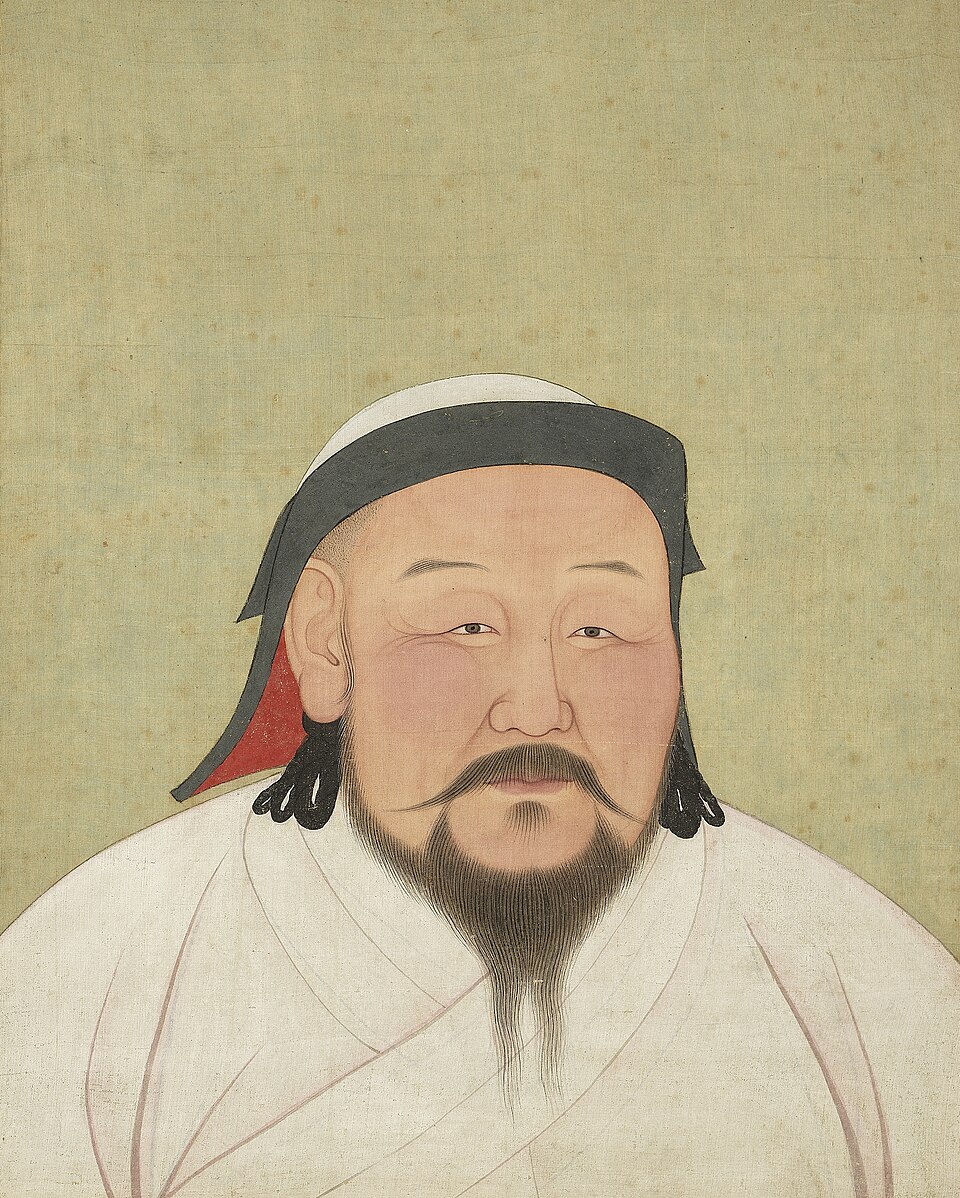
Kublai Khan
Хубилай хаан
Great Khan · Emperor of the Yuan dynasty
1215 – 1294
- Born
- 1215
- Died
- 1294
- Reign
- 1260 – 1294
- House
- Mongol Empire
Biography
Among the grandsons of Genghis Khan, Kublai achieved the most durable transformation of Mongol power, converting steppe conquest into a Chinese imperial dynasty. Born in 1215 to Tolui, youngest son of Genghis Khan, and the Keraite princess Sorghaghtani Beki, he was raised with an unusual exposure to Chinese administration and Confucian advisers. Under his brother Möngke, who became great khan in 1251, Kublai governed Mongol-held territories in northern China and campaigned against the Dali kingdom in Yunnan.
Möngke's death on campaign in 1259 triggered a succession war. Kublai had himself proclaimed great khan in 1260, while his younger brother Ariq Böke claimed the title at Karakorum with the support of more traditionalist factions. Kublai prevailed by 1264, but the conflict marked the effective end of a unified empire: the Golden Horde of the Jochid line, the Chagatai khanate in Central Asia, and even the Ilkhanate founded by his brother Hulagu in Persia pursued increasingly independent courses, though the Ilkhans long remained Kublai's nominal allies and the four khanates continued to share a single ruling family descended from Genghis Khan.
In 1271 Kublai proclaimed the Yuan dynasty, adopting Chinese dynastic forms, and established his capital at Dadu, on the site of modern Beijing. The conquest of the Southern Song, completed with the fall of the last Song resistance in 1279, united China under one rule for the first time in centuries. His government promoted paper currency, rebuilt the Grand Canal, organized relief granaries, and employed officials of many origins, including Central Asians and, according to his own celebrated account, the Venetian traveler Marco Polo. Religious communities of Buddhists, Daoists, Muslims, and Christians operated under imperial patronage, with Tibetan Buddhism enjoying particular favor at court.
The later reign brought costly failures. Seaborne invasions of Japan in 1274 and 1281 ended in disaster, the second destroyed in part by a typhoon, and expeditions against Vietnam, Burma, and Java yielded little. Kublai's final years were shadowed by the deaths of his favorite wife Chabi and his designated heir Zhenjin, and by declining health. He died in 1294 and was succeeded by his grandson Temür; the Yuan dynasty he founded ruled China until 1368.
Updated June 2026 · How we research
Events
Kublai Khan proclaimed the Yuan dynasty on 18 December 1271, adopting a Chinese-style reign name and presenting his Mongol regime to his subjects as the legitimate successor to the Chinese imperial tradition. The Southern Song dynasty held out for another eight years before its final collapse at Yamen, completing the first foreign conquest of all China.
Also there: Zhenjin
Connections across houses
Where Kublai Khan's family tree leaves the Mongol Empire and enters other ruling houses.
Recommended Reading
Affiliate disclosure: the links below go to Amazon searches. As an Amazon Associate, Dynastica earns from qualifying purchases.