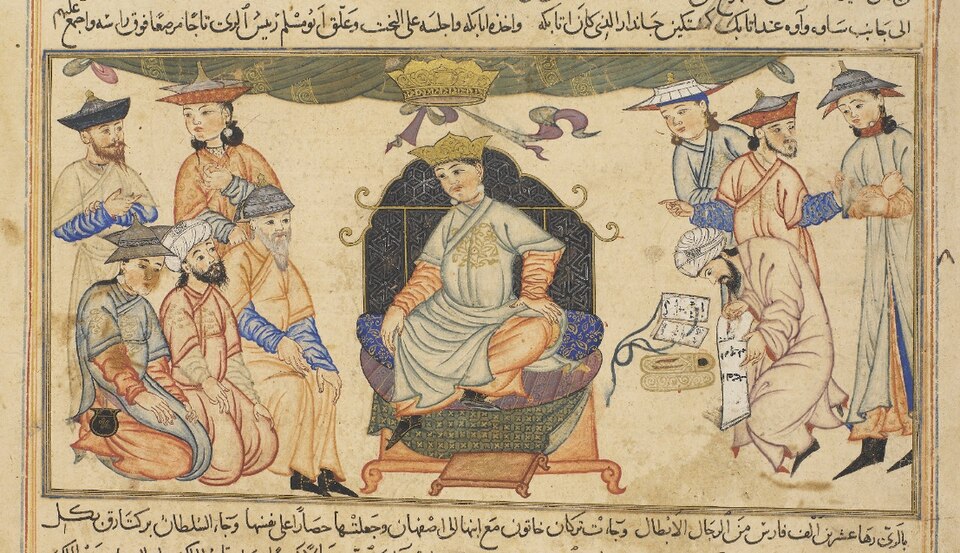
Berkyaruq
Sultan of the Great Seljuk Empire
1080 – 1105
- Born
- 1080
- Died
- 1105
- Reign
- 1094 – 1105
- House
- Seljuk Dynasty
Biography
Berkyaruq spent virtually his entire reign at war with his own family, and the Great Seljuk Empire never recovered the unity he failed to restore. The eldest surviving son of Malik-Shah I, he was about twelve when his father's death in 1092 set off the succession struggle. The partisans of the slain vizier Nizam al-Mulk proclaimed him in Rayy against his half-brother Mahmud, the candidate of Terken Khatun; he won the field at Burujird in 1093, survived capture and the threat of blinding, and emerged as uncontested sultan in 1094 when both Mahmud and Terken Khatun died.
Uncontested proved a brief condition. His uncle Tutush, the Seljuk ruler of Syria, claimed the sultanate and overran western Persia before Berkyaruq destroyed him in battle near Rayy in 1095 — a victory that incidentally shattered Seljuk Syria, leaving Tutush's quarreling sons in Aleppo and Damascus. Another uncle's revolt in Khorasan followed, and then, from 1099, a decade-defining civil war against his half-brother Muhammad Tapar, backed by the young Sanjar in the east. The war swung back and forth across Persia and Iraq through five battles, with the caliph reading the khutba for whichever brother last held Baghdad.
It was during these years of internal paralysis that the First Crusade crossed Anatolia and took Antioch and Jerusalem. Berkyaruq, absorbed in the dynastic war, mounted no coordinated response, and appeals from Syrian emirs went largely unanswered — a failure contemporaries noted bitterly and historians have treated as emblematic of the post-1092 fragmentation. The Nizari Assassins likewise flourished in the disorder, spreading from Alamut through the Elburz and into Persian cities.
Exhaustion finally produced a settlement in 1104: the empire was partitioned, Berkyaruq keeping western Persia and Muhammad taking the northwest and the Jazira, with Sanjar in Khorasan. Berkyaruq had little time to govern his share. He died in early 1105, around twenty-five years old, while traveling toward Baghdad, leaving an infant son whom Muhammad Tapar brushed aside within weeks. His reign of constant survival left the sultanate intact in name and diminished in everything else.
Updated June 2026 · How we research
Connections across houses
Place Berkyaruq in the wider world of ruling houses.
Recommended Reading
Affiliate disclosure: the links below go to Amazon searches. As an Amazon Associate, Dynastica earns from qualifying purchases.