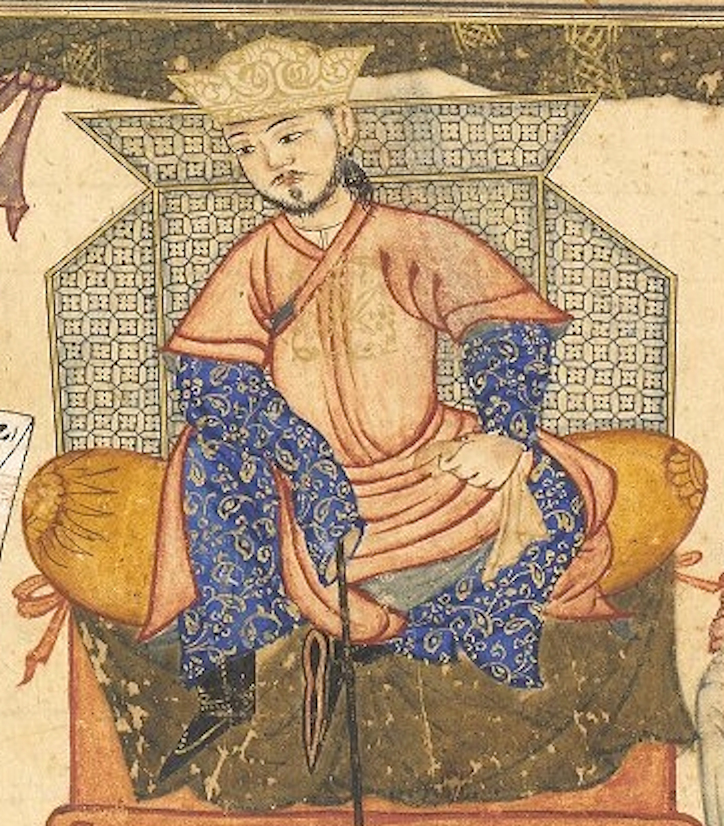
Malik-Shah I
Sultan of the Great Seljuk Empire
1055 – 1092
- Born
- 1055
- Died
- 1092
- Reign
- 1072 – 1092
- House
- Seljuk Dynasty
Biography
The Seljuk Empire reached its greatest extent and its highest cultural ambition under Malik-Shah I, who became sultan at seventeen upon his father Alp Arslan's murder in 1072. His first test came from within: his uncle Qavurt, ruler of Kerman, claimed the throne by seniority and was defeated and executed in 1073. Thereafter Malik-Shah reigned for two decades over a state stretching from the borders of Kashgar to the Mediterranean and southward into the Hijaz and Yemen, with the caliphs of Baghdad, the emirs of Syria, and the new Turkmen lords of Anatolia all acknowledging his name.
The reign's substance owed much to Nizam al-Mulk, the vizier inherited from Alp Arslan, who served as the empire's effective chief executive for thirty years across two reigns. His network of Nizamiyya madrasas, from Baghdad to Nishapur, professionalized Sunni legal and theological education and became a model for the entire Islamic world; his Persian treatise on statecraft, the Siyasatnama, codified the era's theory of government. Malik-Shah's own patronage ran to science: the observatory he founded at Isfahan employed Omar Khayyam among its astronomers, and the Jalali calendar they produced in 1079 — named for the sultan's title Jalal al-Dawla — tracked the solar year more accurately than the Gregorian reform five centuries later.
Beneath the splendor, the reign's last years turned dangerous. The Nizari Ismailis under Hasan-i Sabbah seized the fortress of Alamut in 1090, founding the movement Europeans would call the Assassins. At court, Nizam al-Mulk feuded with the sultan's wife Terken Khatun over the succession, and in October 1092 the old vizier was stabbed to death on the road near Nahavand — the first famous victim attributed to the Assassins, though suspicion also touched the court. Malik-Shah himself died in Baghdad weeks later, not yet thirty-eight, amid rumors of poison.
He left no settled succession, and the structure he had ruled could not survive the omission. His sons Mahmud, Berkyaruq, Muhammad Tapar, and Sanjar would divide and fight over the empire for a generation, and the unified Great Seljuk state effectively died with him. At his death, contemporaries reckoned him the most powerful ruler on earth.
Updated June 2026 · How we research
Connections across houses
Place Malik-Shah I in the wider world of ruling houses.
Recommended Reading
Affiliate disclosure: the links below go to Amazon searches. As an Amazon Associate, Dynastica earns from qualifying purchases.