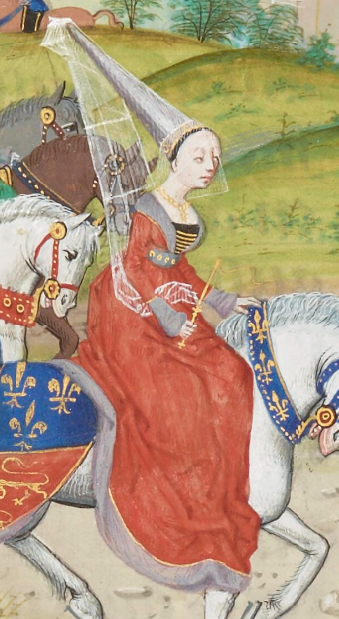
Isabella of France
Isabelle de France
Queen of England · Princess of France
1295 – 1358
- Born
- 1295
- Died
- 1358
- House
- Capetian
Biography
The marriage of Isabella, daughter of Philip IV of France and Joan I of Navarre, to Edward II of England at Boulogne in January 1308 was intended to settle the long-running disputes between the Capetian and Plantagenet crowns over Gascony. She was crowned with her husband at Westminster the following month. The marriage produced four children, the eldest of whom became Edward III; the younger were John of Eltham and the daughters Eleanor and Joan, the latter of whom married David II of Scotland.
The match proved unhappy. Edward's attachment to favorites — first Piers Gaveston, later Hugh Despenser the Younger and his father — alienated much of the English nobility and, in time, the queen. During the Anglo-French war over Saint-Sardos her estates were sequestered in 1324, and her position at court deteriorated under Despenser influence.
In 1325 Isabella was sent to Paris to negotiate with her brother Charles IV over Gascony, and she arranged for her young son Edward to cross the Channel and perform homage for the duchy in his father's place. She then refused to return to England, formed an alliance with the exiled Marcher lord Roger Mortimer, and in September 1326 landed in Suffolk with a modest force. The Despenser regime collapsed almost without resistance; both Despensers were executed, and Edward II, taken prisoner, was compelled to renounce the throne in January 1327 in favor of his fourteen-year-old son. The deposed king died at Berkeley Castle that September.
Isabella and Mortimer dominated the government during Edward III's minority, concluding the unpopular Treaty of Northampton with Scotland in 1328. In October 1330 the young king seized Mortimer at Nottingham Castle and had him executed; Isabella was retired from power but treated honorably, living mainly at Castle Rising in Norfolk. She died in 1358 and was buried at the Greyfriars church in London. Because the death of her brother Charles IV in 1328 had extinguished the direct Capetian male line, her son Edward III advanced a claim to the French throne through her — the dynastic argument that opened the Hundred Years' War.
Updated June 2026 · How we research
Connections across houses
Where Isabella of France's family tree leaves the Capetian and enters other ruling houses.
Recommended Reading
Affiliate disclosure: the links below go to Amazon searches. As an Amazon Associate, Dynastica earns from qualifying purchases.