Khosroid
Iberia (Caucasus) · 580 – 786
11 figures
Royal houses of Continental Europe and the British Isles.
14 dynasties
European royal genealogy is unusual in world history for the density of marriages across borders. By the late Middle Ages it had become exceptional for a king of England to marry an English subject, or for a French queen to be born in France. Diplomats negotiated children's marriages decades in advance; daughters were treated as long-term assets dispatched to courts they would never leave; sons of one dynasty grew up speaking a different language than their grandfathers. The effect was an aristocracy that was a single extended family stretched across the continent.
This page collects the royal lines that mattered: the Frankish houses whose partitions drew the borders of medieval France and Germany; the English dynasties from Plantagenet through Stuart; the Iberian houses whose ambitions reached across the Atlantic; the Russian Tsars and their Romanov successors; the Habsburgs whose marriage strategy gave them so much of the continent. Where dynasties are linked by marriage or descent, Dynastica makes those edges navigable as a single graph.
Iberia (Caucasus) · 580 – 786
11 figures
Caspian Steppe / Eurasia · 650 – 969
1 figure
Syria / Damascus / Spain · 661 – 750
The first hereditary Islamic dynasty, responsible for the rapid expansion of Arab rule from Spain to India.
2 figures
Frankish Empire / Holy Roman Empire · 751 – 987
The Carolingian dynasty ended the Merovingian rule of the Franks in 751 and held the imperial crown of the West, with brief interruptions, until 887. Their rise was the work of three generations of mayors of the palace — court officials whose constitutional position had been ceremonial but who, under Pepin of Herstal, Charles Martel, and Pepin the Short, accumulated such overwhelming military and territorial power that the Merovingian kings became functionally irrelevant. In 751 Pepin the Short asked Pope Zachary whether it would not be better for the man who actually ruled the Franks to also wear the crown; the Pope agreed, the last Merovingian was deposed and tonsured, and Pepin became the first Carolingian king. His son Charlemagne (768–814) is the dominant figure of the entire early medieval period. In a forty-six-year reign he conquered the Lombards, the Saxons, the Bavarians, and most of central Europe; founded an empire larger than anything seen in the West since Rome; was crowned Emperor of the Romans by Pope Leo III on Christmas Day 800, formally reviving the imperial title in the Latin West; and inaugurated the Carolingian Renaissance, the first systematic recovery of classical learning in five centuries. The political and cultural framework of medieval Europe was largely his creation. The empire proved indivisible only as long as Charlemagne lived. His son Louis the Pious inherited it intact but spent his reign tangled in civil wars among his own sons over its eventual division. The Treaty of Verdun in 843 settled the question by tripartition: Lothair I retained the imperial title and a long, narrow Middle Francia stretching from the Low Countries to Italy; Louis the German received East Francia (the kernel of medieval Germany); Charles the Bald received West Francia (the kernel of France). The borders sketched at Verdun shaped European politics for the next millennium. The senior Carolingian line collapsed in West Francia in 987 when Louis V died childless and the magnates elected the Robertian Hugh Capet king. The East Frankish branch had already given way to the Ottonian Saxons in 919. But the Carolingian genealogical legacy is uniquely durable: nearly every later European royal house traces ancestry to Charlemagne through cadet branches, female lines, or both. The Capetian, Plantagenet, Habsburg, and Wittelsbach houses — and through them most of the reigning European monarchs of the modern period — descend from him.
13 figures
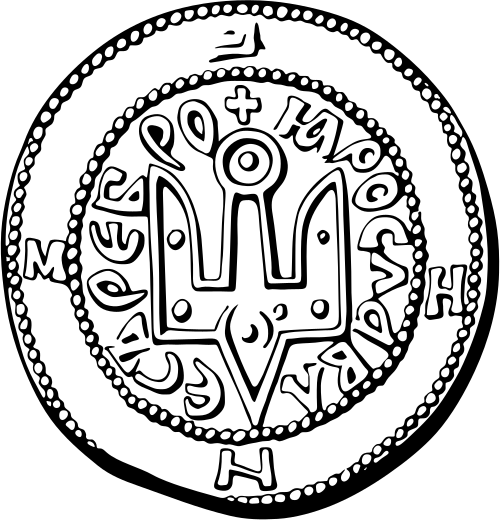
Russia / Eastern Europe · 862 – 1610
1 figure
Byzantium / Anatolia · 870 – 1056
1 figure
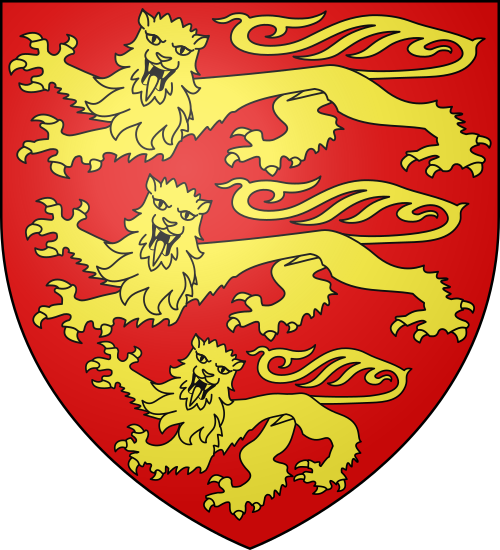
England · 1154 – 1485
The Plantagenets ruled England from 1154 to 1485 — three hundred and thirty-one years, longer than any other dynasty in English history. Their founder Henry II inherited the largest dynastic patrimony in twelfth-century Europe: through his father Geoffrey of Anjou he was Count of Anjou, Maine, and Touraine; through his mother Empress Matilda he was heir to the English throne; through his wife Eleanor of Aquitaine he became Duke of the largest French province. By his coronation in 1154 the Angevin Empire stretched from the Scottish border to the Pyrenees. The dynasty's fortunes inverted over the next century. John lost Normandy, Anjou, and Maine to Philip II of France in 1204, was forced to seal Magna Carta in 1215, and died in civil war. His son Henry III recovered slowly; Edward I conquered Wales and tried to conquer Scotland. The Hundred Years' War began under Edward III on a claim to the French throne through his mother Isabella of France — a claim that bound English foreign policy to French dynastic politics for a century and a quarter. The Plantagenet line ended in civil war between its own cadet branches. The Lancastrian (descended from John of Gaunt, Edward III's third surviving son) and Yorkist (descended from Edmund of Langley, the fourth) branches fought intermittently between 1455 and 1487 — the Wars of the Roses. Richard III, the last Plantagenet king, died at Bosworth Field in 1485, defeated by Henry Tudor whose marriage to Elizabeth of York fused the warring branches. The Plantagenet genealogical legacy is unusually dense: through Edward III's many sons and grandsons the dynasty seeded most of the later English noble houses, the entire Tudor line, the Stuart line via Margaret Tudor, and through Eleanor of Aquitaine connections to both the Capetian house of France and the medieval Castilian and Norman aristocracies. The cross-dynasty bridges Dynastica maps from the Plantagenet pages reach further than the dynasty's three centuries on the throne would suggest.
19 figures
Mongol Empire / Eurasian Steppe · 1206 – 1368
The Mongol Empire was the largest contiguous land empire in human history. It was built in a single generation. At his accession as Great Khan in 1206 Genghis Khan ruled the unified Mongol tribes from the Altai to the Khingan range — perhaps a million subjects on the high steppe. At his death in 1227 he had added the Tangut, Jin, and Khwarezmian empires to his dominions. Under his sons and grandsons the conquests continued: Korea, Russia, Persia, Mesopotamia, the Levant, all of China, parts of Eastern Europe. By 1279 the empire stretched from the Pacific coast of Korea to the Carpathian Mountains and ruled perhaps a hundred million people. The Mongol political system blended Chinggisid descent (only the descendants of Genghis through his chief wife Borte counted as imperial princes) with the older Inner Asian model of confederated tribes under elected great khans. The four khanate division formalized in the 1260s — the Yuan dynasty in China under Kublai Khan, the Ilkhanate in Persia under Hulagu, the Chagatai Khanate in Central Asia, and the Golden Horde over Russia and the western steppe — was supposed to operate under the symbolic supremacy of the Great Khan, but by the early fourteenth century each khanate was effectively independent and the unified empire ended in practice. The Mongol conquests were extraordinarily destructive. Modern estimates put the death toll of the campaigns from Genghis through his immediate successors at thirty to fifty million people — perhaps a tenth of the world population of the early thirteenth century. The sack of Baghdad in 1258 destroyed the Abbasid Caliphate and burned the libraries of the great Islamic intellectual capital; the campaigns in Khwarezm depopulated whole provinces; the Mongol invasions of Russia produced the Tatar Yoke that shaped Russian statehood for the next two and a half centuries. Where the Mongols left intact states they left them transformed. The genealogical legacy of Genghis Khan is the most demographically remarkable in human history. A 2003 study found that approximately eight percent of the male population of the territories the Mongols once ruled — roughly 0.5 percent of all living men globally — carry a Y-chromosome haplotype traced to a single male ancestor from the early thirteenth century, almost certainly Genghis himself or a close male relative. No other historical figure has documented genetic descent on remotely comparable scale.
14 figures
Austria / Holy Roman Empire · 1273 – 1918
The Habsburg house emerged in the eleventh century as obscure Swiss counts whose hereditary patrimony was a single hill-fort in Aargau. By the early fourteenth century they had risen to ducal rank in Austria; by the fifteenth they held the imperial crown of the Holy Roman Empire almost continuously; by the early sixteenth, through the marriage of Maximilian I to Mary of Burgundy and the subsequent marriages of their children, they controlled the largest European patrimony assembled since Charlemagne — Spain, the Indies, Burgundy, the Low Countries, Austria, Bohemia, Hungary, the imperial title, and parts of Italy, all under one ruler in Charles V. The empire Charles inherited proved unmanageable as a single entity. His abdication in 1556 split the dynasty into Spanish and Austrian branches. The Spanish Habsburgs took the global empire and reigned until their extinction in 1700; the Austrian Habsburgs took the imperial succession, the central European territories, and would reign in Vienna until 1918. The Austrian line endured a Reformation that nearly destroyed the religious unity of central Europe, a Thirty Years' War that killed perhaps a quarter of Germany's population, and the gradual erosion of imperial authority over the German princes. The dynasty's last truly great moment was the long reign of Maria Theresa (1740–1780), the only female ruler of the Habsburg lands. Her accession was nearly catastrophic — the Pragmatic Sanction her father Charles VI had spent decades negotiating across Europe was violated within weeks of her accession, plunging her into the War of the Austrian Succession with Frederick the Great of Prussia. She lost Silesia but preserved everything else, bore sixteen children including two emperors and Marie Antoinette of France, and reformed the army, education system, and bureaucracy of her composite monarchy. The dynasty ended in 1918 with the collapse of Austria-Hungary at the close of the First World War. Emperor Karl I renounced participation in state affairs in November 1918 and went into exile; the empire dissolved into Austria, Hungary, Czechoslovakia, Yugoslavia, Romania, and parts of Poland and Italy. The Habsburg-Lorraine family continues as a private house; the current head is Karl von Habsburg (b. 1961), great-grandson of the last reigning Emperor of Austria.
24 figures
Anatolia / Balkans / Middle East · 1299 – 1922
The Ottoman dynasty ruled an empire that, at its early-seventeenth-century peak, stretched from Algeria to the Persian Gulf and from Hungary to the Yemen — perhaps thirty-two million people across three continents. The dynasty's founder Osman I was originally the chief of a small Turkmen warband on the Byzantine frontier in northwestern Anatolia in the late thirteenth century. His descendants conquered Bursa, crossed into Europe in the 1350s, subdued the Balkans, and in 1453 captured Constantinople under Mehmed II — ending the thousand-year Byzantine Empire and giving the Ottomans a capital and an imperial ideology to inherit. The dynasty's classical apex was the reign of Süleyman I "the Magnificent" (1520–1566). His armies took Belgrade and Rhodes, decisively defeated the Hungarians at Mohács in 1526, besieged Vienna in 1529, conquered Baghdad in 1534, and made the Ottoman navy the dominant power in the Mediterranean. His judicial reforms — the kanun, the imperial codification of secular law alongside sharia — gave him the Turkish epithet Kanuni, the Lawgiver. His marriage to the Ukrainian slave concubine Hürrem Sultan transformed the Ottoman imperial harem from a women's quarter into the political center of the Topkapı Palace. Ottoman political succession was uniquely brutal among the great early-modern dynasties. From Mehmed II onward, the law of fratricide (kanunname) permitted a newly enthroned sultan to execute all of his brothers as a precaution against civil war — Mehmed III in 1595 had his nineteen surviving brothers strangled with silken bowstrings the day of his accession. The practice was replaced in the seventeenth century by the kafes (cage) system, in which potential heirs were confined in the palace under house arrest for decades until they were called to the throne; many of the later sultans came to power as middle-aged men who had never governed anything. The Ottoman dynasty's decline was visible from the second siege of Vienna in 1683, prolonged through three centuries of incremental territorial loss to Habsburgs, Romanovs, French, British, and the rising Balkan nationalisms, and ended in the post-First World War partition of the empire and the foundation of the Republic of Turkey under Mustafa Kemal in 1923. The last sultan, Mehmed VI, was deposed and exiled the previous year; the caliphate was abolished in 1924, ending six hundred and twenty-three years of Ottoman dynastic rule. The Osmanoğlu family continues today as a private house; the current head is Harun Osmanoğlu (b. 1932).
3 figures
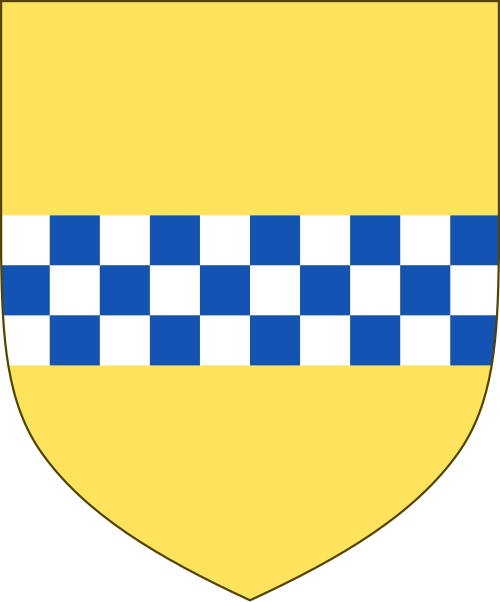
Scotland and England · 1371 – 1714
The Stuart dynasty was the royal house of Scotland from 1371 and of England, Ireland, and ultimately Great Britain from 1603 to 1714. Originating as the hereditary stewards of the Scottish crown — the surname is a corruption of "steward" — they inherited the Scottish throne through Marjorie Bruce's marriage to Walter Stewart, and held it for the next three and a half centuries through assassination, captivity, exile, and the longest sustained run of underage successions in medieval Europe. The dynasty's transformation from a Scottish to a British royal house was the work of one figure. James VI of Scotland inherited the English throne on Elizabeth I's death in 1603, through his descent from Margaret Tudor, daughter of Henry VII. Crowned in both Edinburgh and London, he styled himself King of Great Britain, though the constitutional union of the two kingdoms would not come until the reign of his great-granddaughter Anne a century later. The Stuart period in England would prove the most politically turbulent in the country's early modern history. Charles I (1625–1649) believed in the divine right of kings and refused to summon parliament for eleven years. The English Civil War followed; he was defeated, captured, tried, and on 30 January 1649 became the only English king publicly executed by his own subjects. The Commonwealth and Cromwell's Protectorate held the kingdom for eleven years; Charles II was restored in 1660. James II's open Catholicism and the birth of a Catholic male heir in 1688 triggered the Glorious Revolution: Parliament invited his Protestant daughter Mary and her Dutch husband William of Orange to invade and depose him. The dynasty ended with Queen Anne in 1714, who survived seventeen pregnancies and saw no child reach adulthood. Under the Act of Settlement the throne passed to her distant Hanoverian cousin George I, descended through Sophia of Hanover from Elizabeth Stuart, daughter of James VI and I. The Jacobite Stuart claimants persisted into exile for another century — the Old and Young Pretenders attempted to recover the throne in 1715 and 1745 — but the political Stuart line was over. The genealogical line continues: the current British royal house descends from the Stuarts via the Hanoverian succession.
12 figures
England · 1485 – 1603
The Tudors ruled England for one hundred and eighteen years across five reigns — fewer years and fewer monarchs than any other major English dynasty — but reshaped England more decisively than any predecessor since the Norman Conquest. Their founder Henry VII won the throne by force at Bosworth Field in 1485, defeating Richard III with a claim of thin Lancastrian descent through John of Gaunt's legitimized Beaufort line. Henry's marriage to Elizabeth of York the following year fused the warring branches of the Plantagenet house and ended the Wars of the Roses by union rather than further bloodshed. The dynasty's second and most consequential reign was Henry VIII's (1509–1547). His refusal to accept Pope Clement VII's denial of his annulment from Catherine of Aragon drove him to break with Rome, declare himself Supreme Head of the Church of England, dissolve the English monasteries, seize roughly a fifth of the kingdom's wealth, and reshape English politics around the religious settlement his decisions had created. Six marriages produced three legitimate children — Mary, Elizabeth, and Edward — each of whom would in turn wear the crown. Edward VI (1547–1553) consolidated the English Reformation under his Protestant regents and died at fifteen of tuberculosis. Mary I (1553–1558) reversed the Reformation, married Philip II of Spain, and burned nearly three hundred Protestants at the stake before dying childless. Elizabeth I (1558–1603) restored a moderate Anglican settlement, defeated the Spanish Armada in 1588, presided over a literary golden age that produced Shakespeare and Marlowe, and reigned for forty-four years as a deliberately unmarried queen. Her death without an heir ended the Tudor line and brought her cousin James VI of Scotland to the English throne. The Tudor genealogical legacy is denser than the brief dynasty's five reigns suggest. Through Henry VII's daughter Margaret, who married James IV of Scotland, the Tudor line transmitted the English crown to the Stuart house at Elizabeth's death; through his other daughter Mary, Queen of France, it produced the disputed Lady Jane Grey claim and the Grey-Suffolk line of Tudor descendants. Cross-dynasty bridges from the Tudor pages reach into the Plantagenet, Stuart, Spanish Habsburg, and (via marriage diplomacy) French royal lines.
15 figures
Spain / Holy Roman Empire · 1516 – 1700
The Spanish Habsburg dynasty inherited, at a single moment in 1516, the largest territorial state in the world. Charles V was simultaneously king of Castile and Aragon through his mother Joanna; king of Naples, Sicily, and Sardinia through his Aragonese inheritance; ruler of Spanish America through the same; Duke of Burgundy and Lord of the Netherlands through his grandmother Mary of Burgundy; and from 1519 Holy Roman Emperor, archduke of Austria, and king of the Romans through his Habsburg patrimony. He was nineteen years old. Charles abdicated forty years later in stages between 1554 and 1556, exhausted by four decades of universal war and convinced no successor could manage the whole inheritance. His son Philip II received Spain, the Indies, the Italian possessions, and the Low Countries; his brother Ferdinand received the Austrian lands and ultimately the imperial title. The Spanish branch would reign in Madrid for the next century and a half, defending a global empire against the rising powers of England, France, the Netherlands, and the Ottomans. The reign of Philip II (1556–1598) is the apex of Spanish Habsburg power. The Spanish silver fleets brought back the wealth of the Americas; the Battle of Lepanto in 1571 broke Ottoman naval supremacy in the Mediterranean; in 1580 Philip inherited the throne of Portugal, briefly uniting the two Iberian empires. The reign also saw the catastrophic Dutch Revolt, the failed Armada against Elizabethan England (1588), and the religious wars of the French Reformation in which Philip backed the losing Catholic League. The dynasty entered visible decline under his successors. Repeated cousin marriages — designed to keep the inheritance within the Habsburg family — produced increasingly inbred offspring; the last Spanish Habsburg, Carlos II, was so disabled by genetic damage that he could not chew solid food, walk unaided, or father an heir. His death in 1700 without issue triggered the War of the Spanish Succession, which ended the dynasty and brought the French Bourbons to the Spanish throne under the Treaty of Utrecht.
5 figures
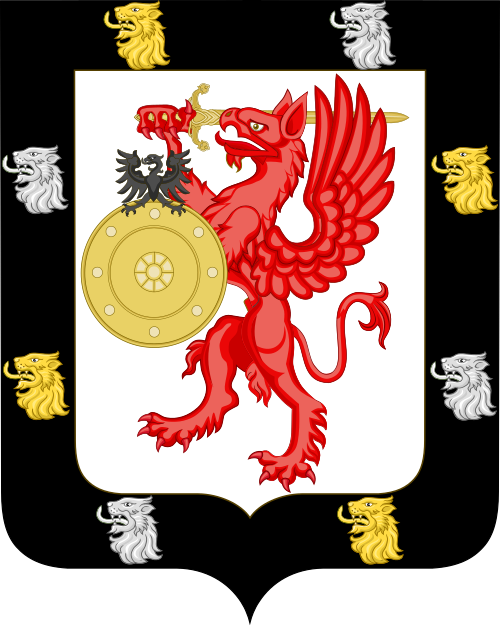
Russia / Eurasia · 1613 – 1917
The Romanov dynasty ruled Russia for three hundred and four years, from the election of Mikhail Romanov by the Zemsky Sobor in 1613 to the abdication of Nicholas II in 1917. Their rise was the resolution to the Time of Troubles — a fifteen-year crisis of dynastic extinction, foreign invasion, and pretender pretenders that followed the death of Ivan IV's son Fyodor I (the last Rurikid) in 1598. The sixteen-year-old Mikhail was a compromise candidate, the great-nephew of Anastasia Romanovna who had been Ivan the Terrible's first wife. The dynasty's transformation from a domestic Muscovite royal house into a great European power was the work of Peter the Great (1682–1725). His Westernizing reforms — beard taxes, fleet-building, the founding of St Petersburg as a "window on Europe," the systematic reorganization of state administration on Swedish and Dutch models — turned Russia from a peripheral land-locked state into a continental power. His successors enlarged the empire from the Baltic to the Pacific: Catherine the Great (1762–1796) annexed Crimea and partitioned Poland; Alexander I (1801–1825) defeated Napoleon and entered Paris in 1814; the nineteenth-century Romanovs took the Caucasus, Central Asia, and Alaska. The dynasty entered its final crisis with the assassination of Alexander II in 1881. Repression replaced reform; the cycle accelerated through the Russo-Japanese War of 1905, the 1905 Revolution, the constitutional concessions Nicholas II made under duress, the catastrophic conduct of the First World War, the February Revolution of 1917, the abdication, and finally the murder of Nicholas, his wife, his four daughters, and his hemophiliac son Alexei at Ekaterinburg on the night of 17 July 1918. The remains were thrown into a mine shaft and rediscovered in 1991. The Romanov genealogical legacy is unusually international for an Orthodox dynasty. By the nineteenth century Romanov children were marrying systematically into the Protestant royal houses of Germany — the Hohenzollerns of Prussia, the dukes of Hesse, the kings of Württemberg. Through these marriages the Romanovs are connected to nearly every reigning European royal house of the modern period: Empress Alexandra was a granddaughter of Queen Victoria; her sister was the last Empress of Russia's older sister Elizabeth Feodorovna; their cousins included George V of Britain and Kaiser Wilhelm II of Germany. The last Russian Tsar and his German Empress, the British George V, and the German Kaiser Wilhelm II were all first cousins.
4 figures