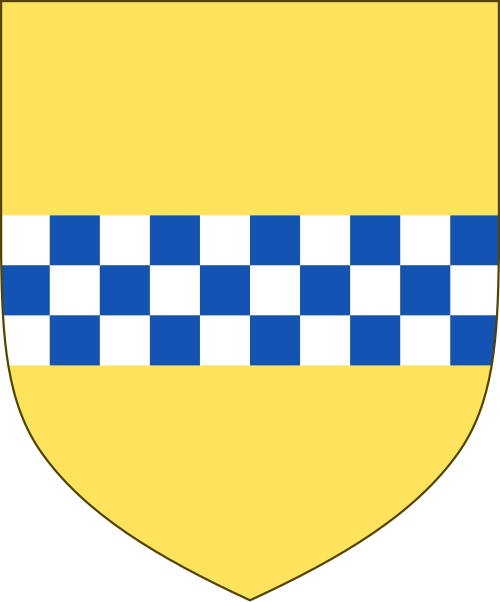
Stuart
Scotland and England · 1371 – 1714
Overview
The Stuart dynasty was the royal house of Scotland from 1371 and of England, Ireland, and ultimately Great Britain from 1603 to 1714. Originating as the hereditary stewards of the Scottish crown — the surname is a corruption of "steward" — they inherited the Scottish throne through Marjorie Bruce's marriage to Walter Stewart, and held it for the next three and a half centuries through assassination, captivity, exile, and the longest sustained run of underage successions in medieval Europe.
The dynasty's transformation from a Scottish to a British royal house was the work of one figure. James VI of Scotland inherited the English throne on Elizabeth I's death in 1603, through his descent from Margaret Tudor, daughter of Henry VII. Crowned in both Edinburgh and London, he styled himself King of Great Britain, though the constitutional union of the two kingdoms would not come until the reign of his great-granddaughter Anne a century later. The Stuart period in England would prove the most politically turbulent in the country's early modern history.
Charles I (1625–1649) believed in the divine right of kings and refused to summon parliament for eleven years. The English Civil War followed; he was defeated, captured, tried, and on 30 January 1649 became the only English king publicly executed by his own subjects. The Commonwealth and Cromwell's Protectorate held the kingdom for eleven years; Charles II was restored in 1660. James II's open Catholicism and the birth of a Catholic male heir in 1688 triggered the Glorious Revolution: Parliament invited his Protestant daughter Mary and her Dutch husband William of Orange to invade and depose him.
The dynasty ended with Queen Anne in 1714, who survived seventeen pregnancies and saw no child reach adulthood. Under the Act of Settlement the throne passed to her distant Hanoverian cousin George I, descended through Sophia of Hanover from Elizabeth Stuart, daughter of James VI and I. The Jacobite Stuart claimants persisted into exile for another century — the Old and Young Pretenders attempted to recover the throne in 1715 and 1745 — but the political Stuart line was over. The genealogical line continues: the current British royal house descends from the Stuarts via the Hanoverian succession.
Updated May 2026 · How we research
Succession of rulers
- 1.James IV of Scotlandr. 1488 – 1513
- 2.James V of Scotlandr. 1513 – 1542
- 3.Mary, Queen of Scotsr. 1542 – 1567
- 4.James VI and Ir. 1603 – 1625
- 5.Charles Ir. 1625 – 1649
- 6.Charles IIr. 1660 – 1685
- 7.James II and VIIr. 1685 – 1688
- 8.Mary IIr. 1689 – 1694
- 9.William IIIr. 1689 – 1702
- 10.Anner. 1702 – 1714
Rulers of the Stuart in order of accession.
Lineage
12 figures- James IV of Scotland1473 – 1513
- James V of Scotland1512 – 1542
- Mary, Queen of Scots1542 – 1587
- James VI and I1566 – 1625
- Charles I1600 – 1649
- Charles II1630 – 1685
- James II and VII1633 – 1701
- Henrietta Maria of France1609 – 1669
- William III1650 – 1702
- Mary of Modena1658 – 1718
All figures
- James IV of Scotland1473 – 1513
- James V of Scotland1512 – 1542
- Mary, Queen of Scots1542 – 1587
- James VI and I1566 – 1625
- Charles I1600 – 1649
- Henrietta Maria of France1609 – 1669
- Charles II1630 – 1685
- James II and VII1633 – 1701
- William III1650 – 1702
- Mary of Modena1658 – 1718
- Mary II1662 – 1694
- Anne1665 – 1714
Related events
In 1513 Henry VIII of England joined the Holy League against France and crossed the Channel to campaign in Picardy. James IV of Scotland, bound to France by the renewed Auld Alliance and to England by the 1502 Treaty of Perpetual Peace and his marriage to Henry's sister Margaret Tudor, honored the French connection. In August he led the largest army a Scottish king had ever taken across the border, equipped with modern artillery and continental pike tactics, and took the Norham and Ford castles in Northumberland. The English response was commanded by Thomas Howard, earl of Surrey, the veteran lieutenant left to guard the north. By a flanking march Surrey placed his army between the Scots and Scotland, and on 9 September 1513 the battle was fought near the village of Branxton. The Scottish pike columns advanced downhill across ground broken by a concealed marsh; their formations lost cohesion, and in the close fighting English bills outmatched the long pikes. James fought on foot in the leading division and was killed within reach of Surrey's standard. With him died a remarkable proportion of the Scottish leadership: contemporary accounts count an archbishop, bishops and abbots, around a dozen earls, and many lords and lairds, along with thousands of common soldiers. It remains the heaviest defeat in Scottish military history. The crown passed to James V, seventeen months old. Margaret Tudor, the widowed queen, became regent under the terms of her husband's will, the first of several unstable regencies of a long minority; she lost the office on her remarriage in 1514, and Scottish politics for the next generation turned on the contest between pro-French and pro-English factions. Henry VIII, for whom Flodden was won in absentia, gained security on his northern border but pressed no conquest of Scotland.
Also involved: Tudor (Victorious crown; the battle was won in the king's absence)
On 8 February 1587, after nineteen years of English captivity and three botched plots against Elizabeth I in her name, Mary Stuart was beheaded at Fotheringhay Castle. Elizabeth signed the warrant under enormous Privy Council pressure and later professed bitter regret. Mary's son James VI of Scotland — destined to inherit the English throne sixteen years later — protested the execution but did not break with England over it.
Also involved: Tudor (executing power)
Elizabeth I died childless on 24 March 1603 with the words "my cousin of Scotland" reportedly her last designation of an heir. Her great-grandnephew James VI of Scotland — descended from Henry VII through his daughter Margaret Tudor — inherited the English and Irish crowns the same day, uniting the three British kingdoms under a single monarch for the first time. Each kept its own parliament, courts, and church.
Also involved: Tudor (ended)
On 30 January 1649, Charles I was beheaded on a scaffold erected outside the Banqueting House in Whitehall — the only English king ever publicly executed by his own subjects. Defeated in two civil wars, refused parliamentary compromise, and convicted of high treason by a tribunal of fifty-nine commissioners (the Rump Parliament had voted away the House of Lords specifically to bring him to trial), he wore two shirts to avoid shivering on the cold morning lest the crowd mistake it for fear.
An invitation from seven English peers brought William of Orange and a Dutch army ashore at Torbay on 5 November 1688. James II, lacking confidence in his own troops and forces, fled to France within weeks. Parliament declared the throne vacant by James's flight and offered it jointly to his daughter Mary and her husband William, on conditions later codified in the Bill of Rights. The settlement fixed parliamentary supremacy as the operating constitution of England.
Parallel Acts passed by the parliaments of England and Scotland in 1706 and 1707 dissolved both legislatures and created a single Kingdom of Great Britain with a unified parliament at Westminster. Scotland retained its distinct legal system, established church, and educational institutions. The union was politically driven (Scotland's financial collapse after the Darien venture, English fears of a separate Stuart restoration) and deeply unpopular in Scotland for generations.
See also
Same region
- Khosroid
Iberia (Caucasus) · 580 – 786
- Khazar
Caspian Steppe / Eurasia · 650 – 969
- Umayyad Caliphate
Syria / Damascus / Spain · 661 – 750
- Carolingian
Frankish Empire / Holy Roman Empire · 751 – 987
 Rurikid
Russia / Eastern Europe · 862 – 1610
- Argyros
Byzantium / Anatolia · 870 – 1056
Same era
 Bagrationi
Georgia (Caucasus) · 780 – 1810
- Khmer Empire
Southeast Asia / Cambodia · 802 – 1431
- Rurikid
Russia / Eastern Europe · 862 – 1610
 Capetian
France · 987 – 1328
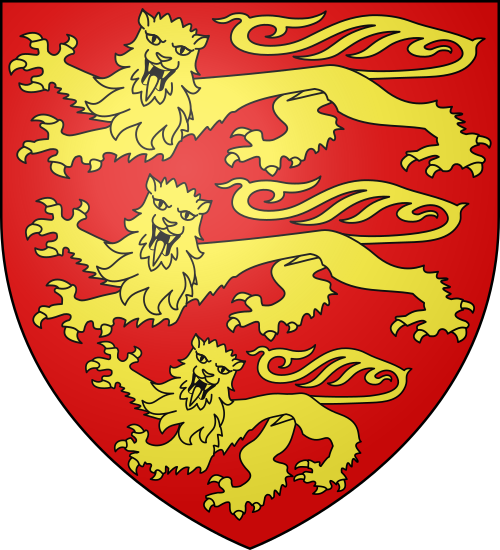 Plantagenet
England · 1154 – 1485
- Mongol Empire
Mongol Empire / Eurasian Steppe · 1206 – 1368