Early Dynastic
Ancient Egypt / North Africa · -3150 – -2613
3 figures
Ruling houses across the African continent.
9 dynasties
African royal genealogy is the most under-catalogued of any major world region in English-language reference works, and the gap is wider in popular than in scholarly literature. Dynastica works to close that gap, with particular depth in the early-dynastic Egyptian, Ptolemaic, Mali (Keita), Songhai, and Solomonic Ethiopian houses. The continent's recorded dynastic history runs deeper than any other in the world: the Egyptian Old Kingdom — including the Fourth Dynasty whose pharaohs built the Pyramids of Giza — was already nine centuries old when Babylon's first dynasty rose.
This page collects the regional ruling houses across the African continent, from the early Egyptian dynasties of the Nile to the trans-Saharan trading empires of West Africa to the Christian Solomonic kings of Abyssinian Ethiopia, whose unbroken line of descent claimed an origin from King Solomon and the Queen of Sheba and reigned, with brief interruptions, from the thirteenth century to 1974.
Ancient Egypt / North Africa · -3150 – -2613
3 figures

Ancient Egypt / North Africa · -2613 – -2494
3 figures
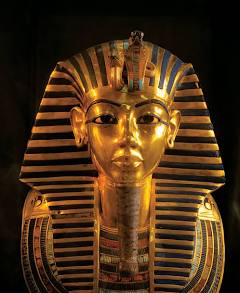
Ancient Egypt / North Africa · -1550 – -1292
10 figures
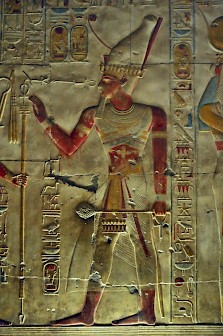
Ancient Egypt / North Africa · -1292 – -1189
5 figures
Ancient Egypt / Hellenistic World · -305 – -30
A Macedonian Greek royal house that ruled Egypt following the death of Alexander the Great. Known for adopting the customs of Egyptian Pharaohs, including extensive sibling marriage, and building the Library of Alexandria.
5 figures
Egypt / Levant · 1171 – 1260
The Ayyubid dynasty emerged from the Kurdish military aristocracy that served the Zangid rulers of Mosul and Aleppo in the twelfth century. Its founders were two brothers, Najm al-Din Ayyub and Asad al-Din Shirkuh, soldiers from the town of Dvin in the Caucasus who rose through Zangid service to govern cities and command armies. When Nur al-Din of Damascus sent Shirkuh to intervene in the faltering Fatimid caliphate of Egypt, the family's fortunes shifted decisively southward. Shirkuh's nephew Saladin accompanied the expeditions, succeeded his uncle as Fatimid vizier in 1169, and in 1171 quietly suppressed the Shia caliphate altogether, restoring Egypt to Sunni allegiance and founding what became an independent dynasty after Nur al-Din's death in 1174. Saladin spent the following decade absorbing Damascus, Aleppo, and the Jazira before turning the combined resources of Egypt and Syria against the crusader states. His destruction of the Frankish field army at Hattin in July 1187 and the surrender of Jerusalem three months later made him the most celebrated Muslim ruler of his age, and the Third Crusade that followed — including the campaigns of Richard I of England — failed to reverse the essential verdict of 1187, ending instead in the negotiated settlement of 1192. The Ayyubids never governed as a centralized monarchy. Saladin distributed cities and provinces among brothers, sons, and nephews as appanages, producing a family confederation in which the sultan of Egypt held seniority but rarely uncontested authority. The arrangement bred recurrent succession struggles, yet it also gave the dynasty resilience and presided over a period of commercial prosperity, Sunni religious patronage, and pragmatic diplomacy with the Franks — most strikingly al-Kamil's 1229 treaty ceding Jerusalem to the emperor Frederick II without a battle. The dynasty's instrument of destruction was of its own making. As-Salih Ayyub, the last great sultan in Cairo, built his power on regiments of Turkish slave soldiers, the Bahri Mamluks, quartered on Roda Island in the Nile. When he died during the crusade of Louis IX in 1249 and his heir Turanshah alienated these regiments, they murdered the young sultan in 1250 and elevated as-Salih's widow Shajar al-Durr, then one of their own commanders, ending Ayyubid rule in Egypt. In Syria the family lingered a decade longer under an-Nasir Yusuf of Aleppo and Damascus, until the Mongol invasion of 1260 swept his realm away. The Mamluk sultanate that defeated the Mongols at Ayn Jalut that same year inherited the Ayyubid state system intact, while minor Ayyubid lines survived in Hama and elsewhere as Mamluk clients. The dynasty's ninety years thus framed both the climax of the counter-crusade and the transition from family confederation to the slave-soldier sultanate that would dominate Egypt for two and a half centuries.
9 figures
West Africa · 1235 – 1670
The ruling house of the Mali Empire, which dominated West Africa from the 13th to 15th centuries. They controlled the trans-Saharan trade routes and held near-monopolies on gold and salt.
4 figures
Horn of Africa / Ethiopia · 1270 – 1974
One of the longest-ruling royal houses in history, claiming direct descent from the biblical King Solomon and the Queen of Sheba.
2 figures
West Africa / Middle Niger · 1464 – 1591
The largest contiguous empire in West African history, which controlled the trans-Saharan gold and salt trade.
2 figures