Umayyad Caliphate
Syria / Damascus / Spain · 661 – 750
The first hereditary Islamic dynasty, responsible for the rapid expansion of Arab rule from Spain to India.
2 figures
Dynasties of Mesopotamia, the Levant, and Anatolia.
6 dynasties
Syria / Damascus / Spain · 661 – 750
The first hereditary Islamic dynasty, responsible for the rapid expansion of Arab rule from Spain to India.
2 figures
Middle East / Mesopotamia · 750 – 1258
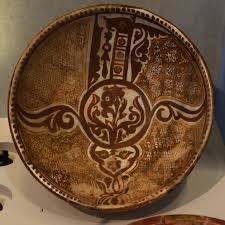
The second great Islamic dynasty, which oversaw the "Golden Age of Islam" from their capital in Baghdad.
6 figures
Byzantium / Anatolia · 870 – 1056
1 figure
Anatolia / Persia / Middle East · 1037 – 1194
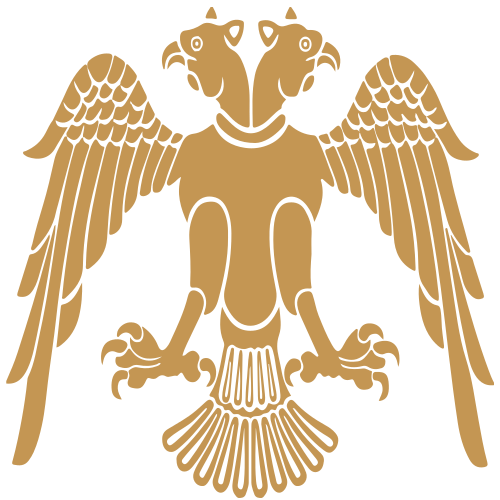
The Seljuk dynasty arose from the Qiniq clan of the Oghuz Turks, pastoral nomads of the steppe country between the Aral Sea and the lower Syr Darya. In the late tenth century the warlord Seljuk broke with the Oghuz Yabgu state and led his followers to the frontier town of Jand, where the clan accepted Sunni Islam around 985. The conversion proved decisive. It transformed a band of steppe horsemen into warriors for the faith, made them acceptable as soldiers to the Muslim powers of Transoxiana, and bound the family's fortunes to the cause of the Abbasid caliphate at the very moment that caliphate needed champions. Under Seljuk's grandsons Tughril and Chaghri the clan crossed into Khorasan, and their victory over the Ghaznavids at Dandanaqan in 1040 handed them an empire almost by accident. While Chaghri consolidated the east from Merv, Tughril pushed west across Persia, and in 1055 he entered Baghdad and ended a century of Shia Buyid control over the Abbasid caliph. Al-Qa'im invested him as sultan, creating the constitutional arrangement that defined the age: the caliph retained religious authority while the Seljuk sultan wielded the sword as protector of Sunni Islam. The dynasty's military climax came in August 1071, when Alp Arslan destroyed a Byzantine army at Manzikert and took the emperor Romanos IV Diogenes prisoner. The defeat broke Byzantine defenses in the east and opened Anatolia to Turkmen settlement, a demographic shift that ultimately produced Turkey itself. Under Malik-Shah I the empire reached its apogee, stretching from Kashgar's borders to the Mediterranean. His great vizier Nizam al-Mulk built the Nizamiyya madrasas that reshaped Sunni education, while the sultan's observatory at Isfahan employed Omar Khayyam, whose Jalali calendar of 1079 measured the solar year with remarkable precision. Malik-Shah's death in 1092 shattered this unity. His sons Mahmud, Berkyaruq, and Muhammad Tapar fought a generation of civil wars, during which the First Crusade marched through a divided Anatolia and Levant almost unopposed at the strategic level. Power devolved onto atabegs, the Turkish guardian-commanders who turned their provinces into hereditary states, and onto cadet branches in Kerman, Syria, and Anatolia. Ahmad Sanjar upheld Seljuk prestige in the east until the catastrophe at Qatwan in 1141 and his captivity among the Oghuz; in the west, a Seljuk-led coalition was routed by David IV of Georgia at Didgori in 1121, signaling the dynasty's receding reach. The Great Seljuk line ended in 1194 when Tughril III fell in battle against the Khwarazmshah. Yet the Sultanate of Rum, founded by a rival branch of the family, endured in Anatolia into the early fourteenth century, and it was through this branch that the Seljuk legacy passed to the beyliks and, eventually, to the Ottomans.
10 figures
Egypt / Levant · 1171 – 1260
The Ayyubid dynasty emerged from the Kurdish military aristocracy that served the Zangid rulers of Mosul and Aleppo in the twelfth century. Its founders were two brothers, Najm al-Din Ayyub and Asad al-Din Shirkuh, soldiers from the town of Dvin in the Caucasus who rose through Zangid service to govern cities and command armies. When Nur al-Din of Damascus sent Shirkuh to intervene in the faltering Fatimid caliphate of Egypt, the family's fortunes shifted decisively southward. Shirkuh's nephew Saladin accompanied the expeditions, succeeded his uncle as Fatimid vizier in 1169, and in 1171 quietly suppressed the Shia caliphate altogether, restoring Egypt to Sunni allegiance and founding what became an independent dynasty after Nur al-Din's death in 1174. Saladin spent the following decade absorbing Damascus, Aleppo, and the Jazira before turning the combined resources of Egypt and Syria against the crusader states. His destruction of the Frankish field army at Hattin in July 1187 and the surrender of Jerusalem three months later made him the most celebrated Muslim ruler of his age, and the Third Crusade that followed — including the campaigns of Richard I of England — failed to reverse the essential verdict of 1187, ending instead in the negotiated settlement of 1192. The Ayyubids never governed as a centralized monarchy. Saladin distributed cities and provinces among brothers, sons, and nephews as appanages, producing a family confederation in which the sultan of Egypt held seniority but rarely uncontested authority. The arrangement bred recurrent succession struggles, yet it also gave the dynasty resilience and presided over a period of commercial prosperity, Sunni religious patronage, and pragmatic diplomacy with the Franks — most strikingly al-Kamil's 1229 treaty ceding Jerusalem to the emperor Frederick II without a battle. The dynasty's instrument of destruction was of its own making. As-Salih Ayyub, the last great sultan in Cairo, built his power on regiments of Turkish slave soldiers, the Bahri Mamluks, quartered on Roda Island in the Nile. When he died during the crusade of Louis IX in 1249 and his heir Turanshah alienated these regiments, they murdered the young sultan in 1250 and elevated as-Salih's widow Shajar al-Durr, then one of their own commanders, ending Ayyubid rule in Egypt. In Syria the family lingered a decade longer under an-Nasir Yusuf of Aleppo and Damascus, until the Mongol invasion of 1260 swept his realm away. The Mamluk sultanate that defeated the Mongols at Ayn Jalut that same year inherited the Ayyubid state system intact, while minor Ayyubid lines survived in Hama and elsewhere as Mamluk clients. The dynasty's ninety years thus framed both the climax of the counter-crusade and the transition from family confederation to the slave-soldier sultanate that would dominate Egypt for two and a half centuries.
9 figures
Anatolia / Balkans / Middle East · 1299 – 1922
The Ottoman dynasty ruled an empire that, at its early-seventeenth-century peak, stretched from Algeria to the Persian Gulf and from Hungary to the Yemen — perhaps thirty-two million people across three continents. The dynasty's founder Osman I was originally the chief of a small Turkmen warband on the Byzantine frontier in northwestern Anatolia in the late thirteenth century. His descendants conquered Bursa, crossed into Europe in the 1350s, subdued the Balkans, and in 1453 captured Constantinople under Mehmed II — ending the thousand-year Byzantine Empire and giving the Ottomans a capital and an imperial ideology to inherit. The dynasty's classical apex was the reign of Süleyman I "the Magnificent" (1520–1566). His armies took Belgrade and Rhodes, decisively defeated the Hungarians at Mohács in 1526, besieged Vienna in 1529, conquered Baghdad in 1534, and made the Ottoman navy the dominant power in the Mediterranean. His judicial reforms — the kanun, the imperial codification of secular law alongside sharia — gave him the Turkish epithet Kanuni, the Lawgiver. His marriage to the Ukrainian slave concubine Hürrem Sultan transformed the Ottoman imperial harem from a women's quarter into the political center of the Topkapı Palace. Ottoman political succession was uniquely brutal among the great early-modern dynasties. From Mehmed II onward, the law of fratricide (kanunname) permitted a newly enthroned sultan to execute all of his brothers as a precaution against civil war — Mehmed III in 1595 had his nineteen surviving brothers strangled with silken bowstrings the day of his accession. The practice was replaced in the seventeenth century by the kafes (cage) system, in which potential heirs were confined in the palace under house arrest for decades until they were called to the throne; many of the later sultans came to power as middle-aged men who had never governed anything. The Ottoman dynasty's decline was visible from the second siege of Vienna in 1683, prolonged through three centuries of incremental territorial loss to Habsburgs, Romanovs, French, British, and the rising Balkan nationalisms, and ended in the post-First World War partition of the empire and the foundation of the Republic of Turkey under Mustafa Kemal in 1923. The last sultan, Mehmed VI, was deposed and exiled the previous year; the caliphate was abolished in 1924, ending six hundred and twenty-three years of Ottoman dynastic rule. The Osmanoğlu family continues today as a private house; the current head is Harun Osmanoğlu (b. 1932).
3 figures