Khosroid
Iberia (Caucasus) · 580 – 786
11 figures
Royal houses of Georgia, Armenia, and surrounding regions.
6 dynasties
The Caucasus has the rare distinction of producing one of the longest single-line royal dynasties in world history: the Bagrationi house of Georgia, which traces a continuous male-line descent from the late ninth century through the Russian annexation of 1801 — nine hundred and twenty years. By comparison, the Capetian senior line of France lasted three hundred and forty-one years; the Habsburgs, six hundred and forty-five. Only the Yamato dynasty of Japan has reigned longer in a comparable royal capacity.
Dynastica's Caucasus catalog is unusually deep in Bagrationi figures by design — the site was founded to map this lineage. It also includes the smaller surrounding houses (the Khosroid kings of pre-Bagrationi Iberia, the Abkhazian royals, the Ossetian princes) whose marriages and successions interweave with the Bagrationi line. The cross-dynasty bridges from the Caucasus reach further than they look: the Bagrationi married into the Byzantine imperial house, the Komnenian dynasty of Trebizond, and the medieval Armenian and Alanian royal lines.
Iberia (Caucasus) · 580 – 786
11 figures
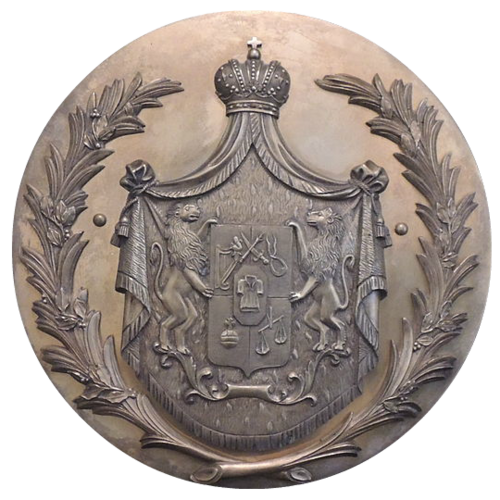
Georgia (Caucasus) · 780 – 1810
The Bagrationi were the royal house of Georgia for over a thousand years — by a wide margin the longest continuously reigning dynasty in Christian history, and one of the longest-reigning royal lines in the world. From the late ninth century, when the first Bagrationi prince Adarnase IV took the title King of the Georgians, until the formal Russian annexation of Kartli-Kakheti in 1801, an unbroken male-line descent occupied the Georgian throne. By comparison the Capetian senior line of France lasted 341 years; the Habsburgs 645; the Romanovs 304. Only the Yamato dynasty of Japan has reigned longer in a comparable royal capacity. The Bagrationi origin myth — recorded in medieval Georgian chronicles and accepted by every Georgian monarch as a fact of dynastic legitimacy — claimed descent from the Biblical King David and so from the royal house of ancient Israel. Modern scholarship treats the claim as a tenth-century legitimating fiction, but the dynasty's actual historical origin (probably as Bagratid Armenian princes who moved north into Georgia in the eighth century) is itself unusually old and well documented. The first Bagrationi rulers governed initially as princes of Tao-Klarjeti, on the borderlands between the Georgian, Armenian, and Byzantine worlds. The dynasty's golden age was the reign of David IV "the Builder" (1089–1125) and his great-granddaughter Queen Tamar (1184–1213). David expelled the Seljuk Turks from Georgia, retook Tbilisi from its Muslim emirs after four centuries of occupation, and built a unified Georgian kingdom stretching from the Black Sea to the Caspian. Tamar's reign saw the cultural and territorial apex: Shota Rustaveli's epic The Knight in the Panther's Skin, the great frescoed cathedrals of late medieval Georgia, and a sphere of influence reaching deep into Anatolia and Persia. After the Mongol invasions of the thirteenth century the unified kingdom fragmented into three smaller kingdoms (Kartli, Kakheti, Imereti) and several principalities, each ruled by a separate Bagrationi branch. The line persisted through Mongol overlordship, Timurid raids, Ottoman and Persian pressure, and centuries of border wars. In 1783 Erekle II of Kartli-Kakheti accepted Russian suzerainty under the Treaty of Georgievsk; his son Giorgi XII died in 1800, and the following year the Russian Empire annexed the kingdom outright. The Bagrationi continued as Russian princes through the imperial period and continue today; the current head of the royal house is Davit Bagrationi (b. 1976), residing in Tbilisi.
62 figures
Georgia / Caucasus · 786 – 1008
16 figures
North Caucasus · 800 – 1239
4 figures
Armenia / Caucasus · 830 – 1021
1 figure
Georgia / Caucasus · 870 – 960
1 figure