Khazar
Caspian Steppe / Eurasia · 650 – 969
1 figure
The houses that shaped Rus, Muscovy, and the Russian Empire.
4 dynasties
Caspian Steppe / Eurasia · 650 – 969
1 figure
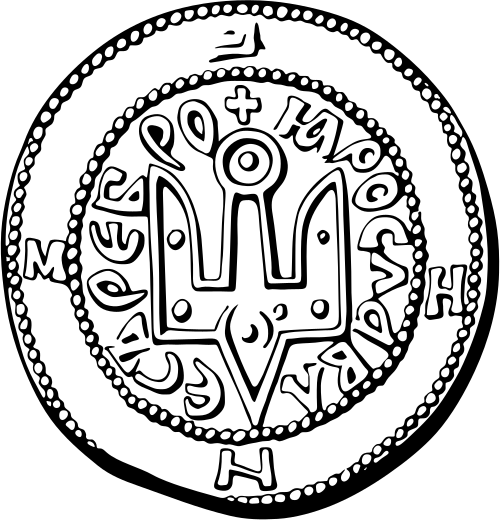
Russia / Eastern Europe · 862 – 1610
1 figure
Mongol Empire / Eurasian Steppe · 1206 – 1368
The Mongol Empire was the largest contiguous land empire in human history. It was built in a single generation. At his accession as Great Khan in 1206 Genghis Khan ruled the unified Mongol tribes from the Altai to the Khingan range — perhaps a million subjects on the high steppe. At his death in 1227 he had added the Tangut, Jin, and Khwarezmian empires to his dominions. Under his sons and grandsons the conquests continued: Korea, Russia, Persia, Mesopotamia, the Levant, all of China, parts of Eastern Europe. By 1279 the empire stretched from the Pacific coast of Korea to the Carpathian Mountains and ruled perhaps a hundred million people. The Mongol political system blended Chinggisid descent (only the descendants of Genghis through his chief wife Borte counted as imperial princes) with the older Inner Asian model of confederated tribes under elected great khans. The four khanate division formalized in the 1260s — the Yuan dynasty in China under Kublai Khan, the Ilkhanate in Persia under Hulagu, the Chagatai Khanate in Central Asia, and the Golden Horde over Russia and the western steppe — was supposed to operate under the symbolic supremacy of the Great Khan, but by the early fourteenth century each khanate was effectively independent and the unified empire ended in practice. The Mongol conquests were extraordinarily destructive. Modern estimates put the death toll of the campaigns from Genghis through his immediate successors at thirty to fifty million people — perhaps a tenth of the world population of the early thirteenth century. The sack of Baghdad in 1258 destroyed the Abbasid Caliphate and burned the libraries of the great Islamic intellectual capital; the campaigns in Khwarezm depopulated whole provinces; the Mongol invasions of Russia produced the Tatar Yoke that shaped Russian statehood for the next two and a half centuries. Where the Mongols left intact states they left them transformed. The genealogical legacy of Genghis Khan is the most demographically remarkable in human history. A 2003 study found that approximately eight percent of the male population of the territories the Mongols once ruled — roughly 0.5 percent of all living men globally — carry a Y-chromosome haplotype traced to a single male ancestor from the early thirteenth century, almost certainly Genghis himself or a close male relative. No other historical figure has documented genetic descent on remotely comparable scale.
14 figures
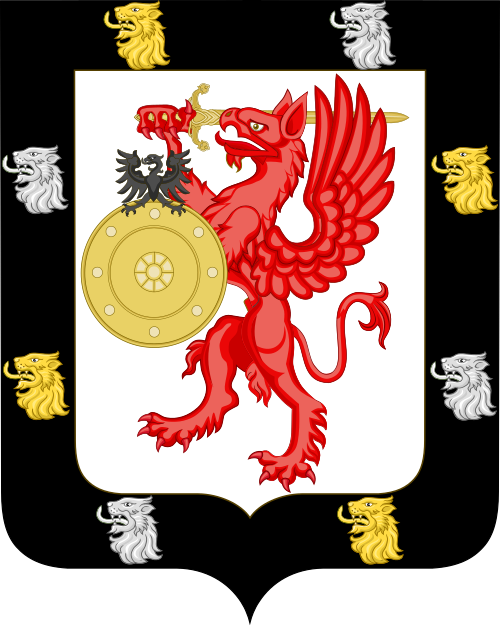
Russia / Eurasia · 1613 – 1917
The Romanov dynasty ruled Russia for three hundred and four years, from the election of Mikhail Romanov by the Zemsky Sobor in 1613 to the abdication of Nicholas II in 1917. Their rise was the resolution to the Time of Troubles — a fifteen-year crisis of dynastic extinction, foreign invasion, and pretender pretenders that followed the death of Ivan IV's son Fyodor I (the last Rurikid) in 1598. The sixteen-year-old Mikhail was a compromise candidate, the great-nephew of Anastasia Romanovna who had been Ivan the Terrible's first wife. The dynasty's transformation from a domestic Muscovite royal house into a great European power was the work of Peter the Great (1682–1725). His Westernizing reforms — beard taxes, fleet-building, the founding of St Petersburg as a "window on Europe," the systematic reorganization of state administration on Swedish and Dutch models — turned Russia from a peripheral land-locked state into a continental power. His successors enlarged the empire from the Baltic to the Pacific: Catherine the Great (1762–1796) annexed Crimea and partitioned Poland; Alexander I (1801–1825) defeated Napoleon and entered Paris in 1814; the nineteenth-century Romanovs took the Caucasus, Central Asia, and Alaska. The dynasty entered its final crisis with the assassination of Alexander II in 1881. Repression replaced reform; the cycle accelerated through the Russo-Japanese War of 1905, the 1905 Revolution, the constitutional concessions Nicholas II made under duress, the catastrophic conduct of the First World War, the February Revolution of 1917, the abdication, and finally the murder of Nicholas, his wife, his four daughters, and his hemophiliac son Alexei at Ekaterinburg on the night of 17 July 1918. The remains were thrown into a mine shaft and rediscovered in 1991. The Romanov genealogical legacy is unusually international for an Orthodox dynasty. By the nineteenth century Romanov children were marrying systematically into the Protestant royal houses of Germany — the Hohenzollerns of Prussia, the dukes of Hesse, the kings of Württemberg. Through these marriages the Romanovs are connected to nearly every reigning European royal house of the modern period: Empress Alexandra was a granddaughter of Queen Victoria; her sister was the last Empress of Russia's older sister Elizabeth Feodorovna; their cousins included George V of Britain and Kaiser Wilhelm II of Germany. The last Russian Tsar and his German Empress, the British George V, and the German Kaiser Wilhelm II were all first cousins.
4 figures